
Nepal's disaster diplomacy: How a Himalayan catastrophe became a political battleground
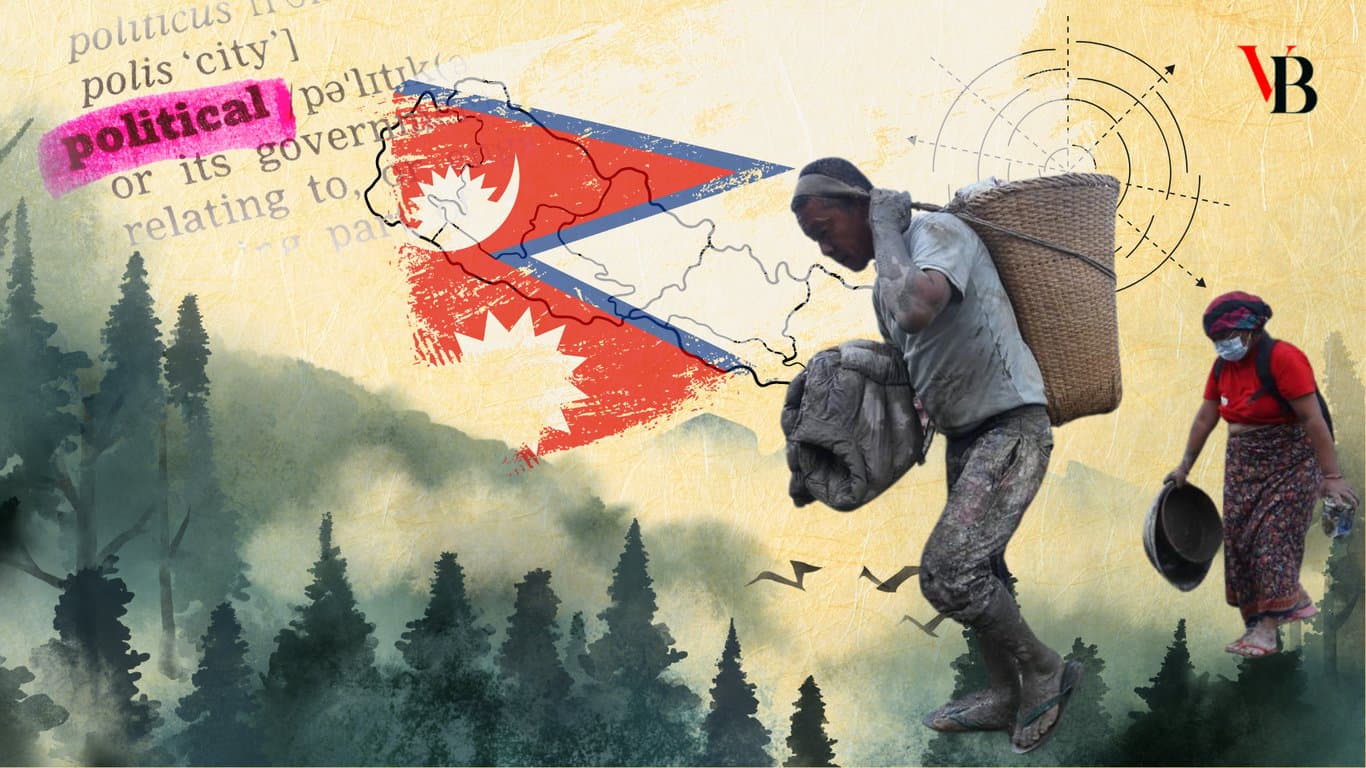

On the morning of August 26, 2026, a massive glacier and rock collapse near the Nepal-Tibet border unleashed a wall of water down the Bhotekoshi and Trishuli river systems, obliterating villages, hydropower plants, and the Gyirong border crossing with China. More than a week later, Nepal's death toll has climbed past 1,300, with thousands still unaccounted for — making it the country's deadliest disaster since the 2015 earthquake that killed roughly 9,000 people. But beyond the human tragedy, the flood has become entangled with Nepal's fragile post-uprising politics, its relationship with global powers, and a young, still-untested government's fight to control the narrative.
To understand Nepal's current moment, one has to go back to September 2025, when Gen Z-led protests over corruption and a government-imposed social media ban erupted into days of arson and violence, killing dozens and forcing Prime Minister K.P. Sharma Oli to resign. Former chief justice Sushila Karki took over as interim prime minister, and fresh elections were called for March 2026.
Those elections produced a landslide for Balendra "Balen" Shah, a former rapper and civil engineer who had built his reputation as an anti-corruption, results-driven mayor of Kathmandu. At 35, he became Nepal's youngest-ever prime minister and the first from the Madhes region, sweeping aside the traditional Nepali Congress and UML parties that had dominated politics for three decades. He was sworn in on March 27, 2026, and his cabinet quickly rolled out a wide-ranging governance reform agenda.
Even before the floods, Shah's honeymoon period was fraying. In July 2026, fresh Gen Z protests broke out in Kathmandu after a ride-share driver died from self-inflicted burns following a dispute with traffic police, with demonstrators demanding accountability and, in some cases, Shah's resignation. Analysts have also noted that Shah's governing style — described by International Crisis Group analyst Ashish Pradhan as reluctant to face cameras or address the public at key moments — has drawn growing scrutiny even from those sympathetic to his anti-corruption image. As one observer told Taipei Times, the floods have become the first real test of whether the goodwill that carried Shah to power can survive an actual crisis.
Within a day of the disaster, Nepal's Foreign Ministry publicly declined offers of search-and-rescue teams from India, China, the United States, Britain, South Korea, and others, saying domestic security forces could handle the operation and asking instead for direct cash contributions through a single official channel. The move triggered immediate backlash at home and abroad: private-sector hydropower operators accused the government of losing precious time while workers remained trapped in flooded tunnels, and critics online called it a display of "hollow nationalism" at the worst possible moment.
The government's position later softened. Finance Minister Swarnim Wagle disputed characterizations that Nepal had rejected help outright, saying assistance was being accepted "according to the needs on the ground," and Shah subsequently confirmed that Indian, Chinese, and South Korean experts were working alongside Nepali forces at hydropower sites.
Kathmandu-based analyst Chandradev Bhatta offered a geopolitical explanation to NPR, suggesting the initial hesitation was shaped by memories of the 2015 earthquake, when China, India, and Western donors competed openly for influence during reconstruction — a contest he says China ultimately won by gaining a lasting foothold in the country. In that reading, Kathmandu's early reluctance to admit foreign rescue teams, particularly so close to the sensitive Chinese border, reflected an instinct to guard sovereignty and avoid becoming a staging ground for great-power rivalry, even at humanitarian cost.
As the immediate rescue phase gave way to a longer reckoning, Nepal's diplomacy took a sharper turn. Foreign Minister Shishir Khanal announced that the country was formally seeking climate compensation from the world's largest emitters — China, the United States, and India — arguing that Nepal's own greenhouse gas emissions are negligible while it bears a disproportionate share of the consequences. Khanal described the shift explicitly as moving Nepal's diplomatic posture "from aid to justice and compensation," framing continued glacier melt as a threat to the water security of the roughly two billion people across South Asia who depend on Himalayan-fed rivers. Nepal's finance ministry has also sent a formal claim to the international Loss and Damage Fund, and officials have debated whether Shah himself should address the UN General Assembly on the issue.
Commentators have been quick to note the legal and political complexity of this claim. An analysis pointed out that while scientific attribution linking climate change to specific extreme weather events has advanced considerably, that is not the same as establishing legal liability — Nepal would need to connect the science to concrete state obligations and conduct, a far higher bar than moral argument alone.
The scale of loss has kept growing through early September: from roughly 165 confirmed dead in the first day, past 600 within a week, past 900 by August 31, and beyond 1,300 by September 5, with several thousand people still listed as missing across Nepal and Tibet combined. Nepal's disaster authority has estimated losses of around 400 billion rupees.
Even as the government leans into an international justice narrative, domestic critics argue its handling of the crisis at home tells a less flattering story. Civil society groups have accused the Shah administration of running an overly centralized, military-led response that sidelined elected local officials and delayed relief distribution in the hardest-hit districts. Commentary in The Statesman described a pattern of ministers touring flood zones by helicopter with heavy entourages — behavior critics labeled political theatre that diverted attention and resources from professional rescue work, while local lawmakers faced open anger from constituents over slow warnings and mistakes acknowledged even by officials themselves.
Taken together, Nepal's posture since August 26 traces a clear arc: an initial, controversial assertion of self-reliance in the rescue phase, followed by a pivot toward casting the disaster not as a domestic governance failure but as evidence of global climate injustice inflicted on a blameless small nation by its giant neighbors and the world's biggest emitters. That framing carries real scientific and moral weight — Nepal's emissions genuinely are negligible on a global scale, and the Himalayas are warming faster than most of the planet. But it also conveniently shifts scrutiny outward at a moment when the Shah government faces mounting domestic criticism over centralized decision-making, delayed warnings, and a leadership style many Nepalis already found distant even before the floods. Whether that strategy succeeds may depend less on the strength of Nepal's legal case abroad than on whether it can restore public confidence at home.
Leave A Comment