

Niazi with his head down in shame and humiliation: AK Khandker
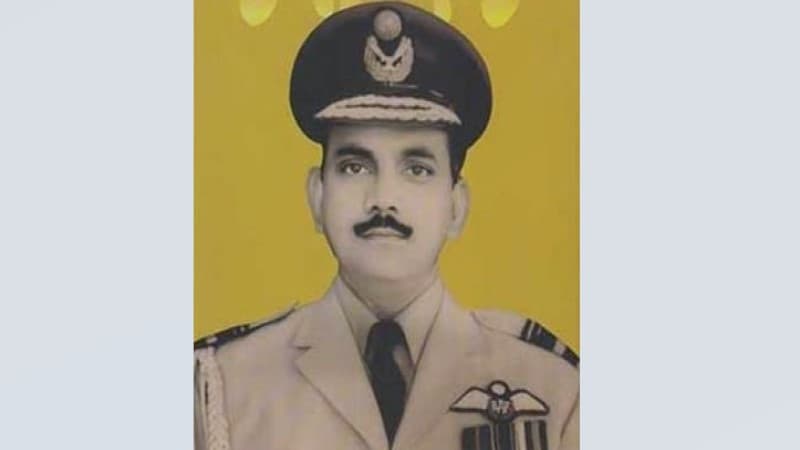
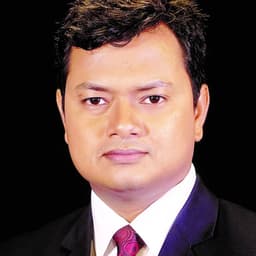
As a short winter day, on that Thursday the sun dipped below the horizon and the sky turns darker too early. On the afternoon of December 16, 1971, the Pakistani commander of the eastern region, AK Niazi, and Chief of Staff of the Indian Army's Eastern Command Major General JFR Jacob were sitting in an emergency meeting at the Dhaka Cantonment. The meeting decided that the Pakistani army would surrender in the open field, among the people. Brave freedom fighter and the then Deputy Chief of Staff of the Liberation Forces, Abdul Karim Khandker, witnessed that historic moment as a representative of Bangladesh. In 1971, he was a Group Captain of the Air Force and Deputy Commander-in-Chief of the Bangladesh Army. Niazi received Jagjit Singh Aurora, (GOC-in-C) Indian Army officer and joint commander of the Bangladesh Forces at the airport at 3:30pm. At the same time, AK Khandker arrived in Dhaka from Kolkata via Agartala. He also went directly to Suhrawardy Udyan in the same jeep with Arora. He witnessed the historical chapter in history. Rahat Minhaz, Assistant Professor of Mass Communication and Journalism at Jagannath University, sat with the 1971 hero and conducted this interview for a book titled Ekattor by Simon Dring and others. The interview was conducted on June 23, 2016, at AK Khandker's house in Uttara.
Rahat Minhaz: What were your thoughts about the war in early December?
AK Khandker: When we started the war in an organized manner, we knew that the defeat of the Pakistanis in this war was inevitable. And after the all-out joint operation started in October-November, we realized that Pakistan's defeat was only a matter of time. By December, the war gained momentum. After Pakistan attacked India on December 3, we all became convinced that the rise of Bangladesh was nothing more than a matter of counting the days. Because Pakistan's morale was at a very low level. They had no moral standing. And we knew that it would be very easy to defeat such a weak force that was geographically very difficult.
Rahat Minhaz: On December 6, India recognized Bangladesh. A joint command was formed. You observed all the events from Tajuddin Ahmed's side at that time. Can you tell us a little about your memories of that day?
AK Khandker: Look, we received special support from India from the beginning of the war. And on a personal level, I had a very good relationship with Aurora and other senior army officers. Every time I went to Fort William in Kolkata, I received their warm treatment. That is why it was easy for me to work with them. And after the formation of the joint command, this relationship became even stronger. Many people objected to the formation of the joint command. But Tajuddin Ahmed knew that it was necessary. As the Deputy Chief of Staff of the Army, I also understood that this command formation would keep us ahead strategically. In any case, after the formation of the command, my previous good relationship was very useful in conducting and coordinating the war operations.
And the day of India's recognition was very joyful. On the morning of December 6, Bhutan recognized Bangladesh, and India's recognition came in the afternoon. We used to tell how important Indian recognition was for Bangladesh's independence. Many of us were disappointed because of the delay in getting this desired recognition. Anyway, on the day of that recognition, a wave of joy flooded the office of the Government in Exile at No. 8 Theater Road, Kolkata. Tajuddin Ahmed even cried at the press conference.
Rahat Minhaz: Where were you on December 16? How and when did you come to Dhaka as a witness to history?
AK Khandker: I went out for a little work that day. I returned to the Theater Road office around 10:30 in the morning. As soon as I arrived, some people told me, where have you been? The Prime Minister (Tajuddin) is looking for you. I quickly went to his room. Seeing me, he got up from his chair. He said, listen, the surrender will happen today. You have to go to Dhaka. Get ready to go to Dhaka quickly.
Rahat Minhaz: As the Commander-in-Chief of the Army, General Osmani is supposed to do that job. Why you? Many people say different things about Osmani not attending the surrender ceremony. They raise questions. What do you say?
AK Khandker: As far as I know, Osmani Sahib was not in Kolkata on December 16. He went to Sylhet area to inspect the liberated areas. Brigadier Ujjwal Gupta and Lieutenant Colonel Abdur Rab were with him. He had planned to inspect the liberated areas a few days ago, probably on December 13. At that time, I told him that it was better not to go outside Kolkata at this time of emergency. Although he did not heed my advice. However, I do not know exactly why he did not know about the surrender ceremony or was not interested in attending the ceremony.
Rahat Minhaz: How and when did you reach Dhaka?
AK Khandker: A small plane was waiting for me at Dum Dum Airport. Tajuddin told me that. Tajuddin's personal secretary Farooq Aziz Khan, Major Nurul Islam and Flight Lieutenant Reza took me to the airport. When I went up the stairs a little, I saw a military jeep coming towards the plane. I understood that someone important was in it. As the jeep approached, I saw General Jagjit Singh Aurora, the head of the Eastern Command, and his wife Banti Aurora in the car. I then got down from the stairs and made way for him. But Aurora first let me go forward. He said, you are the commander of the Mukti Bahini, you will go first. He put me in the plane and then sat down himself. That day, Aurora's humility impressed me very much. We reached Agartala in that small plane. From there, we took a helicopter to Dhaka. During the war, the runway of Dhaka Airport was damaged. As a result, planes could not take off and land there. However, Helicopters could land. So we went to Dhaka via Agartala. There were several helicopters ready at the small airport in Agartala.
Rahat Minhaz: What did you see when you landed at the airport?
AK Khandker: Niazi invited Aurora to the airport. There were also other senior officials of the Pakistan Army.
Rahat Minhaz: How did you see Niazi? How was his facial expression?
AK Khandker: Niazi was very depressed. He looked devastated, defeated. But everything was happening so quickly that despite asking for a lot, there was no opportunity to observe.
Rahat Minhaz: When did you reach the Race Course ground? What was the atmosphere like in Dhaka?
AK Khandaker: We were taken from the airport in four or five jeeps to the Race Course ground. There were a lot of people on the streets. Everyone was happy and was breathing in the free air. And a few people hugged me at the airport. Hugs. Victory hugs. Then this hug and greeting continued on the way to the maidan. After reaching the maidan, the level of greetings increased even more. Everyone hugged me. Thanked me. There was joy of independence all around. It was a joy like Eid.
Rahat Minhaz: How was the historic surrender completed?
AK Khandker: The Race Course ground was crowded with people. The security personnel were having a hard time. In the meantime, a table and two chairs were brought under the banyan tree. Then Aurora and Niazi came. Lieutenant General Jagjit Singh Aurora was then the Officer Commanding Chief of India and Bangladesh Forces in the Eastern Command and General Amir Abdullah Khan Niazi was the Commander of the Pakistan Eastern Command. I was the Deputy Chief of Staff of the Bangladesh Army. Some Pakistani army officers were also present at the event. Aurora and Niazi sat on chairs with the surrender documents in hands. Tension was high. Lots of people all around. I managed to stand next to the table with great effort. Next to me (a little in front) was the Chief of the Indian Navy, Rear Admiral S. M. Nanda, the Commander of the Eastern Air Force, Air Marshal Hari Chand Dewan, and next to him was General Jacob. The pen was handed over to sign the document. The ink did not come out during the first signing. After a little shaking, the pen did. Niazi signed. Later I found out that Aurora had brought the pen from Kolkata for this signing.
Rahat Minhaz: How long was the ceremony? Do you have any special memories of it?
AK Khandker: Everything was happening quickly then. Although the surrender ceremony was very important, it was over in a very short time. As far as I remember, the duration of the ceremony was less than half an hour.
After signing, an officer asked Niazi to hand over his weapon. At this time, Niazi was very ashamed. Later, he took out a revolver from his waist and handed it to Aurora. At this time, Niazi's head was down in disappointment, shame and humiliation. And then Niazi's hands were shaking. I clearly saw the hands of the mighty Niazi shaking of shame, humiliation and unknown fear.
Rahat Minhaz: What did you do after the ceremony?
AK Khandker: After the surrender, Niazi was cordoned off and taken to Dhaka Cantonment. Then we went to the airport again with Aurora. From there, we took a helicopter to Agartala. And again, we took a small plane to Dum Dum Airport in Kolkata.
Rahat Minhaz: What did Tajuddin say to you after returning from there?
AK Khandker: From Dum Dum, I went straight to the office at Theatre Road No. 8. Tajuddin hugged me. He patted me on the back. Well done! He said. I was feeling an unprecedented feeling in everything, moment by moment. Then on December 26, I returned to Dhaka again
Leave A Comment
You need login first to leave a comment