

Over 1.5 crore people faced 'severe food insecurity' in Bangladesh in 2025
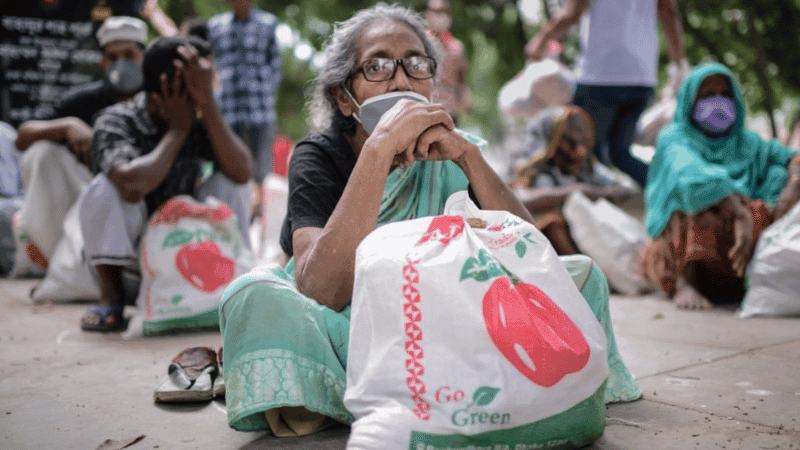

Despite significant improvement in Bangladesh's food security situation at the beginning of 2025 due to the absence of major disasters, reduced inflation, and increased remittance inflows, more than 1.5 crore people remained in 'severe food insecurity', according to a global report.
Additionally, the food situation of Rohingya refugees in two districts of Bangladesh has deteriorated due to floods and reduced humanitarian assistance.
The findings were published in a report on Friday by the Global Network Against Food Crises, based on data from several humanitarian agencies including the United Nations, the Food and Agriculture Organization (FAO), the World Food Programme (WFP), the International Fund for Agricultural Development (IFAD), and the European Union.
The 'Global Report on Food Crises' (GRFC) stated that around 1.60 crore people in Bangladesh were experiencing acute food insecurity in mid-2025, representing 17 per cent of the population analysed .
Of these, 1.56 crore people faced food insecurity at 'Crisis level (Phase 3)' and 40 lakh people were in 'Emergency level (Phase 4)'.
The number of people facing acute food insecurity decreased by approximately 76 lakh or 32 per cent in 2025 compared to 2024 . However, the report observed that maintaining this situation would be challenging due to various factors including extreme weather.
Bangladesh is among the 10 countries where lack of food security has become most acute. The other countries are Afghanistan, Congo, Myanmar, Nigeria, Pakistan, South Sudan, Sudan, Syria and Yemen .
The report indicated that the crisis will likely continue or worsen in many countries due to conflict and extreme weather conditions.
While food situations have slightly improved in some countries like Bangladesh and Syria, they have significantly deteriorated in Afghanistan, Congo, Myanmar and Zimbabwe.
Bangladesh has been identified as a country with a 'moderate level of nutrition crisis'. The five countries with the most severe nutrition crises are Gaza in Palestine, South Sudan, Sudan, Afghanistan and the Central African Republic.
Despite improvements in the food and nutrition situation, Bangladesh has worsened in the forced displacement index. According to the GRFC, Bangladesh ranks third among the 10 countries with the highest number of forcibly displaced persons . Sudan and Syria rank first and second respectively, followed by Congo, Nigeria and Myanmar.
According to the report, approximately 26.66 crore people across 47 countries and territories faced severe food crises in 2025. Among them, 14 lakh people reached 'catastrophic' famine-like levels (Phase 5) .
For the first time in history, famines occurred in two countries in the same year — Gaza in Palestine and Sudan. Additionally, there is a high risk of famine in parts of South Sudan and Yemen.
The report warned that a rapid decline in international aid to address food and nutrition crises and the ongoing war situation in the Middle East could further deepen the crisis. While the number of displaced people in war-torn regions is increasing, fertiliser production costs have also risen during the agricultural season.
UN Secretary-General António Guterres described the GRFC as a call for immediate action on issues such as food and nutrition insecurity, conflict and displacement.
In the report's foreword, he said this report is a call to generate the political will to rapidly increase investment in life-saving assistance and to work towards ending the conflict, which is causing untold suffering in the lives of countless people.
Leave A Comment
You need login first to leave a comment