
Pakistan’s Mining Mystery: The Copper, the Military and Billions in Disputed Royalties
The arithmetic is extraordinary. A provincial government is allegedly owed Rs34.5 billion in mining royalties. The amount recorded as collected? Just Rs169 million. That leaves a staggering difference of more than Rs34.33 billion.
In an ordinary business, figures like these would be enough to keep auditors awake at night. But this is Pakistan, and the enterprise at the centre of the controversy is linked to the country's powerful military establishment. Getting to the bottom of the accounts has proved so difficult that the matter has reached the courts.
Apparently, extracting copper from hundreds of feet beneath the mountains is easier than extracting a clear account of the money it generates. The controversy centres on the Muhammad Khel copper mine in North Waziristan, Khyber Pakhtunkhwa, where Nisar Baz Khan, an Awami National Party leader and member of the provincial assembly, has raised serious questions about royalty payments.
According to Khan, approximately 987,000 tonnes of minerals were extracted from the mine between 2016 and 2024, with an estimated market value of Rs690 billion. Applying a royalty rate of five per cent, he calculates that the provincial government should have received around Rs34.5 billion. Yet departmental records cited by him show collections of just Rs169 million.
Where has the rest of the money gone? More precisely, how much was legally payable, how much was actually paid, and who is responsible for explaining the difference?
On October 17, 2026, Pakistan Point and Urdu Point reported Khan's allegations. Two days later, an investigation by BBC Urdu examined the project's contracts, production figures and revenue records. According to official documents cited by the BBC, the mine produced 952,878 metric tonnes of mineral material between 2016 and 2024. The government earned Rs 189.8 million from royalties, rents and joint venture payments.
The figures are not directly comparable, and the entire alleged discrepancy cannot automatically be treated as embezzlement. Establishing the actual royalty liability requires an examination of mineral grades, realised sales prices, applicable rates and contractual provisions.
But that brings us to the obvious question: why has a comprehensive, independently audited account of such a substantial operation not been made publicly available?
To understand the controversy, one must first look at who runs the mine.
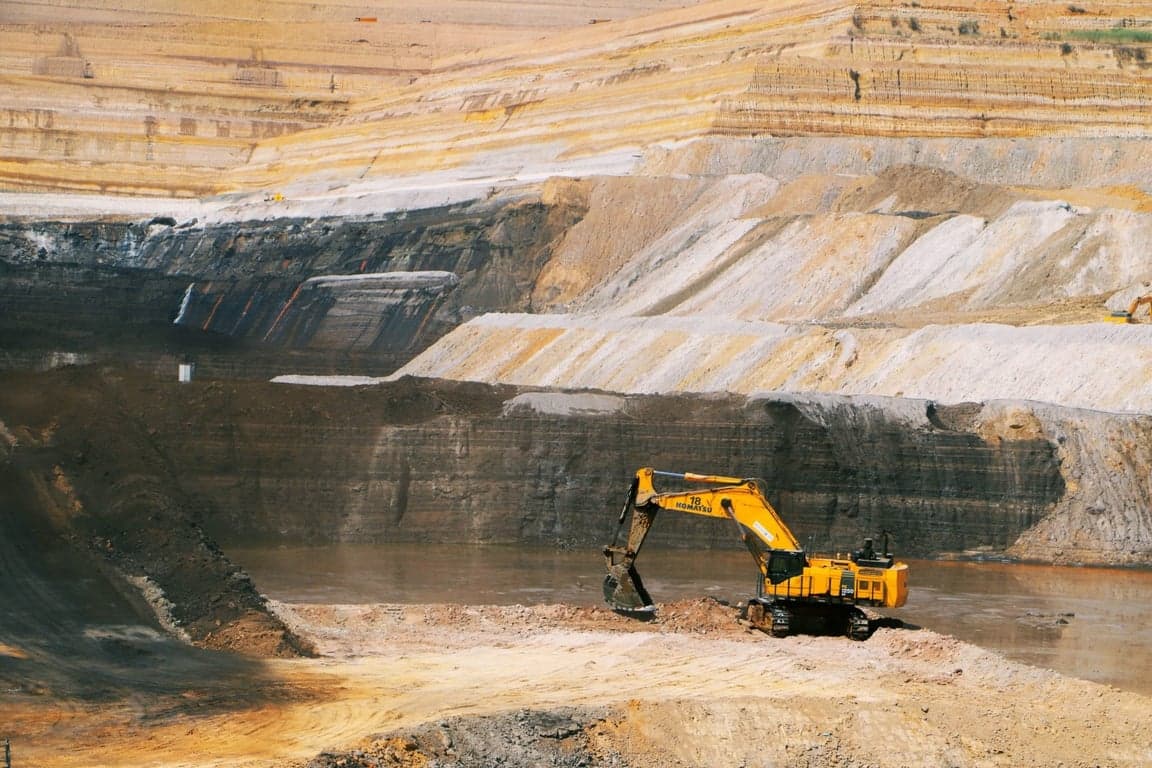
The Muhammad Khel Copper Mining Project is operated by Degan Exploration Works (DEW), a subsidiary of the Frontier Works Organisation (FWO), the engineering and construction organisation associated with Pakistan's military.
The project covers approximately 30 square kilometres. A 20-year mining lease was granted in 2016, followed by a joint-venture agreement the following year. The agreement sets out an apparently straightforward profit-sharing arrangement: 50 per cent for the military-linked DEW, 10 per cent for the mineral development department, 22 per cent for a social responsibility fund and 18 per cent for local communities.The percentages add up perfectly. Not a rupee out of place on paper.
The difficulty begins when the figures are translated into actual earnings. How much profit has the mine generated? How much has each party received? And how much of the money earmarked for local development has reached the communities it was intended to benefit?
A comprehensive, publicly accessible audited account answering these questions remains unavailable.
It was this exact lack of financial transparency that led lawyer Malik Mohammad Ajmal to approach the Peshawar High Court in July 2024 for disclosure of mining leases, contracts, annual earnings and government revenues.
According to Dawn, the court directed the defence secretary and other relevant officials to submit their responses. The petition also referred to an alleged sale of copper worth approximately US$35 million to China. The petitioner referred to a statement purportedly issued by an FWO official about the export of about 22,000 tons of copper from Muhammad Khel. How much of that revenue went towards extraction and processing? What was the actual profit? What share belonged to the government?
Those were among the questions raised before the court. No final judicial ruling establishing embezzlement has been identified in the available reports. Pakistan's Defence Minister Khawaja Asif, meanwhile, has rejected allegations that the military exercises extensive control over the province's mineral resources. According to him, the FWO received only one of the 4,917 mineral licences issued in Khyber Pakhtunkhwa. However, The Express Tribune has reported FWO involvement in four mineral blocks across North Waziristan and Balochistan, although these do not all represent the same category of mining licence.
More concrete evidence appears in documents submitted to the Pakistan Stock Exchange in 2024, which identify a 51 per cent stake held by the military-linked DEW in Balochistan's EL-207 mineral exploration block. Military-linked participation in the mining business, therefore, is not merely a political allegation. It is reflected in corporate records. But the story does not end with money. Beyond the balance sheets lies another, more complicated question: who owns the land from which these riches are being extracted?
In Balochistan's Chagai district, the massive Reko Diq copper and gold project is being developed through a partnership involving Canada's Barrick Mining Corporation, which holds 50 per cent, Pakistani state-owned enterprises with 25 per cent, and the Balochistan provincial government with the remaining 25 per cent. The mine is not directly owned by the military. Nevertheless, military and paramilitary organisations play an important role in its security arrangements.
And that is where questions of economic development begin to collide with those of land ownership, traditional livelihoods and human rights.
Across much of Balochistan, ownership cannot always be established through formal title deeds alone. Communities have lived on and used land for generations, relying on customary arrangements governing grazing grounds, water sources, seasonal migration and communal access. Yet how far are those traditional rights recognised when land is allocated for large mining projects?
In a formal communication issued in December 2025, United Nations human rights experts noted that more than 90 per cent of land in Balochistan had not undergone formal settlement. They also referred to a Balochistan High Court ruling recognising the importance of longstanding customary possession and use. For a pastoral family, land is more than a few acres marked on a government map. It is where animals graze, where water can be found and where a livelihood has been sustained across generations. Put a fence across a traditional grazing route, and a family may lose its means of survival without losing a single wall of its home.
In May 2026, the Coalition for Human Rights in Development, an international alliance of civil society organisations, warned that the Reko Diq project could adversely affect local grazing lands, traditional routes and livelihoods. The coalition also reported the involvement of the Frontier Corps and Askari Guards, a security company associated with Pakistan's military establishment, in the project's security arrangements.
The project developers and financing assessments, however, have rejected allegations that involuntary land acquisition is required. No independently verified figure has been established for the number of families forcibly displaced by the project. At the heart of the dispute lies a fundamental difference between state-recognised ownership and the customary rights of communities that have used the land for generations. But even more troubling allegations concern the treatment of those who have challenged the authorities.
In a communication dated 1 December 2025, UN human rights experts raised concern about alleged intimidation, arbitrary detention, enforced disappearances and ill-treatment in custody of activists opposing mining-related activities or campaigning for community rights.
The communication referred to several rights defenders, including Mahrang Baloch and Sibghatullah Shahji Baloch.
The Human Rights Commission of Pakistan has separately expressed serious concern over enforced disappearances, restrictions on civil liberties and the lack of accountability among state institutions in Balochistan. These allegations demand independent investigation. They do not, however, establish that every reported disappearance or abuse was directly connected to a particular mining project. Barrick Mining has denied involvement in human rights violations.
Pakistan's security concerns are not imaginary. Armed Baloch separatist groups have carried out attacks that have killed security personnel and civilians. But combating militancy and suppressing peaceful dissent are two very different things. A state cannot strengthen national security by leaving the security of its own citizens in doubt. The atmosphere of mistrust is now casting a shadow over the mining industry's commercial ambitions.
In April 2026, Barrick announced that it was slowing development at Reko Diq because of deteriorating security conditions. In November, Dawn reported that the planned start of production, originally scheduled for 2028, could be delayed until 2030. There is a curious irony here.
Pakistan can attract foreign investment, import sophisticated mining machinery and deploy armed security forces to protect its mineral wealth. What it cannot so easily secure is the confidence of the people who live above that wealth. Trust, after all, is not a commodity that can be imported. No letter of credit can purchase it, and no customs clearance can deliver it. It must be earned through fairness, transparency, respect for land rights and the assurance of personal safety.
Pakistan's mineral resources could transform its economy. Copper and gold may bring export earnings, investment and new opportunities for development. But if local communities remain uncertain about their land, families receive no answers about missing relatives, and public revenue cannot be properly accounted for, the promise of prosperity will remain incomplete.
There are geologists to measure the copper beneath the mountains, accountants to calculate the profits and soldiers to guard the mines.
But who will account for what the people living on those mountains stand to lose?
Until that question is answered, the true value of Pakistan's mineral wealth will remain impossible to calculate. Because the market can put a price on copper. Human dignity is another matter entirely.
Leave A Comment