
July-August Mass Uprising Day
PM calls for preserving national unity, building democratic Bangladesh
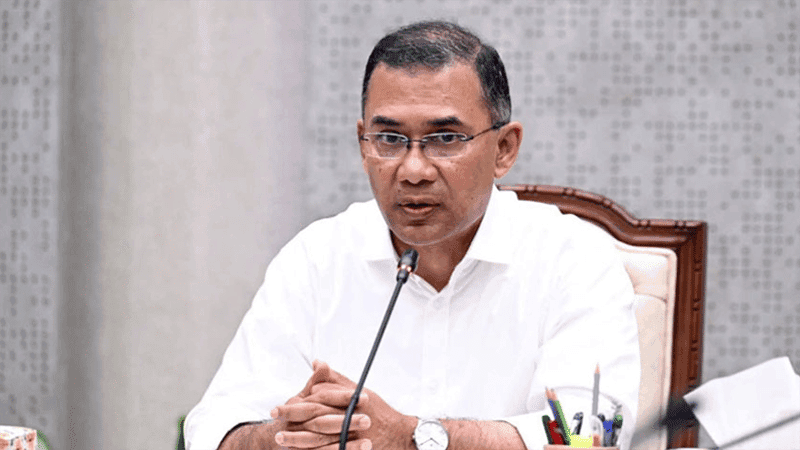

Prime Minister Tarique Rahman today called for maintaining national unity forged during the July-August Mass Uprising and pledged to build a just, democratic and humane Bangladesh by ensuring the political and economic empowerment of the people.
The Head of Government said the student-led mass uprising of August 5, 2024, forced the then government to flee the country, ending what he described as authoritarian rule and renewing the nation's hopes for democracy.
In a message marking the "July Mass Uprising Day" to be observed tomorrow (August 5), the premier said the day symbolises "joy, victory and the restoration of democratic political rights" following the end of more than one and a half decades of fascist rule.
Recalling the anti-fascist movement, Tarique Rahman said the BNP, other anti-fascist political parties and people from different walks of life had endured enforced disappearances, killings, abductions, torture, false cases and repression in their struggle to restore democracy and voting rights.
He also paid tribute to former Prime Minister Begum Khaleda Zia, saying the uncompromising leader of the nation had been imprisoned for years on what he described as false charges while leading the democratic movement.
Secret detention centres, known as "Aynaghar", had been established across the country to silence dissent, while many political leaders and activists remained missing, alleged the prime minister.
He said the country's Constitutional and statutory institutions, including the judiciary and the Election Commission, had been rendered ineffective, elections had been reduced to a mere formality, and widespread corruption and money laundering had severely weakened the economy and banking sector.
Highlighting the broad-based participation in the July-August uprising, Tarique Rahman said students, farmers, workers, rickshaw-pullers, day labourers, garment workers, hotel and restaurant employees, transport workers, journalists, intellectuals, cultural activists, professionals, women and people from all sections of the society had joined the movement.
He alleged that security forces opened fire on demonstrators, including from helicopters, resulting in thousands of deaths and injuries.
The premier paid tribute to the martyrs of the movement, including Abu Sayed of Rangpur, Wasim Akram of Chattogram and Mugdho of Dhaka, describing their sacrifices as a lasting source of inspiration for the nation's democratic struggle.
He said thousands were killed and at least 30,000 people were injured during the uprising, while many lost limbs or their eyesight permanently.
On the occasion, Tarique Rahman urged the nation to honour the sacrifices of the martyrs by establishing equality, human dignity and social justice and by building a self-reliant, democratic and humane Bangladesh.
He also called on all pro-democracy political parties and citizens to safeguard national unity despite differences of opinion, saying democracy flourishes through diversity of views, but such differences should never turn into hostility.
The prime minister vowed that autocracy, fascism, extremism and militancy would never again be allowed to take root in Bangladesh, adding that the unity forged through the 2024 mass uprising would remain steadfast.
Drawing a historical parallel, he said 1971 was the struggle to achieve independence, while 2024 was the struggle to safeguard the country's freedom and the rights of its people.
Leave A Comment