
PM’s China visit poised to boost trade, investment and tech cooperation
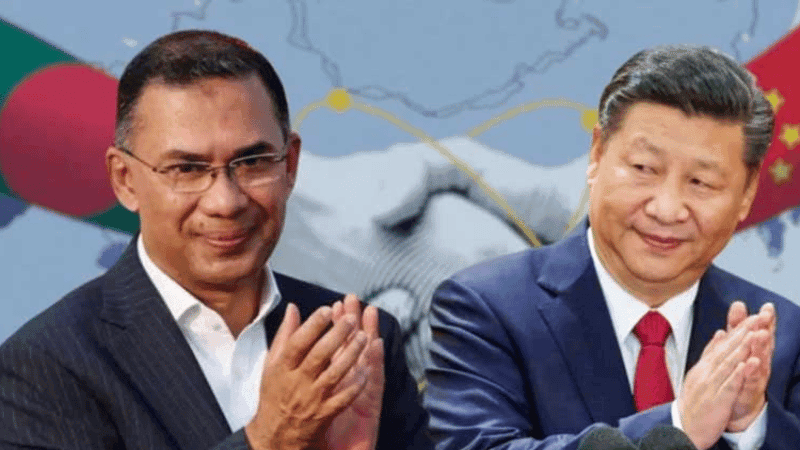

Prime Minister Tarique Rahman is set to visit China amid growing expectations of deeper economic cooperation between the two countries, with trade, investment, infrastructure, energy and technology partnerships likely to dominate the agenda.
The visit has generated optimism within both government and business circles, as stakeholders see it as an opportunity to strengthen Bangladesh-China economic ties and attract greater Chinese investment into key sectors of the economy.
China is currently one of Bangladesh’s largest development partners and its biggest source of imports. Over the years, Chinese involvement in major projects—including the Padma Bridge Rail Link, power plants and economic zone development—has played a significant role in Bangladesh’s infrastructure and industrial growth. A large share of the country’s industrial machinery, electronics, textile inputs and raw materials also comes from China.
After concluding his bilateral visit to Malaysia, the prime minister is scheduled to arrive in the Chinese port city of Dalian, where he will first attend the World Economic Forum. He is expected to address a session on climate leadership and hold meetings with world leaders, policymakers and international business representatives.
Foreign Secretary Asad Alam Siam said the prime minister will hold high-level talks with Chinese leaders focusing on trade expansion, investment promotion, development cooperation, infrastructure projects, energy security, digital economy initiatives and regional connectivity. Efforts to reduce Bangladesh’s trade deficit with China are also expected to feature prominently in the discussions.
Officials said the two countries are likely to sign between 15 and 17 memorandums of understanding (MoUs), agreements, protocols and action plans during the visit, reflecting the broad scope of bilateral cooperation.
On June 25, the prime minister will also attend the Bangladesh Investment Forum organized by the Bangladesh Investment Development Authority (BIDA), where he will showcase Bangladesh’s investment opportunities to Chinese businesses and investors.
According to the Ministry of Commerce, annual trade between Bangladesh and China currently ranges between $22 billion and $25 billion. However, the relationship remains heavily import-oriented, with Bangladesh facing a substantial trade deficit. Business leaders believe greater exports of garments, leather goods, agricultural products, processed foods and light engineering products could help narrow the gap.
Bangladesh is a key partner in China’s Belt and Road Initiative, while cooperation is also expanding under Beijing’s Global Development Initiative (GDI). Analysts say increased collaboration under these frameworks could accelerate infrastructure development, technology transfer and industrial growth in Bangladesh.
President of the Bangladesh-China Chamber of Commerce and Industry (BCCCI), Mohammad Khorshed Alam, said the visit could usher in a new phase of economic relations between the two countries. He noted that Chinese investors have long shown interest in Bangladesh’s industrial, energy, technology and agricultural sectors, but investment inflows have yet to reach their full potential.
He also emphasized the importance of attracting long-term Chinese capital into Bangladesh’s capital market and productive sectors, arguing that greater technology transfer and industrial cooperation could significantly enhance the country’s manufacturing capacity and export competitiveness.
Meanwhile, Yusef Xu, executive director for South Asia at China Civil Engineering Construction Corporation, said Chinese businesses remain keen to expand their footprint in Bangladesh. He expressed confidence that the high-level visit would strengthen diplomatic ties and create fresh opportunities for trade and investment.
Business leaders believe the future success of Bangladesh-China economic relations will largely depend on three key areas: effective implementation of investment commitments, diversification of Bangladesh’s export basket and greater technology transfer. Meaningful progress in these sectors could elevate the bilateral economic partnership to a new level in the years ahead.
Leave A Comment