

Political implications of Tarique Rahman's secondcoming
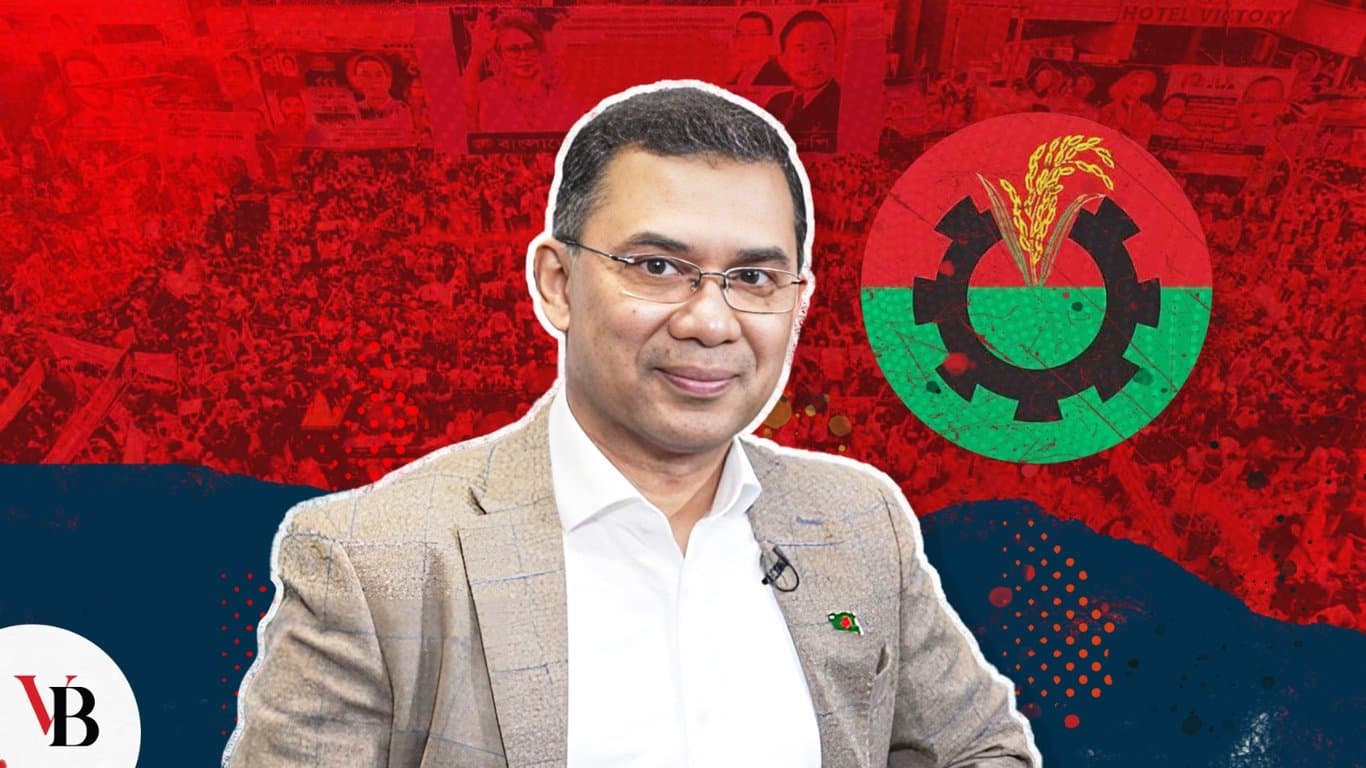

Depicting a political leader, let alone any ordinary person, taking off his shoes and socks and walking barefoot on the ground, smelling the earth, when he returns to the beloved homeland after almost a decade and a half seems not to be unusual. In that sense, the sight of Tarique Rahman walking barefoot on the ground at Hazrat Shahjalal International Airport in Dhaka on December 25, after spending 17 years in exile in London, did not impress people. But what caught more attention was that he replaced the special chairs on the reception stage in the 300-foot highway area with ordinary chairs, made no negative comments about his political opponents, made no slanderous remarks, showed no egoism, and did not show people lofty dreams. Also, the political foresight and economy of words and phrases that Tarique Rahman displayed in his speech by saying 'I have a plan' in imitation of Martin Luther King, the famous civil rights leader, priest, and symbol of non-violent movement in the United States, may help understand the dynamics of his future politics.
Tarique Rahman has also avoided the excessive emotion in the voice or tears in the eyes that should have been present in a politician returning to the country after a long period of exile. Through these small acts, he may have given a message of practicing a new type of politics. However, only time will tell how much positive change he can really bring to politics in the future. However, there is no denying that Tarique Rahman's return to his homeland at this moment is very significant for the politics of Bangladesh. Not only for the BNP, but also for the stability of the country.
Tarique Rahman said in his speech, "Today, the people of Bangladesh want to regain their right to speak. They want their democratic rights restored. They want to receive their fair rights based on merit. Dear brothers and sisters, today is the time for us all to build the country together. Just as there are people from the hills in this country, there are people from the plains in this country. People of different religions including Muslims, Buddhists, Christians, and Hindus live in this country. We want to build a Bangladesh together that a mother dreams of." The most important part of Tarique Rahman's speech: "We have to maintain peace and order in this country at any cost. We have to remain calm and composed in the face of any provocation."
How the country will end the instability and unrest that it is going through is a more important question than who will form the government through the elections. The importance of Tarique Rahman's return lies in this question. Because, the chaos the country has been going through for the past one and a half years since the interim government took the helm after the Awami League collapsed in the face of an uprising; where one mob attack after another has made the country unsafe; how the rise of extremists has increased and how various initiatives and conspiracies to sabotage the February elections are becoming visible, many believe that many evil forces may be weakened through Tarique Rahman's return.
Since BNP Chairperson Begum Khaleda Zia is absent from politics due to physical illness, who will directly lead the party's electoral leadership in the country has become a big question. In that reality, Tarique Rahman's return to the country will also be a win-win for BNP. BNP will now be able to stay in the election fight with more confidence, and if necessary, it will also be able to resist the evil forces sabotaging the elections. Taking these into consideration, BNP Secretary General Mirza Fakhrul Islam Alamgir has called Tarique Rahman's return a 'new hope in politics'.
However, how the top leaders of the rival political parties are evaluating Tarique Rahman's return is also important. For example, Jamaat-e-Islami Ameer Dr. Shafiqur Rahman said that Tarique Rahman has announced an action plan. They will not limit themselves to just announcing his plan but will also monitor how it is implemented. Shafiqur Rahman said that Jamaat will keep an eye on what role Tarique Rahman plays in unity in the current political situation, or what plans he has and how he will implement them.
In a status on his Facebook wall regarding Tarique Rahman's return to his homeland, National Citizen Party (NCP) convener Nahid Islam wrote: 'The restoration of the right of a Bangladeshi citizen and political leader to return to his own land is a positive reflection of our democratic struggle.' Nahid Islam also believes that Tarique Rahman's return will further consolidate the practice of multi-party democracy in the country. He wrote, "Our main challenge now is to build a culture of coexistence and healthy competition in the new political reality."
Islamic Movement Bangladesh Ameer and Charmonai Pir Mufti Syed Muhammad Rezaul Karim welcomed the return of BNP acting chairman Tarique Rahman and said that there had been a kind of instability in the country's politics for a long time. Especially a large political party like the BNP was deprived of direct leadership. He believes that the arrival of Tarique Rahman will fill that void to a great extent.
Qatar-based media outlet Al Jazeera has published an analysis on the significance of Tarique Rahman's return. It says that the plan that Tarique Rahman has talked about, now all eyes are on the equation of his relationship with India. The allegations of historical imbalance in the bilateral relations between Bangladesh and India have been long-standing. Neighboring India has always maintained close relations with the Awami League, while their relations with the BNP were cold. But not hostile.
Although Delhi has mentioned its negative experience with the BNP government in the past, the BNP has always said that they want a relationship based on equality, but they are not anti-India. Many believe that BNP's relations with India have lost momentum due to the alliance between BNP and Jamaat for a long time. However, this time, the separation of BNP from Jamaat may cut that coldness in relations with India. While several political parties in Bangladesh have taken a stand against India, the BNP has maintained a good balance. Although Tarique Rahman prioritizes Bangladesh first and foremost.
Al Jazeera's analysis says that Tarique Rahman has been put forward as the next Prime Minister of Bangladesh. His return will calm the political unrest in Bangladesh at least to some extent. The momentum will return in the electoral process.
Tarique Rahman's return is believed to boost the morale of the field-level leaders and workers and consolidate the unity of the party. At the same time, party decision-making will gain momentum, and the long-standing leadership crisis and duality may be greatly reduced.
Tarique Rahman's direct presence in BNP politics means that the party is once again actively returning to street and electoral politics under a central and unified leadership.
There is no doubt that Tarique Rahman's return will directly affect the next national election as BNP's demand for participatory elections will be stronger and more organized. A new dimension will be added to the question of the acceptability of the election process by the international community. Political and diplomatic pressure on the government and administration may increase.
In fact, Tarique Rahman is not just a legacy of the past; he is also a symbol of BNP's future leadership. His return may create an opportunity to bring young and middle-aged leadership to the fore.
The day after Tarique Rahman's return, a news headline in Samakal read: 'He has come, now the country will become calm'. Mozakker Hossain, who came to welcome Tarique Rahman in the 300-foot area, gave a straightforward answer to a journalist's question: 'He has come, now you will see the country becoming restful.'
Tareque Rahman has also repeatedly called for peace in the country and calmness against incitement to extremism in his speech. If the country really 'becomes tranquil' through his return, then there can be no greater success for a politician. And based on this success, Tarique Rahman may become the statesman of the future.
Amin Al Rasheed: Journalist and writer.
Leave A Comment
You need login first to leave a comment