

Qatar Energy halts LNG production, Bangladesh fears crisis
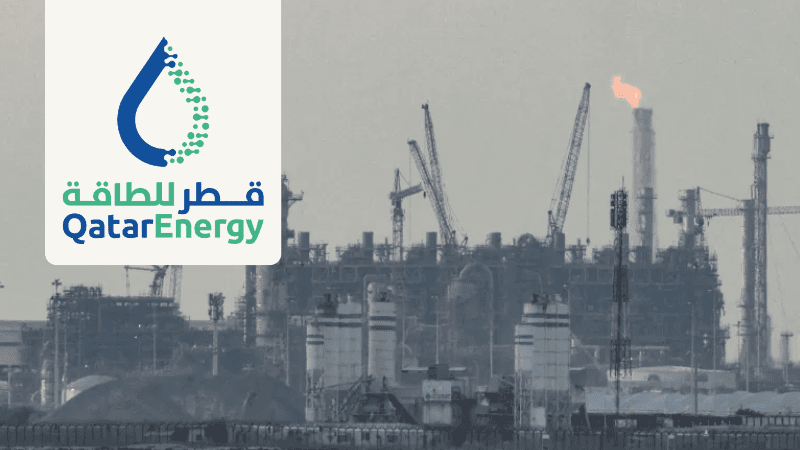

Qatar Energy has temporarily halted LNG production after Iran's drone attack. This has created instability in the global energy market and analysts fear that Asian countries including Bangladesh may face major impacts.
Qatar's Defense Ministry said that two Iranian drones hit a water tank at a power plant in Mesaieed Industrial City and a Qatar Energy fuel facility in Ras Laffan on Monday. The Ras Laffan complex is home to one of the world's largest LNG processing units. Although there were no casualties, production of LNG and related products at the affected facilities has been suspended for security reasons.
Reuters and Bloomberg reported that Qatar Energy has declared 'force majeure' in this situation. That is, the company cannot be held responsible even if the supply is disrupted as per the contract due to unforeseen events beyond its control.
Meanwhile, the Iranian Revolutionary Guard Corps has announced the closure of the Strait of Hormuz, raising risks in trade routes.
According to the Anadolu news agency, LNG and oil tanker traffic in the strait has dropped by 86 percent, and about 700 ships are stranded on both sides.
Qatar supplies about 20 percent of global LNG exports. As a result, the production shutdown has led to a supply shortage and increased prices in the international market. Rachel Ziemba, a senior fellow at the Center for a New American Security, said that the situation has become more tense, increasing pressure on the energy infrastructure in the Gulf region. According to her, the most direct impact will be on the Asian markets—especially Bangladesh, India, and Pakistan.
The situation is worrying in the context of Bangladesh. The country's daily gas demand is about 3.8 billion cubic feet, while the supply is 2.65 billion cubic feet. Of this, 950 million cubic feet of gas comes from LNG imports. The plan was to increase imports to 1.05 billion cubic feet by summer. If that is not possible, gas supply to the power sector may decrease, production may decrease, and there is a risk of increased load shedding. Gas pressure in the pipeline may also cause suffering in cooking.
According to the plan of Bangladesh Oil, Gas and Mineral Resources Corporation Petrobangla, a total of 115 LNG cargoes are planned to be imported this year. Of these, 40 cargoes are expected to come from Qatar and 16 from Oman under long-term contracts.
China's situation is somewhat different in terms of influence on the global market. Although it is the world's largest importer of natural gas, a large portion comes from Australia—about 34 percent, according to the US Energy Information Administration.
Maxim Sonin, an energy expert at Stanford University's Center for Fuels of the Future, said that Qatar Energy's decision will create short-term instability in the market, but it cannot be said that a major crisis has arisen right now. According to him, the risk of a repeat of the gas crisis that occurred in Europe after the Russia-Ukraine war in 2022 is low.
Currently, the United States is the world's largest LNG exporter. Then there are Qatar and Australia. About 82 percent of Qatar Energy's LNG is exported to Asia. So if their production is stopped, it is natural that other markets, including Europe, will be under pressure. Prices have already risen due to low supply against the same demand. After the announcement, Dutch and British wholesale gas prices have increased by about 50 percent and the base price of LNG in Asia by about 39 percent.
Analysts say that if Qatar is out of production for a long time, uncertainty will increase in the global energy market. However, in an apparent relief for Europe, the main winter period is over. The European Union is calling a meeting of the Gas Coordination Group to assess the situation, where representatives of member states will discuss gas reserves and security of supply.
Leave A Comment
You need login first to leave a comment