
Russia proposes cheaper urea supply to Bangladesh
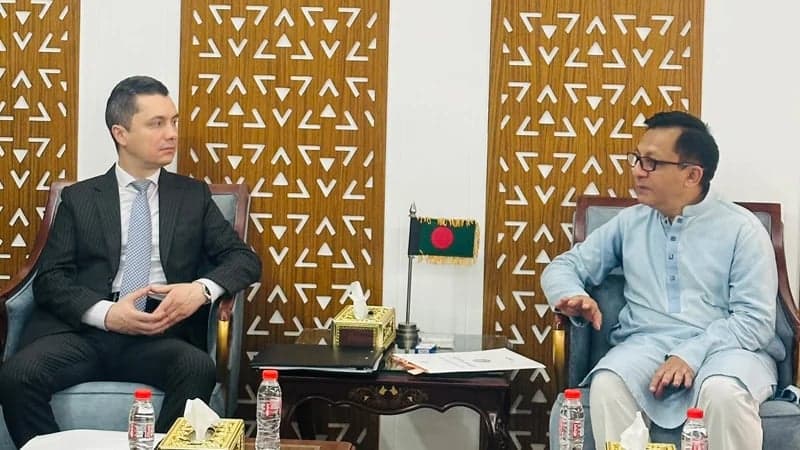

Russia has reaffirmed its commitment to strengthening Bangladesh's food security and expanding bilateral trade. The country has expressed interest in supplying urea fertiliser and other essential food items at lower prices compared to other nations.
A Russian delegation led by Chargé d'Affaires Vyacheslav Sentyurin met with Commerce, Industry, Textiles and Jute Minister Khondkar Abdul Muktadir at his office in the Secretariat on Tuesday. The delegation expressed interest in supplying approximately 280,000 tonnes of urea fertiliser to the Bangladesh Chemical Industries Corporation (BCIC) on a government-to-government basis through JSC FEC ProdinTorg.
The Russian delegation said they are offering urea at $10 per tonne less than the rates Bangladesh currently pays to other countries. If this cooperation materialises, it would ensure a reliable fertiliser supply while reducing import costs.
The meeting also discussed expanding cooperation in supplying essential commodities under the existing Memorandum of Understanding (MoU) between the Trading Corporation of Bangladesh (TCB) and JSC FEC ProdinTorg.
Russia also expressed interest in supplying sunflower oil, yellow peas, chickpeas, red lentils, green lentils and other essential food items to Bangladesh. They assured continued cooperation to maintain Bangladesh's food security and market stability.
The Commerce Minister welcomed Russia's interest in expanding trade and said bilateral trade, investment and economic cooperation would be further strengthened based on mutual interest and benefit.
Khondkar Abdul Muktadir praised Russia's cooperation in regular supply of wheat and MOP (Muriate of Potash) fertiliser to ensure Bangladesh's food security. He described Russia as a trusted friend of Bangladesh and expressed hope that trade and economic cooperation between the two countries would expand further in the future.
The meeting discussed the long-standing friendly relations and growing economic partnership between the two countries, with particular emphasis on food security, agricultural cooperation, fertiliser supply and expansion of government-to-government trade.
Both sides agreed to maintain regular communication to expand bilateral trade, increase investment and further strengthen economic partnership.
Leave A Comment