
Sheikh Hasina's extradition request is under legal examination: Dinesh Trivedi
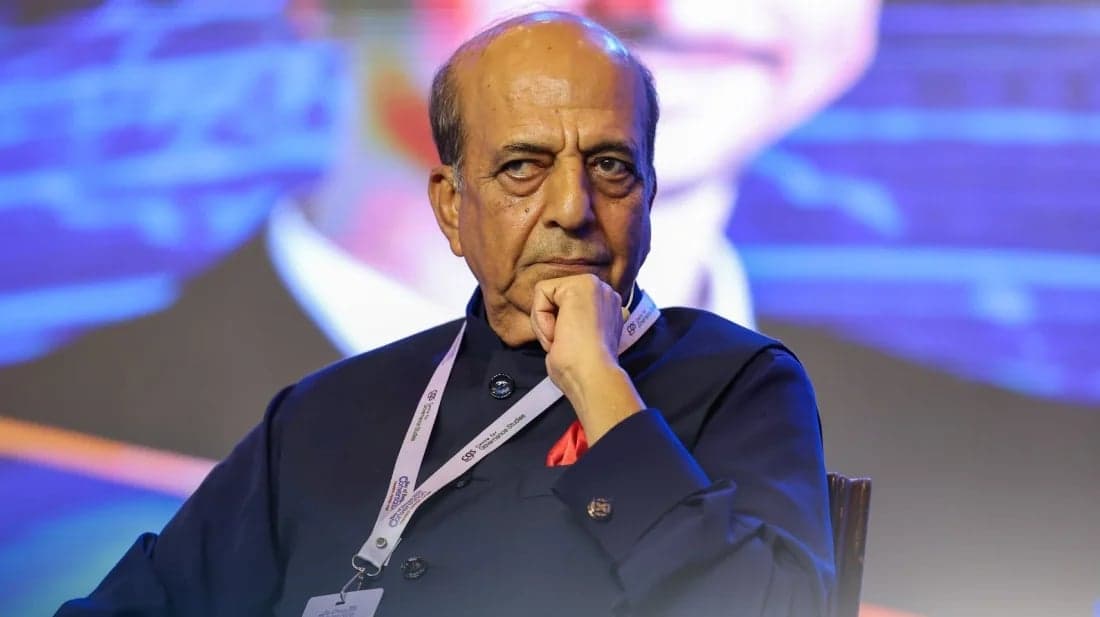

Indian High Commissioner to Bangladesh Dinesh Trivedi has said Sheikh Hasina's extradition request is under legal examination with no fixed timeline. The stand keeps the issue at the centre of strained India-Bangladesh ties and Tarique Rahman's proposed visit.
India cannot set any deadline for the return of ousted Bangladesh prime minister Sheikh Hasina as Dhaka's extradition request is being examined through a legal process, Indian High Commissioner to Bangladesh said on Saturday. He said the matter was being handled under an established legal framework and no timeframe could be given.
Trivedi also said India had little choice but to allow Hasina to land in the country after she fled Dhaka in August 2024 as her government collapsed amid a massive anti-government agitation. His remarks came as the issue of Hasina's extradition continues to weigh on India-Bangladesh ties and on discussions over Bangladesh Prime Minister Tarique Rahman's proposed visit to New Delhi.
Speaking at a discussion organised by a private think tank in Dhaka, Trivedi said, "Nobody can give you a timeframe (over Hasina's return)", while responding to questions on repeated requests from Dhaka for Hasina's extradition to Bangladesh.
Sheikh Hasina, 79, has been living in India since she fled Dhaka after the fall of her government in August 2024. India's external affairs ministry has maintained that the Bangladesh government's extradition request is being examined in line with established procedures. Reiterating that position, Trivedi said, "Again and again, the government of India has replied to this that there is a process, and the process is legal, and it is well structured."
He said Hasina had not been brought to India by the Indian Air Force or the Army. According to Trivedi, a Bangladesh Air Force aircraft carried her to India on August 5, as the protests, dubbed the July Uprising, toppled her government. At the time, a Bangladesh Army-led security detachment escorted her from her official residence as protesters moved towards the premises.
Explaining India's position at the time, Trivedi said, "At that point in time, Hasina was still the prime minister of Bangladesh. We had hardly any choice on that. It was our duty as a neighbour to accept the reality of life, because situations are such where at times you are not prepared for it." He added, "What was our choice? If you would have said that no, we are not going to accept, we don't give landing permission. Things would have been I don't know what."
Trivedi said the situation had unfolded because of "tragic circumstances" in Bangladesh and added that such circumstances should never be repeated anywhere in the world. Bangladesh Prime Minister Tarique Rahman, who gave the opening remarks at the fifth edition of the Bay of Bengal Conversation 2026 on Saturday, was not present when Trivedi made the comments during a panel discussion at the same event. These were Trivedi's first explicit comments on Hasina's extradition, after he had earlier declined to comment on matters involving "politics".
After Hasina's government was toppled, an interim administration led by Muhammad Yunus took office on August 8, 2024 and governed Bangladesh for the next 18 months. During that period, India-Bangladesh ties deteriorated sharply. Hasina was tried in absentia by a special tribunal and sentenced to death, while the interim government disbanded her Awami League party and sought her extradition through a diplomatic note.
After coming to power following the February 12 elections, which barred the Awami League from contesting, Rahman's Bangladesh Nationalist Party government endorsed the ban on Hasina's party and repeatedly renewed the demand for her extradition. The issue has since become a major strain in bilateral ties and has also affected Rahman's proposed visit to New Delhi.
Leave A Comment