
Survey warns of rising risks for journalists in upcoming Bangladesh elections

A new study has warned of rising physical and digital risks for journalists during the upcoming 13th national parliamentary elections in Bangladesh.
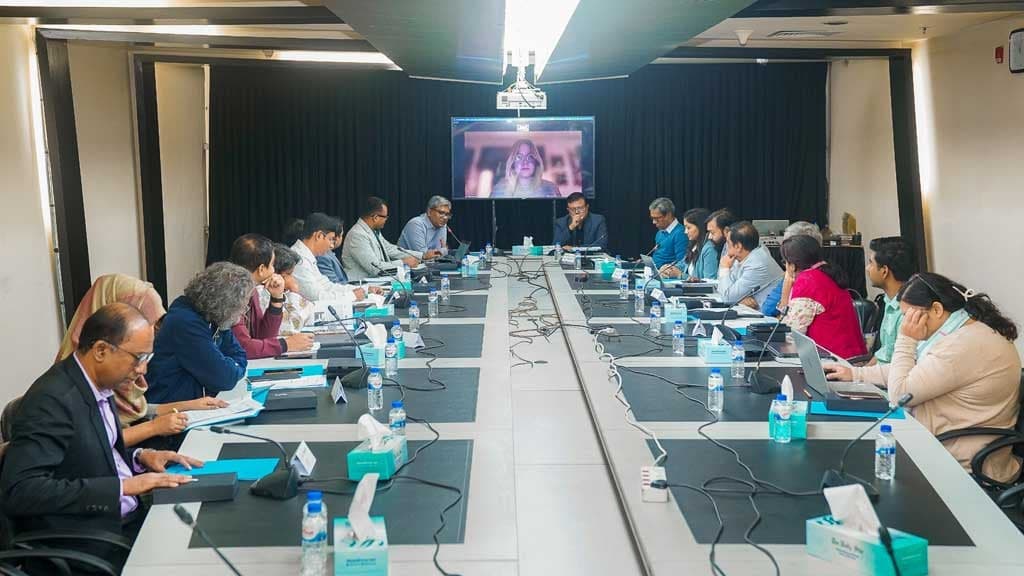
Miraj Ahmed Chowdhury, managing director of Digitally Right, presented the finding at a roundtable meeting at The Daily Stat Centre in Dhaka on Saturday attended by editors and senior media managers.
The statement said the study draws on a survey of 201 journalists from 19 districts and 10 in-depth interviews.
The study titled “High Risks, Low Preparedness: Journalist Safety in 2026 Elections” has found that reporters across the country expect violence, intimidation and harassment in what is anticipated to be a highly polarised election period.
The study said that 89 percent of respondents expect assault or beatings while covering election events, 76 percent anticipate verbal harassment and 71 percent fear intimidation.
Threats are more acute for women journalists, with 50 percent fearing sexual harassment and 40 percent fearing sexual assault.
Digitally Right said digital harassment is also expected to intensify.
The Institute noted that 75 percent of journalists anticipate disinformation campaigns aimed at them or their newsrooms, while 65 percent fear hacking attempts.
Women reported significantly higher concerns about online harassment and surveillance, and more than half of all respondents anticipate smear campaigns that could damage their credibility.
Despite the high-risk environment, most newsrooms appear unprepared, the statement said.
Respondents said there is often no designated person or system to manage safety threats, and less than one in four journalists report receiving safety gear or training from their employers. Digital safety protocols are largely absent, with 77 percent reporting no such measures in place.
The survey indicated that male journalists are nearly three times more likely than women to have a personal safety plan.
According to the statement, more than 90 percent of respondents identified political actors as the primary source of violence or harassment during election coverage.
It added that law-enforcing agencies and extreme religious groups are also cited as significant threats, particularly by women and regional correspondents.
Rising risks were linked to “political labelling, declining trust in media, extremism, mob violence, weak law enforcement responses, and targeted disinformation campaigns”.
The study outlines several areas where additional measures could strengthen journalist safety during the election period, including practical physical and digital safety training, clear newsroom protocols and systems, gender-sensitive protections, and improved access to emergency and legal support.
Among other Reaz Ahmed, editor of Dhaka Tribune; Roksana Anzuman Nicole, assignment editor of Jamuna Television; Zakir Hossain, associate editor of Samakal; M Abul Kalam Azad, editor of Times of Bangladesh; Sheikh Sabiha Alam, bureau chief of AFP; Mustafizur Rahman, chief reporter of New Age; Jahidul Kabir, chief news editor of bdnews24.com; Elias Hossain, chief news editor of RTV; and Shahnaz Sharmeen, special correspondent of Ekattor Television. Maria Petersson, project coordinator (Asia) of Fojo Media Institute, joined the roundtable discussion online.
Leave A Comment
You need login first to leave a comment