
Tangle of land cases seems impossible to unravel
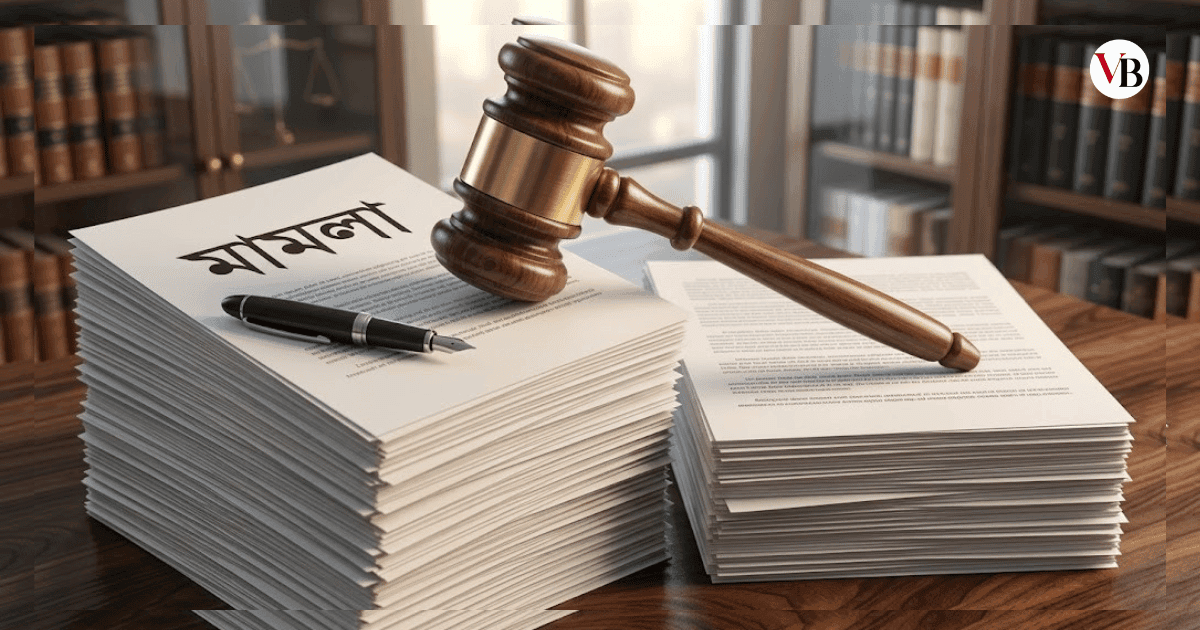

Disputes over land ownership often begin with something as small as a boundary covering a few decimals of land. But once such a dispute reaches court, it rarely remains a simple land case. A case that begins with one generation can end up being passed on to the next. Disputes over land records, plot numbers, mutation, partition, possession, inheritance or land surveys become intertwined, causing cases to drag on for years. Amid the mountain of cases piling up in court records, the wait of those seeking justice is often lost.
Recent government data show that 293,127 land-related cases are still pending in courts across the country. Land Minister Mizanur Rahman Minu disclosed the figure in Parliament, citing data for the 2025–26 financial year. At the same time, 39.43 per cent of land disputes this year have been resolved through mediation and alternative dispute resolution mechanisms. This suggests that although significant opportunities exist to settle disputes before they reach court, nearly 300,000 land cases continue to put pressure on the justice system.
To understand the scale of the problem, land cases must be viewed in the wider context of Bangladesh's overall civil-case backlog. According to Supreme Court sources, 4,078,432 cases were pending before subordinate courts as of 30 June 2026, including 1,690,443 civil cases. During the same period, the Appellate Division had 39,113 cases pending, of which 22,208 were civil cases. In the High Court Division, 522,331 cases were pending, including 106,109 civil cases.
In other words, the more than 293,000 land cases form part of a much larger backlog of civil litigation. When a land dispute begins in a district judge's court or civil court and subsequently moves to the higher courts through an appeal, revision or writ petition, the same dispute can circulate through different levels of the judiciary for years. It becomes an invisible labyrinth.
One of the defining features of land disputes is that a single case can involve multiple government and private parties. A decision by a land office, sub-registrar's office, district administration, Directorate of Land Records and Surveys or local administration can lead to a civil suit, a writ petition or a case before a Land Survey Tribunal.
An earlier analysis of Land Survey Tribunals found that although the law requires cases to be disposed of within one year, this does not happen in practice. A shortage of judges, lack of co-operation from relevant government offices and delays in implementing interim orders all contribute to prolonged litigation. Delays in submitting investigation reports, lengthy examination of witnesses and repeated adjournments have also been identified as major causes of the case backlog.
The ultimate pressure created by land disputes is also felt in the higher judiciary. As of 30 June 2026, 22,208 civil cases were pending in the Appellate Division and 106,109 in the High Court Division. Yet in 2026 alone, the Appellate Division disposed of 7,553 cases, while the High Court Division disposed of 55,756.
Despite the disposal of a large number of old cases, however, the backlog is not declining because new cases and appeals continue to be added. The Supreme Court's own annual reports have repeatedly highlighted the heavy burden of civil litigation.
Recently, special initiatives have been taken to expedite the disposal of old cases in the higher courts. Supreme Court sources say that in May 2026, the High Court disposed of 7,104 long-pending cases in a single day. Nearly 50,000 old cases have been disposed of this year, around half of them civil cases. Most of these civil cases are related to land disputes.
Another major cause of the backlog is the disproportionate pressure on judges. According to parliamentary data from 2026, 1,964 judges were working against 2,620 sanctioned posts in the lower courts, leaving 656 posts vacant.
At the same time, there are six judges in the Appellate Division and 101 in the High Court Division. The shortage is not merely a matter of numbers. When an enormous number of cases accumulate before each judge, hearing dates become increasingly distant. Starting the examination of witnesses can take time, and if one party seeks an adjournment, the next hearing may be pushed back by weeks or months. In this way, a land dispute can continue for decades.
This year, the government introduced mandatory pre-litigation mediation in 20 districts. The initiative has already produced results.
Law Minister Md Asaduzzaman told Views Bangladesh: “In districts where mandatory pre-litigation mediation has been introduced, the average rate of new case filings fell by 62.02 per cent between February and June 2026. Partition cases in civil courts fell by 66.97 per cent. This is very significant. A large proportion of land disputes can be settled through local mediation, arbitration or legal aid before they reach court, which can help reduce the flow of new cases.”
However, Supreme Court lawyer Motahar Hossain told Views Bangladesh, “Whatever measures are taken, the crisis will not be resolved until the more than 293,000 old land cases are disposed of. What is needed is rapid digital verification of land records, a system for identifying multiple cases involving the same piece of land, sufficient judges for Land Survey Tribunals, timely reports from government offices and measures to reduce unnecessary adjournments.
“In land disputes, time does not merely prolong the life of a case. It increases costs, fuels family conflicts, creates uncertainty over ownership and, in many cases, prevents the economic use of the land itself. Therefore, simply speeding up the disposal of cases in court will not be enough to untangle the land-case backlog. The system must also be strengthened so that disputes do not reach court in the first place.”
Leave A Comment