
Tarique Rahman: From exile to statesman
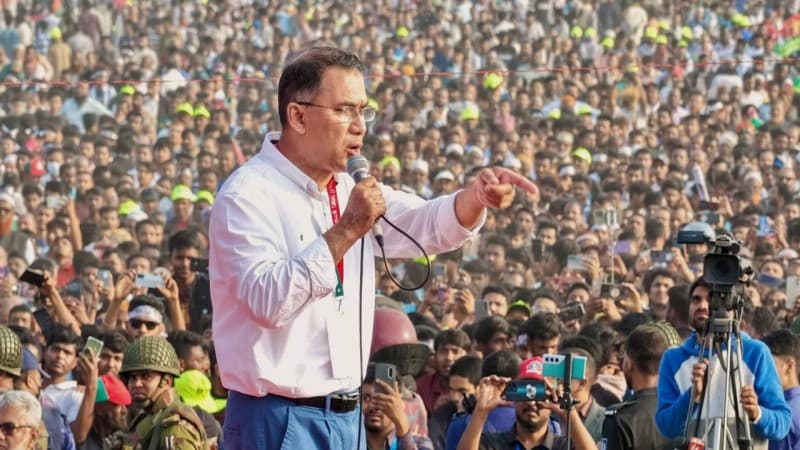

The political landscape of Bangladesh is characterized by a tumultuous history, significant shifts, and abrupt declines. Over the course of more than fifty years since gaining independence, the distribution of power within the country has undergone numerous transformations. The latest development in this ongoing narrative centers around Tarique Rahman—who, following the bereavement of his father, a period of incarceration, and an extended exile, has made his return to the political arena of the nation and successfully secured victory in the national election to assume the role of Prime Minister of Bangladesh.
Childhood and political lineage
Tarique Rahman was born on November 20, 1965, into a historic family. His father, martyred President Ziaur Rahman, was a sector commander during the Liberation War, army chief and later a president; and his mother, Khaleda Zia, was a three-time prime minister and long-time chairperson of the BNP.
As the president's child, he spent his childhood in an environment of discipline and state rituals.
His fate took a cruel turn on May 30, 1981. His father was killed in a military coup in Chattogram. At the age of just 15, the family descended from the president's son to a politically uncertain reality. Khaleda Zia became a political leader from a grieving housewife; and Tarique began to take the inside lessons of politics from her side.
After studying at BAF Shaheen School and Residential Model College in Dhaka, he enrolled in the Department of International Relations at Dhaka University. During his university life, he was attracted by the ideas of classic thinkers of Western political philosophy.
Mother's leadership, lessons of politics
Khaleda Zia remained away from politics for a long time after her husband's death. But in the context of the anti-military rule movement in the eighties, she entered active politics and became the BNP chairperson in 1984. In 1991, she took charge as the country's first female prime minister.
From that time, Tarique Rahman began to take the inside lessons of party politics. In 1988, he entered formal politics with the primary membership of BNP from Gabtoli in Bogura.
Rapid rise in politics
He became active on the streets with his mother in the anti-dictatorship movement. During the BNP's resurgence in democratic politics after the 1990 uprising, he worked at the grassroots level of the organization.
Before the 2001 elections, he set up a political office in Dhaka to research local issues and good governance; which later came to be known as the 'Hawa Bhaban'. Although he did not hold a formal position after the formation of the BNP-led coalition government, he became the party's most influential organizer. He was promoted to the position of Senior Joint Secretary General in 2002.
Supporters say he was the architect of modern organizational politics; critics say he was the 'invisible center of power'. This dual image formed the primary identity of his political life.
A long chapter of arrest, imprisonment and exile
In 2007, Tarique Rahman was arrested on corruption charges during the Emergency. He was charged in multiple cases and imprisoned. The BNP alleged that his physical condition had deteriorated due to torture while on remand. He was released on bail in September 2008 by his wife Dr. Zubaida Rahman and her daughter Zaima went to London for treatment, which turned into almost 17 years of exile.
During this time, the BNP in the country fell into one of the most difficult periods in its history. The defeat by the Awami League in the 2008 elections, the repression of the movement, and the imprisonment of Khaleda Zia; all in all, the party was practically leaderless. Tarique Rahman, who was based in London, filled that void. He managed the party from afar by holding meetings, giving instructions, and giving speeches via video conference.
When Khaleda Zia was imprisoned in 2018, he became the acting chairman. He maintained the organizational structure of the BNP from exile; which later laid the political foundation for his return.
Political change and return
The 2024 mass uprising brought down the long-ruling Awami League government and created a new political reality. When the sentence in the case was canceled and legal obstacles were removed, Tarique Rahman's path to return to the country was opened.
He returned to Dhaka on December 25, 2025, to a reception by millions of workers and supporters. However, personal tragedy struck again. Five days later, BNP Chairperson and former Prime Minister Khaleda Zia died. He officially became BNP Chairman on January 9, shouldering both grief and responsibility.
‘I Have a Plan’: New image and election strategy
Upon returning to the country, Tarique Rahman reinvented himself as a statesman. He used the language of stability and reconciliation, not revenge. Dialogue with the youth, promises of good governance and reform. These became the main themes of his campaign. At the rally on his return to the country, he said ‘I Have a Plan’, imitating Martin Luther King’s ‘I Have a Dream’. This slogan formed his election message; peace, accountability, anti-corruption and inclusive democracy.
In the election without the Awami League, strategic campaigning against the main rival Jamaat-e-Islami, attempts to attract floating voters and the revival of grassroots organizations; all in all, BNP won two-thirds of the seats.
A promise as a winner
In his first speech after winning the election, Tarique Rahman said that maintaining peace and order in the country and establishing the rule of law would be the main goal of the government. He called for building a state of justice and accountability, not politics of revenge.
In his words, 'If the rule of law cannot be established, all our efforts will be in vain. The law is equal for all citizens, whether they are anti-government or not. Everyone must be careful not to let election-time disputes turn into revenge.'
A message of stability, not revenge
In an interview given to the international media Reuters before the election, Tarique Rahman said, 'Nothing good comes from revenge. Now the people of the countryWhat is needed is peace and stability.’
He sought the cooperation of dissenting opinions and different parties, saying, ‘Just like the struggle to establish democracy, everyone must come forward to fight corruption and establish accountable governance.’
From personal tragedy to statesmanship
Patricide in adolescence, imprisonment in youth, exile in middle age—Tareque Rahman’s political journey, through these three chapters, is a reflection of Bangladeshi politics. Where decline is not permanent, exile is not over, and return is not always impossible.
From exile to state power; this journey proves that there is no such thing as the last word in Bangladeshi politics. Sometimes, after the longest night, the brightest dawn comes. He is now the elected Prime Minister of Bangladesh.
Leave A Comment
You need login first to leave a comment