

Tobacco Control Ordinance Will Be Turn into Law in the First Session of Parliament: Adv. Zainul Abedin
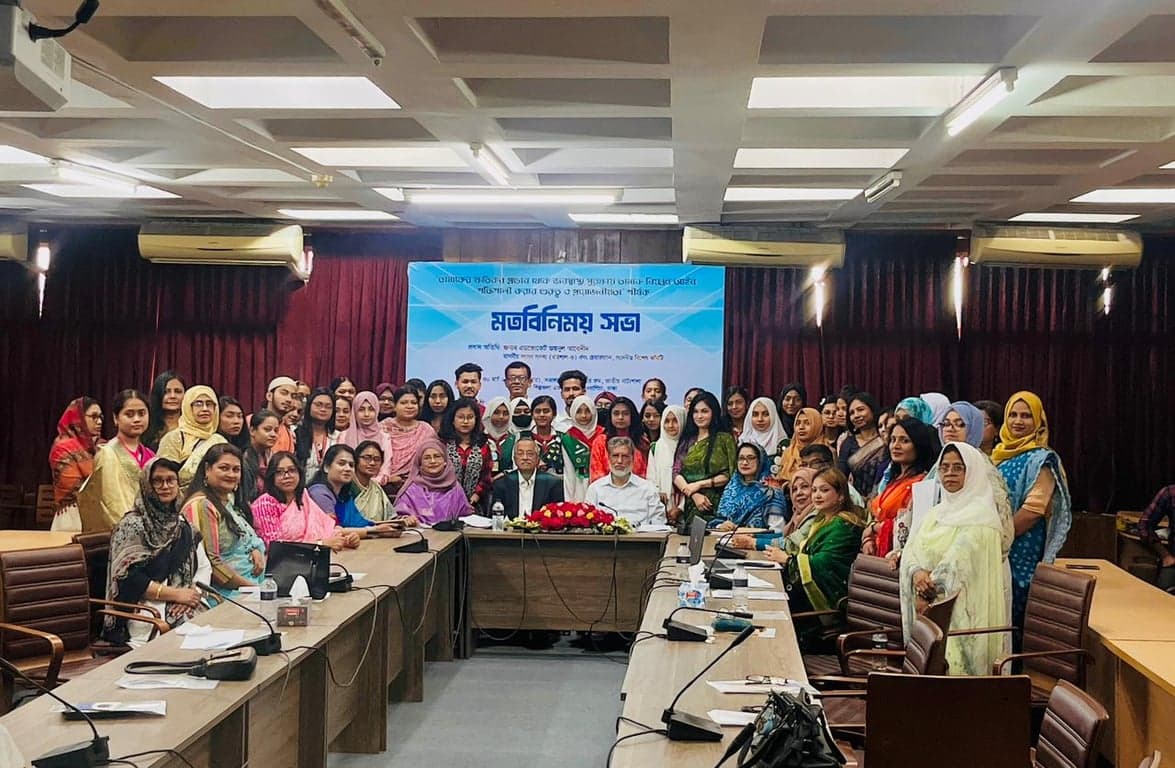

Advocate Zainul Abedin, Honorable Member of Parliament from Barishal-3 and Chairman of the Parliamentary Standing Committee, has expressed optimism that the Tobacco Control Ordinance 2025 will be turn into law during the very first session of Parliament to protect public health, particularly that of women, children, and youth.
He made this statement as the chief guest at a discussion meeting titled “The Importance and Necessity of Strengthening Tobacco Control Law to Protect Public Health from the Harmful Effects of Tobacco”, organized by Nari Maitree at the Bangladesh Shilpakala Academy on Monday (March 30).
Zainul Abedin said, “We believe that human life is far more valuable than revenue. With this consideration, the Tobacco Control Ordinance has been thoroughly reviewed by the committee, and it will be turn into law within the stipulated time in compliance with parliamentary obligations.”
It was stated at the meeting that 35.3% of people aged 15 and above in Bangladesh use tobacco (BBS, 2017), which is the highest in South Asia. According to the Tobacco Atlas 2025, nearly 200,000 people die annually from tobacco-related diseases in Bangladesh—an average of about 546 deaths per day. A recent study by the Health Economics Institute of Dhaka University shows that in the 2024–25 fiscal year, revenue from the tobacco sector was approximately BDT 41,000 crore, while the total economic loss due to tobacco-related deaths, health damages, and environmental harm amounted to around BDT 87,000 crore annually—more than double the revenue. Therefore, tobacco use and the tobacco business are not beneficial for public health, the environment, or the economy. Effective tobacco control is also essential to achieve Sustainable Development Goals (SDGs) 3.a and 3.4.
Bangladesh signed the World Health Organization’s Framework Convention on Tobacco Control (WHO FCTC) in 2003, and subsequently enacted the Smoking and Tobacco Products Usage (Control) Act in 2005. However, to modernize the law in line with evolving needs and WHO FCTC guidelines, the Smoking and Tobacco Products Usage (Control) (Amendment) Ordinance, 2025 has been issued.
Key amendments in the Ordinance include: banning smoking and the use of tobacco products in public places and public transport to protect non-smokers from secondhand smoke; prohibiting the display of tobacco products at points of sale to discourage youth; banning all forms of tobacco advertising, promotion, and sponsorship across print, electronic, social media, OTT, and digital platforms; prohibiting the sale of tobacco products within 100 meters of educational institutions, hospitals, and playgrounds; and increasing the size of pictorial health warnings on tobacco packaging from 50% to 75%.
Once enacted into law, the Ordinance is expected to significantly reduce premature deaths and healthcare costs, while also discouraging tobacco use among adolescents and youth.
Speakers at the event also noted that under the guise of “harm reduction,” tobacco companies are introducing new nicotine products such as e-cigarettes, vapes, and nicotine pouches—an innovative strategy to attract young users. They warned that these tactics are misleading youth and pushing them toward addiction. To counter this, they emphasized the urgent need to enact the Ordinance into law. The current government had pledged in its election manifesto to take necessary legal measures to control non-communicable diseases caused by tobacco use. Therefore, they demanded that this commitment be fulfilled by passing the Ordinance into law.
Tasfia Nowrin, a member of the Anti-Tobacco Youth Forum, said, “According to the latest Population Census (2022), around 28% of Bangladesh’s population is youth. It is not possible to achieve national progress by ignoring this segment, especially as tobacco companies primarily target young people. To counter these tactics, it is essential to enact the Tobacco Control Ordinance into law during the current Parliament’s first session.”
In her closing remarks, Shaheen Akhter Dolly, Executive Director of Nari Maitree, stated, “The harm caused by tobacco is not limited to individual health risks; it also has severe negative impacts on families, society, and the national economy. According to the Tobacco Atlas 2025, more than 11% of female deaths in Bangladesh are due to tobacco-related diseases. Therefore, I strongly urge that the Tobacco Control Ordinance 2025 be enacted into law to protect women’s health.”
The event was attended by members of anti-tobacco mothers’ forums, anti-tobacco teachers’ forums, anti-tobacco women journalists’ forums, anti-tobacco youth forums, and representatives from various civil society organizations. All participants strongly demanded that the Tobacco Control Ordinance be enacted into law in the first session of Parliament.
Leave A Comment
You need login first to leave a comment