
Today marks the 72nd death anniversary of Jibanananda Das
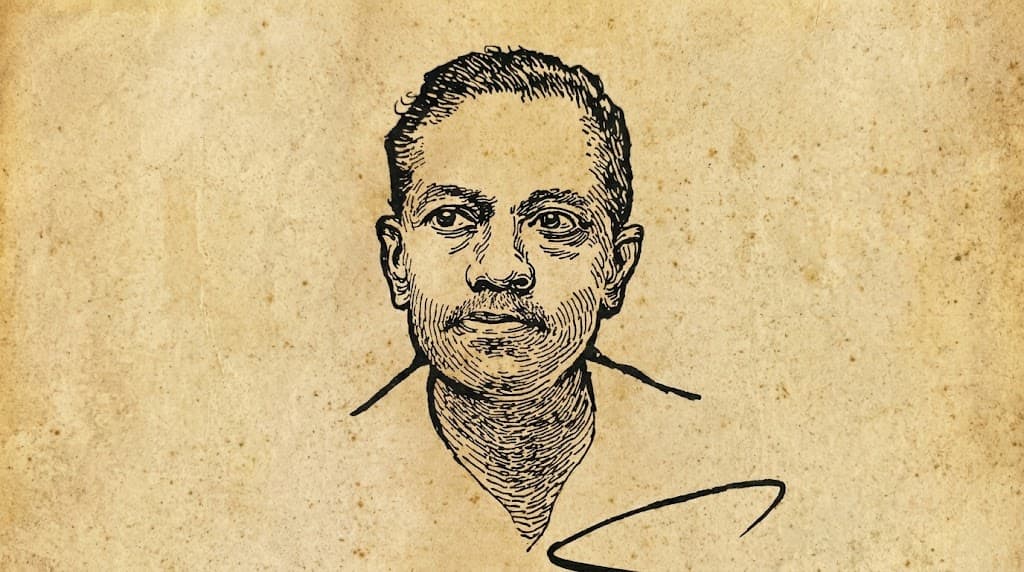

Today marks the 72nd death anniversary of Jibanananda Das, a poet who created a distinctive poetic language and a unique world of nature, melancholy and introspection in modern Bengali literature. Known as the “Poet of Rupashi Bangla,” he breathed his last at Shambhunath Pandit Hospital in Kolkata on October 22, 1954. More than seven decades after his death, he remains one of the most influential poets in Bengali literature for the depth of his poetry, vivid imagery and distinctive style.
Jibanananda Das was born in Barishal on February 17, 1899. By creating a poetic universe of his own beyond the dominant influence of Rabindranath Tagore, he established a distinct strand of modern Bengali poetry. Alongside the intimate beauty of nature, his poems explore loneliness, melancholy, the weariness of urban life and the existential struggles of human beings. Although his poetry faced various criticisms during his lifetime, his originality gained widespread recognition among readers and literary critics in later years.
The circumstances surrounding Jibanananda’s death remain a subject of discussion. On October 14, 1954, he was seriously injured in a tram accident in the Ballygunge area of Kolkata. While receiving treatment at a hospital, he later developed pneumonia and died on October 22. Literary circles have long debated whether the incident was purely accidental or whether other factors were involved.
Fellow poet Buddhadeb Bose described Jibanananda Das as the “most solitary poet.” The phrase captures both his reclusive nature and the introspective qualities of his poetry. His works bring alive the fields, rivers, birds, grass and mist of Bengal while reflecting on time, memory, death and the profound loneliness within the human experience.
Among Jibanananda’s notable poetry collections are Jhara Palak, Dhusar Pandulipi, Banalata Sen, Mahaprithibi, Saat-ti Tarar Timir and Rupashi Bangla. The last of these was published posthumously. Its deep affection for the landscapes and communities of Bengal has earned it a special place in Bengali literature. Meanwhile, the poem *Banalata Sen* creates a distinctive poetic atmosphere by weaving together history, weariness, journeys and the longing for refuge.
Beyond poetry, Jibanananda Das made significant contributions to fiction and literary criticism. His novels Malyaban and Sutirtha, along with his essay collection Kobitar Kotha, demonstrate the breadth of his creative work. Although only part of his literary output was published during his lifetime, manuscripts discovered after his death revealed numerous previously unpublished poems, novels and short stories.
One of the defining strengths of Jibanananda’s poetry is his ability to make familiar landscapes appear new. The Dhanshiri River, Bengal’s villages, verdant fields and the stillness of dusk are not merely scenic elements in his work. They merge with human memory and emotion to create a profound understanding of life. The melancholy in his poetry is not simply an expression of despair; rather, it offers a distinctive way of contemplating the transience, beauty and complexity of existence.
Jibanananda Das’s ancestral home was in Barishal, Bangladesh. His forebears once lived in the Kumarbhog area of Bikrampur, in what is now Munshiganj district, before the Das family settled in Barishal. Literary discussions frequently highlight the important role that Barishal’s natural surroundings and environment played in shaping his poetic imagination.
As time passes, reading habits change and the pace of life evolves. Yet Jibanananda Das’s exploration of nature, memory, solitude and beauty continues to inspire readers to reflect anew. His poetry is therefore more than a literary legacy of a particular era; it remains an enduring treasure of the Bengali language and the world of human emotions.
Leave A Comment