

Iran-US delegations reach Islamabad
US agrees to release seized Iranian assets ahead of historic talks
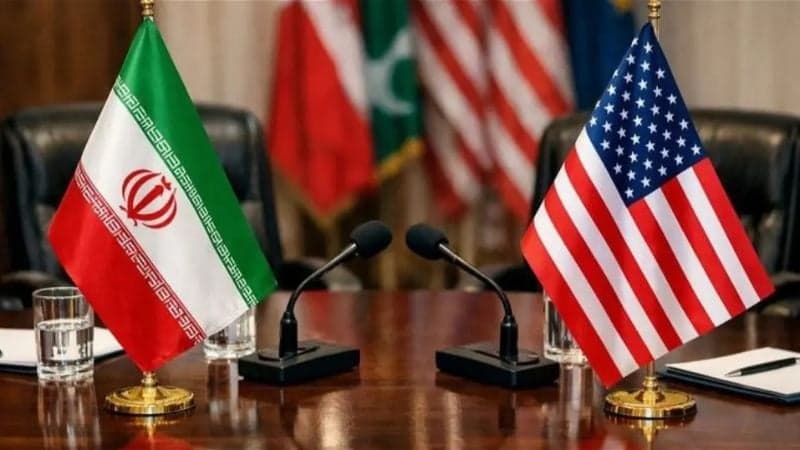

Historic peace talks between the United States and Iran are set to begin today, Saturday, April 11, in Pakistan's capital, Islamabad. Just before the talks, Washington has agreed to a key Iranian condition by releasing Iranian assets frozen in Qatar and other countries. US Vice President JD Vance and Iranian Parliament Speaker Mohammad Baqer Ghalibaf have arrived in Islamabad for the talks.
US agrees to Iranian condition
Before the talks began, the United States agreed to a key Iranian condition. An Iranian official told Reuters on Saturday, April 11, that the US has agreed to release Iranian assets frozen in Qatar and other countries. The Iranian official said Iran views this US decision as a 'test of goodwill' ahead of the talks. It also signals Washington's seriousness about the negotiations.
The Iranian official further said the release of frozen assets is directly linked to shipping in the Strait of Hormuz. That is, if Iran ensures unhindered navigation in the Strait of Hormuz, the US will release its frozen assets.
Earlier on Friday, Iranian Parliament Speaker Ghalibaf posted on X that talks with the US in Islamabad would not begin until Israel stops attacks on Lebanon and Iran's frozen assets are released.
Vance and Ghalibaf arrive in Islamabad
On Friday night, the Iranian delegation and the US delegation led by Vice President JD Vance arrived in Islamabad.
Iran's semi-official Tasnim news agency reported that the Iranian delegation, led by Parliament Speaker Mohammad Baqer Ghalibaf, includes Foreign Minister Abbas Araghchi, the secretary of the Defence Council, the central bank governor and several lawmakers.
On the other hand, the US delegation led by Vice President JD Vance includes Middle East special envoy Steve Witkoff and presidential adviser and son-in-law Jared Kushner.
Both the Iranian and US delegations were welcomed at the airport by Pakistan's Deputy Prime Minister and Foreign Minister Ishaq Dar, military chief Field Marshal Asim Munir, National Assembly Speaker Sardar Ayaz Sadiq and Interior Minister Mohsin Naqvi.
The plane carrying the Iranian delegation to Islamabad is named 'Minab 168'. Iranian authorities claim the name signifies the 168 Iranian citizens, including children, killed in the February 28 attacks. After landing in Islamabad, Ghalibaf shared a photo on X with the caption, "They were my companions on this flight."
Pre-talks begin in Islamabad
US Vice President JD Vance, who is in Islamabad to participate in historic peace talks with Iran, has held a bilateral meeting with Pakistan Prime Minister Shehbaz Sharif, the White House has confirmed. Vance was accompanied by US Special Envoy Steve Witkoff and President Trump's son-in-law Jared Kushner. From the Pakistani side, Foreign Minister Ishaq Dar and Interior Minister Mohsin Naqvi were present.
During the meeting, Shehbaz Sharif expressed hope that the Iran-US talks would be a major step towards establishing lasting peace in the Middle East and reiterated Pakistan's readiness to provide all kinds of cooperation to both parties.
Earlier in the morning, the Iranian delegation met with Pakistan's Prime Minister Shehbaz Sharif in Islamabad on Saturday, where Iran was expected to raise alleged ceasefire breaches by the US side and discuss its 10-point proposal, which it says forms the framework for permanently ending the war that began on February 28.
The meeting began at 1:30 pm local time, according to IRIB. Earlier, the Iranian negotiating team also met with Pakistan's army chief General Asim Munir.
First round of talks this morning
White House Press Secretary Caroline Levitt confirmed that the first round of talks between US and Iranian delegations will take place on Saturday morning in Islamabad's capital.
Speaking to journalists before departing the United States, Vice President Vance said the US is fully prepared for talks, and if Iran is sincere, they will have no choice but to extend a hand of friendship. However, he clearly warned that if Iran resorts to any tactics or deception, the US delegation will not accept it, and no positive response will come from the US.
White House Press Secretary Caroline Levitt said the first round of talks will begin on Saturday morning. Before the journey, Vance told journalists that the US is ready to extend a hand of friendship if Iran is sincere. However, if Iran plays tricks, the US will not show a positive response.
Key issues to dominate Iran-US talks: Ceasefire
Several complex issues are expected to be discussed in the upcoming talks between Iran and the US to restore ceasefire and regional stability, according to a Reuters report.
Iran wants a simultaneous ceasefire in Lebanon, where nearly 2,000 people have been killed in Israeli strikes against Iran-backed Hezbollah. Israel has already objected to this.
Iran seeks permission for uranium enrichment, which Washington and President Trump have completely rejected. Experts believe Iran may show flexibility on this issue strategically.
Both Israel and the US want to dramatically reduce Iran's missile capability, but Tehran has said this is non-negotiable.
Iran has demanded the lifting of sanctions that have severely damaged its economy for years and the release of its seized assets, which the US is likely to accept.
Iran has demanded the withdrawal of all US troops from the Middle East and an end to war on all fronts, while Trump has committed to maintaining a US military presence in the region until a peace deal is reached. Iran has reportedly indicated it may back down from this condition.
Iran wants recognition of its authority over the Strait of Hormuz, where it seeks to change the regional power balance by collecting transit fees. Iran has also said it will use the revenue to rebuild infrastructure damaged in the six-week war.
Additionally, Iran may demand compensation for all damages caused during the six-week war.
Notably, the conflict lasted about 40 days after the US and Israel launched joint strikes on Iran on February 28, killing Iran's supreme leader and over 3,000 people. In retaliation, Iran closed the Strait of Hormuz. Both sides agreed to a two-week ceasefire on April 8 through Pakistan's mediation.
Leave A Comment
You need login first to leave a comment