
175 Bangladeshi peacekeepers killed in UN missions: Prime Minister
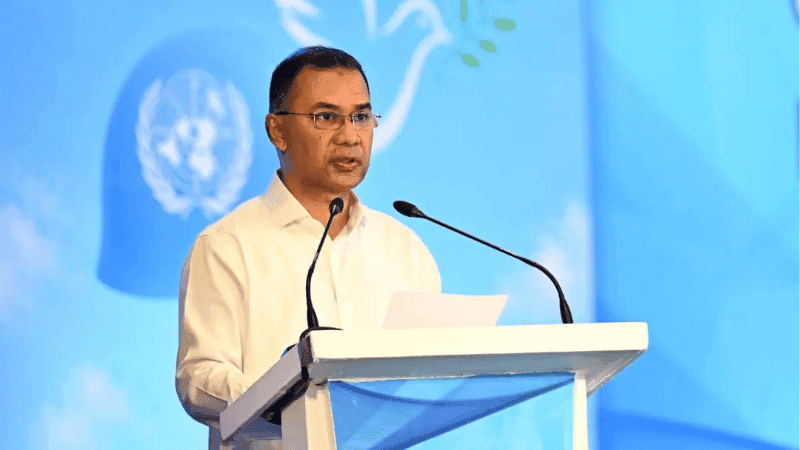

Prime Minister Tarique Rahman has said that 175 Bangladeshi peacekeepers have been killed while serving in United Nations peacekeeping missions since 1988, while many others were injured in the line of duty.
He made the remarks while speaking as chief guest at a programme marking the International Day of United Nations Peacekeepers held at Sena Kunja in Dhaka Cantonment on Wednesday (June 10).
Paying tribute to fallen and injured peacekeepers, the prime minister said Bangladesh’s peacekeepers have made significant sacrifices in advancing global peace and security under the UN flag.
During the event, he handed over special honours to the families of six armed forces personnel who were killed while serving in Sudan in 2025. Injured members of the armed forces deployed in various missions were also recognised.
The prime minister also interacted virtually with Bangladeshi peacekeepers currently deployed in different UN missions around the world.
He said the sacrifices of peacekeepers reflect Bangladesh’s unwavering commitment to global peace and demonstrate the country’s strong reputation as a trusted contributor to UN peacekeeping operations.
According to him, more than 200,000 members of Bangladesh’s armed forces and police have served in around 63 peacekeeping missions across 43 countries so far.
Currently, about 5,860 Bangladeshi peacekeepers are deployed in 10 UN missions worldwide, with preparations underway for participation in a new mission in Haiti, he added.
He also highlighted the role of women peacekeepers, noting that around 11 per cent of Bangladesh’s deployed personnel are female, contributing significantly to peacebuilding efforts in conflict zones.
The Prime Minister said Bangladesh’s armed forces have built a global reputation over nearly four decades for professionalism, reliability and commitment in UN peacekeeping operations.
Referring to the country’s liberation war, he recalled the role of the military in the independence struggle and emphasized the importance of unity, discipline and professionalism within the armed forces.
He also stressed that maintaining chain of command, discipline and institutional integrity is essential to preserving dignity and operational effectiveness.
In his address, he said modern peacekeeping faces new challenges including cyber warfare, artificial intelligence misuse, misinformation campaigns and climate-related security threats.
He called for making future peacekeeping operations more modern, technology-driven and forward-looking.
The prime minister concluded by urging members of the armed forces to uphold professionalism and dedication both at home and abroad, reaffirming the state’s gratitude for their service and sacrifice.
Leave A Comment