
641 cases of rape recorded in first seven months of 2026

A total of 641 incidents of rape against women and children were documented in Bangladesh during the first seven months of this year, including 400 cases involving women and 241 involving children.
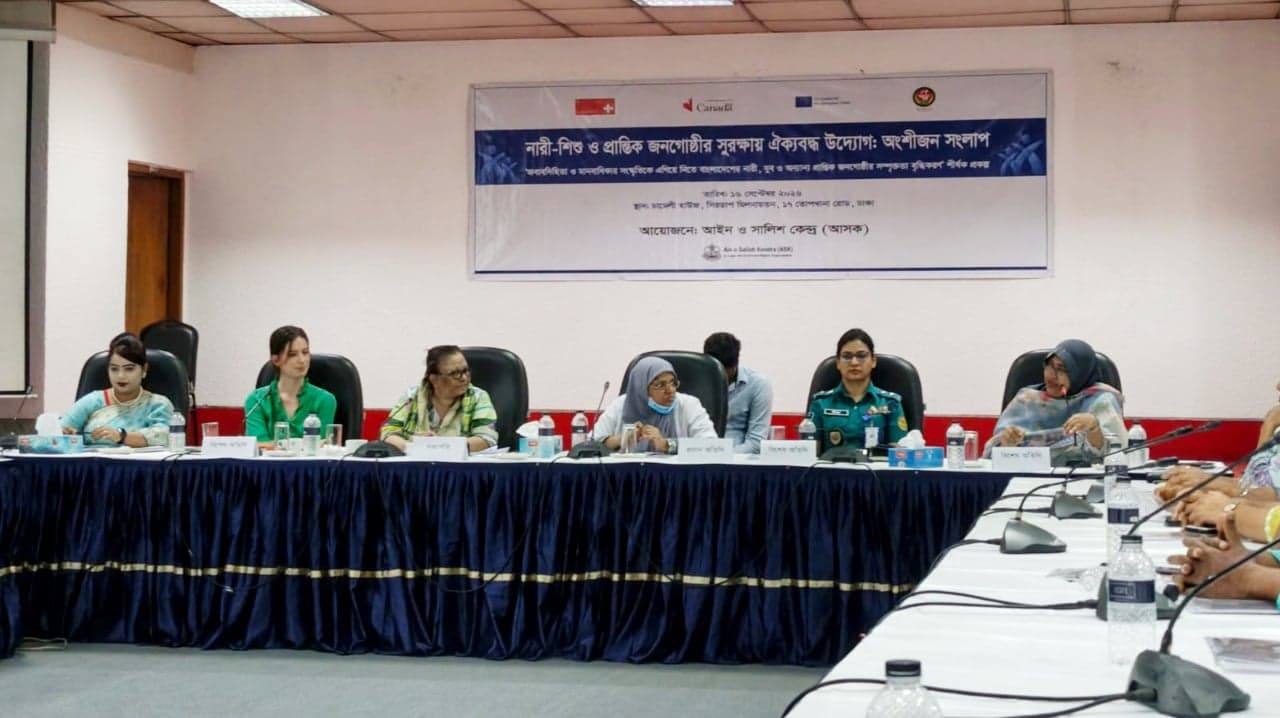
The figures were presented by Ain o Salish Kendra (ASK) at a dialogue held on Wednesday (September 16) at the CIRDAP auditorium in Dhaka.
ASK organised the dialogue with stakeholders to discuss strengthening protection for women, children and marginalised communities, access to justice, and service delivery.
Tahmina Rahman, executive director of ASK, presented data on violence against women and children between January and July.
According to ASK, 37 women were killed after being raped during the seven-month period, while 152 incidents of attempted rape were recorded. During the same period, 606 incidents of violence against children were documented, including 241 cases of child rape and 213 cases of child murder.
In addition, 191 incidents of sexual harassment and stalking of women and adolescent girls were recorded.
The dialogue also highlighted a concerning situation regarding human trafficking. A total of 1,126 new trafficking-related cases were filed in 2025. By May this year, the number of cases pending trial or under investigation had reached 5,284.
Participants said various legal, medical, psychosocial and rehabilitation services are available through government and non-government initiatives to protect women and children.
However, a lack of coordination among these services often forces victims to move from one institution to another, increasing both the time and cost required to obtain necessary support.
People in rural and remote areas, in particular, have comparatively limited awareness of these services.
Citing data from the National Legal Aid Services Organization, the dialogue was told that 1,846,799 people had received legal aid and awareness services between 2009 and August 2026.
Of them, 31,222 received assistance through the Supreme Court Legal Aid Office, while 1,333,777 were served through legal aid offices in the country’s 64 districts.
Speakers said the process of applying for legal aid is often complicated and time-consuming.
Multiple approval stages, irregular meetings of relevant committees and difficulties in appealing rejected applications can delay access to services for many victims. Although online applications and helplines are available, their use remains limited in rural areas due to inadequate internet access and a lack of awareness.
Meanwhile, Bangladesh has 95 One-Stop Crisis Centres (OCCs) and cells for women affected by gender-based violence.
However, the dialogue noted that it has not been possible to ensure integrated services—including medical treatment, forensic examinations, legal and psychosocial support, and rehabilitation—at all centres.
In some locations, there are also shortages of 24-hour services, separate counselling rooms and dedicated diagnostic facilities.
Rezmin Sultana, an additional district and sessions judge at the Bangladesh Legal Aid Services Organization, said genuine protection means ensuring that the rights of women, children and marginalised communities are not violated.
However, when rights are violated, no single institution can ensure timely remedies on its own. Stronger coordination among all relevant institutions is therefore necessary.
The dialogue was chaired by ASK Executive Director Tahmina Rahman and attended by representatives of legal aid services, police, women and children’s services, and non-government organisations.
Participants stressed the need to improve coordination among service providers, make legal aid more accessible, and strengthen long-term rehabilitation measures to ensure better protection for women and children.
Leave A Comment