
International study led by UK
Antibiotic levels exceed safe limits in poultry from Bangladesh, 2 other countries
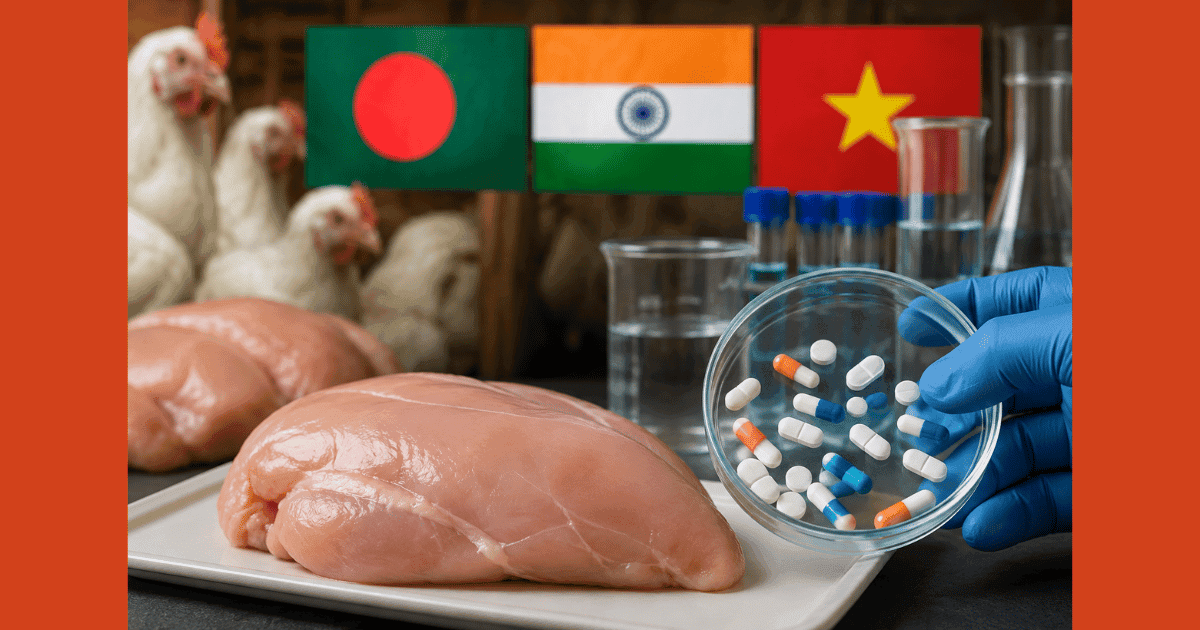

Some samples of poultry meat sold in markets in Bangladesh, India and Vietnam have been found to contain higher levels of antimicrobial drug residues than internationally established safety limits, according to an international study led by the UK . The researchers warned that such residues could pose long-term public health risks and further exacerbate the problem of antimicrobial resistance (AMR) .
The study, led by the Royal Veterinary College in the UK, involved researchers from Bangladesh, India and Vietnam . The findings were reported by the UK-based media outlet Poultry News . The researchers said that the indiscriminate use of antimicrobial drugs in the livestock sector and the slaughter of animals before the end of the recommended withdrawal period can leave drug residues in meat .
For the study, a total of 558 chicken breast samples were collected from the three countries in 2021 and 2022 . Some of the samples were taken from retail outlets, while the rest were collected from poultry farms ready for market. The samples were later tested at Nanyang Technological University in Singapore for the presence of 69 types of veterinary antimicrobials, following European Union standards .
The test results showed that 3.7 to 8.6 percent of the samples collected from retail outlets had antimicrobial levels exceeding international safety limits . In comparison, the rate in European Union countries during the same period was only 0.05 to 0.09 percent, indicating a significant difference .
The researchers believe that in some cases, antimicrobial drugs may have been administered to the animals just before slaughter . As a result, the active ingredients of the drugs do not have enough time to be fully eliminated from the body, leaving residues in the meat. The researchers warned that such irregularities not only compromise food safety but also contribute to the spread of antimicrobial-resistant bacteria.
Professor Ludovic Pelligand of the Royal Veterinary College, the lead researcher of the study, said this is one of the first studies to assess antimicrobial residues in different Asian countries using a standardised scientific methodology . He expressed hope that the findings would help strengthen food safety, raise awareness and lead to more effective policies on antimicrobial use in the livestock sector . The research was funded by the UK Research and Innovation's (UKRI) Global Challenges Research Fund through the 'One Health Poultry Hub' programme .
Leave A Comment