
Awami League will never be allowed to return to politics in Bangladesh: Home Minister
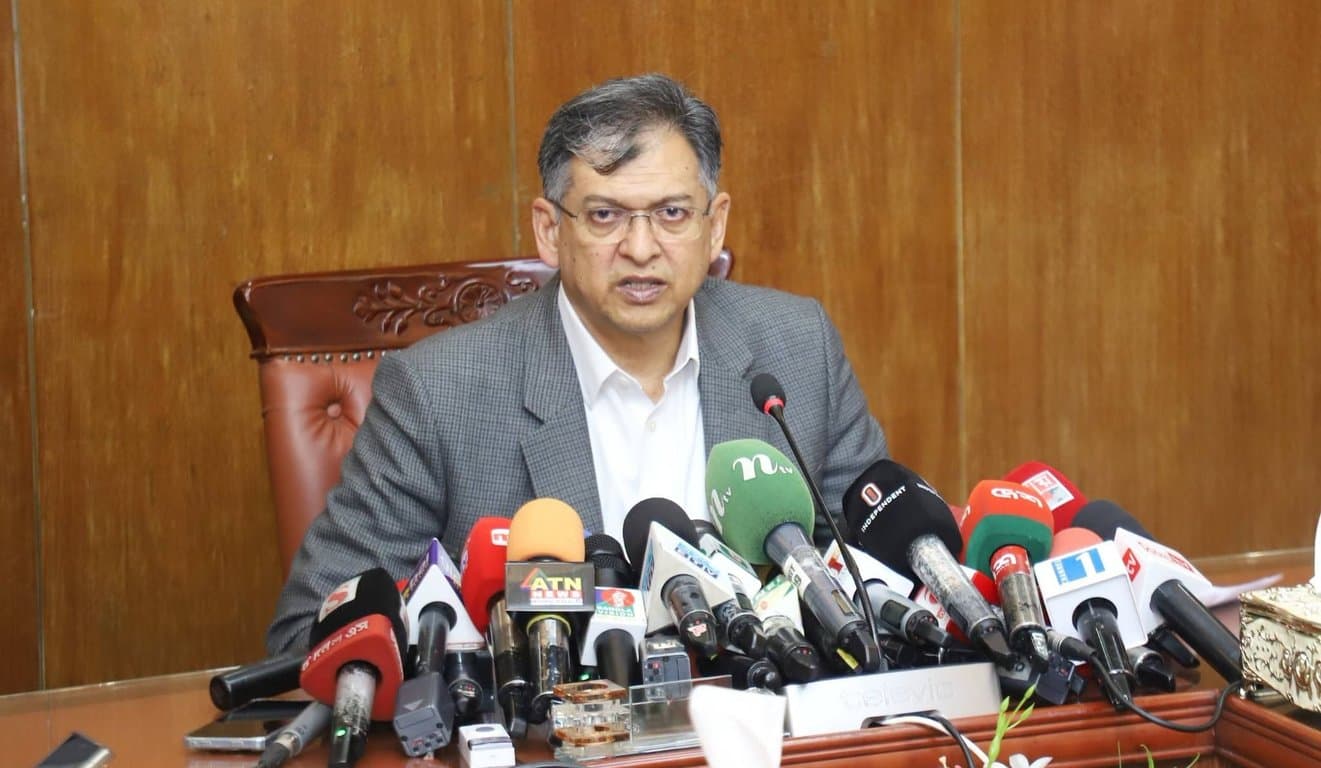

Home Minister Salahuddin Ahmed has said the activities of the banned Awami League have turned the party into a terrorist organisation, adding that it will never be allowed to return to politics in Bangladesh.
He said the party had lost its recognition as a political organisation following its fall from power and flight from the country after the mass uprising of 2024, during which it was accused of carrying out a massacre. The people of Bangladesh, he added, would not recognise the party either.
The minister made the remarks at a press briefing on contemporary issues at the conference room of the Home Ministry at the Bangladesh Secretariat on Wednesday. The ministry later issued a press release detailing his comments.
Referring to the historical example of Nazi Germany, Salahuddin said no genocidal fascist or mafia force had ever managed to return to politics anywhere in the world after committing such crimes.
“The banned Awami League will never be able to return to the country or participate in democratic politics again,” he said.
On the possibility of former prime minister Sheikh Hasina returning to Bangladesh, the home minister said fugitives and convicted criminals could return only in accordance with the extradition treaty. The government had already sent a letter to the relevant country through diplomatic channels via the Ministry of Foreign Affairs. The country concerned had informed Bangladesh that it would examine the matter and take action in accordance with its laws, he said.
“People keep saying, ‘I will return, I will return’. How long will this go on? First November, then December, and now 16 December is being mentioned,” Salahuddin said. He added that the government was neither concerned nor under pressure over such statements and that law enforcement agencies remained alert.
The minister alleged that fugitive leaders of the Awami League were operating from locations across the western and eastern borders, directing activists inside Bangladesh to organise torch processions, lockdowns, shutdowns and hartals. He said the leaders were misleading their supporters and pushing them into danger.
“The people of this country will never accept such activities,” he said.
Salahuddin warned that law enforcement agencies would take strict legal action against anyone attempting extremist activities, arson attacks or damage to public life and property. He said the authorities had already thwarted previous attempts through patience and strategic operations, without causing loss of life or property.
He added that police, the Border Guard Bangladesh (BGB) and other forces were being deployed in areas where intelligence reports indicated a risk of unrest.
Preparations had also been completed to ensure the peaceful and orderly celebration of Victory Day on 16 December, he said. The arrangements were finalised through an inter-ministerial meeting led by the Home Ministry.
Asked whether the Awami League would be formally banned as a political party, Salahuddin said the matter was part of an ongoing judicial process. Under the International Crimes (Tribunals) (Amendment) Act, 2026, and Article 47 of the Constitution, both individuals and organisations could be brought to trial for crimes against humanity.
The interim government had already banned the activities of the Awami League and its affiliated organisations through a gazette notification, while the Election Commission had suspended the party's registration, he said.
Responding to a question about sabotage in Gopalganj and the alleged involvement of some police officials, the minister said several officers had already been arrested on the basis of specific information about political bias and conspiracy while serving in government positions. They had been charged with sedition and faced departmental proceedings, he added.
He also said an additional superintendent of police, who was from and serving in Muksedpur upazila of Gopalganj, had recently been placed on attachment.
On labour unrest in the garment sector, Salahuddin said the minimum wage had been determined and signed through a democratic process involving representatives of employers and workers and the wage board. Both genuine workers and factory owners were satisfied with the outcome, he claimed.
He alleged that those spreading rumours and attempting to create disorder in industrial areas were not genuine workers, but members of a group seeking to use the unrest for political purposes. Law enforcement agencies were handling the situation patiently and investigating those behind the alleged attempts to incite unrest.
Regarding discussions with political parties opposed to fascism, the minister said Prime Minister Tarique Rahman had already met several leaders of the National Citizen Party (NCP). The government was also planning to hold discussions with other political parties as part of broader consultations.
Leave A Comment