

Bangladesh economy under pressure despite avoiding crisis: CPD
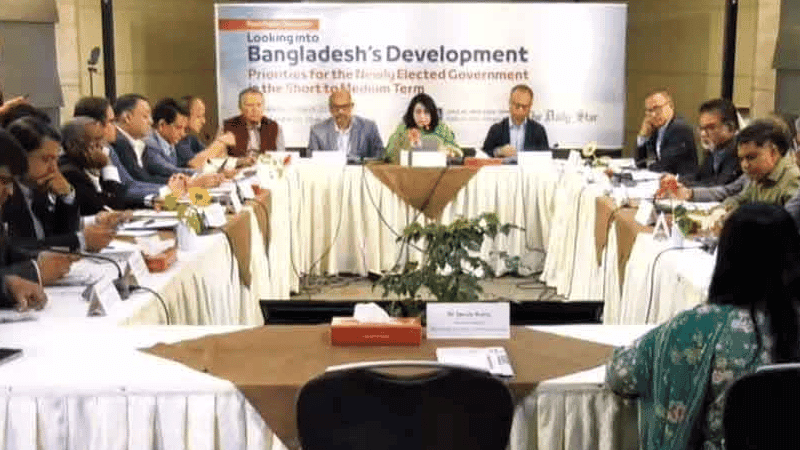

The Bangladesh economy is not on the verge of collapse but remains under significant pressure, according to the Centre for Policy Dialogue (CPD).
The warning came during a seminar in Dhaka on Wednesday (March 4) titled “Focus on Bangladesh’s Development: Short- to Medium-Term Priorities of the Newly Elected Government,” jointly organised by CPD and The Daily Star.
CPD highlighted that real GDP growth slowed to 3.49 per cent in FY2025, down from 4.2 per cent the previous year. Industrial output fell short of expectations, household consumption declined in the services sector, and private investment showed limited enthusiasm.
However, first-quarter FY2026 growth rebounded to 4.50 per cent from 2.58 per cent in the same period last year, signaling a partial recovery, though sustainability remains uncertain.
Inflation eased to 8.66 per cent in January 2026, helped by lower food prices, but remains near the upper threshold. With wages rising 8.12 per cent, the gap between income and expenditure persists, continuing pressure on both consumption and savings.
Private sector credit growth fell to 6.10 per cent in December 2025, a multi-year low, while government net borrowing rose to 32.19 per cent, raising concerns that increased borrowing from banks could reduce liquidity for private investment. Tax-to-GDP ratio slipped to 6.78 per cent, and total debt-to-GDP climbed to 38.61 per cent.
Though debt risks remain manageable, rising interest burdens could strain future budgets. Revenue growth of 17.74 per cent in Q1 FY2026 is seen as a positive sign.
Following the adoption of international debt classification standards, non-performing loans peaked at 35.73 per cent in September 2025, falling to 30.60 per cent by December after rescheduling.
CPD noted that structural reforms are necessary for lasting resolution.
Exports shrank 1.93 per cent between July 2025 and January 2026, but remittances surged to $19.43 billion, up 21.76 per cent from the previous year, strengthening foreign reserves to cover nearly five and a half months of import payments.
With Bangladesh set to graduate from LDC status, many trade privileges will be lost. Around 70 per cent of exports currently enjoy such benefits, increasing future competition. CPD emphasised the need for export diversification, technological investment, and skill development.
The think tank stressed that restoring confidence is the government’s biggest challenge. Policy continuity, transparency, and coordinated monetary and fiscal measures are essential for sustainable recovery.
“While the economy is not facing a collapse, it is operating under intense pressure. Timely structural reforms will determine the trajectory of Bangladesh’s economy in the coming years,” CPD concluded.
Leave A Comment
You need login first to leave a comment