
Bangladesh has 2.62 million unemployed people, including 885,000 university graduates
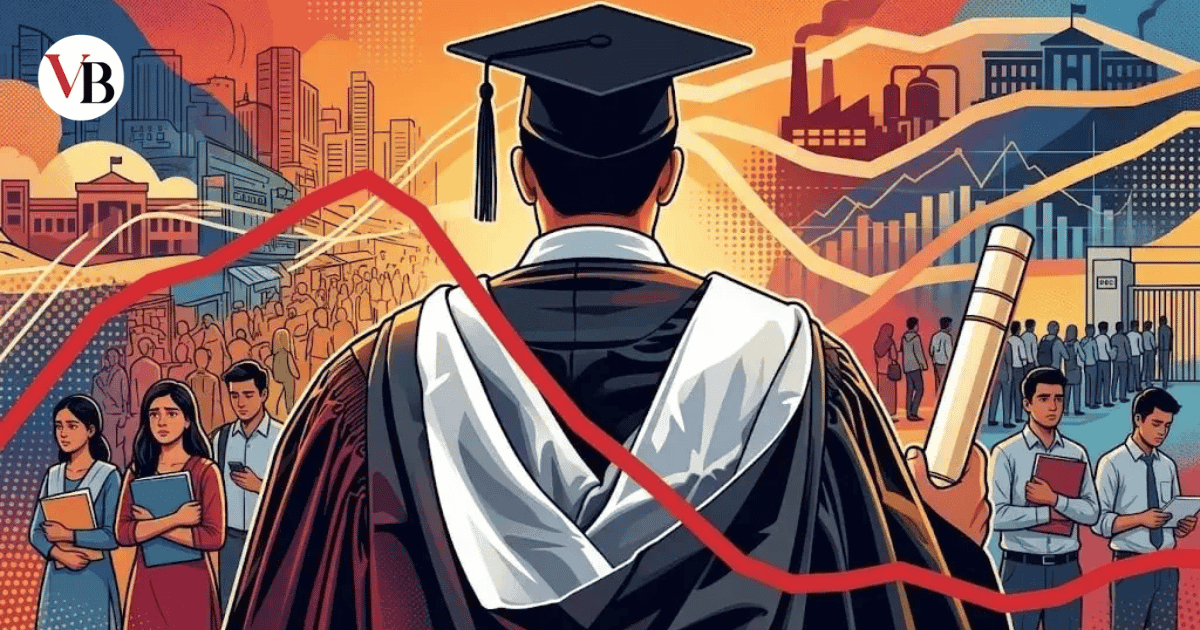

A new study has revealed a worrying picture of unemployment in Bangladesh, with more than 2.6 million people currently out of work, including 885,000 university graduates.
The findings highlight the growing difficulty educated young people face in securing employment, with unemployment particularly high among female graduates.
According to a study by the Power and Participation Research Centre (PPRC), the country's overall unemployment rate stands at 3.66%. However, the rate rises to 8.07% among people aged 15 to 29 and 13.5% among university graduates. Among female graduates, the unemployment rate is even higher, at 20.4%.
The findings were presented on Saturday at the CIRDAP auditorium in Dhaka as part of a study titled 'Economic Opportunities and Realities for Youth in Post-Uprising Bangladesh'. PPRC Executive Chairman Dr Hossain Zillur Rahman and Senior Research Associate Namira Shamim presented the findings. Syed M. Hashemi was also involved in the research, which was conducted with support from The Asia Foundation.
The study found that although the overall unemployment rate is relatively low, the situation is markedly different among young people and those with higher education. A substantial proportion of university graduates remain outside employment.
The unemployment rate among female graduates is significantly higher than that among their male counterparts, raising fresh concerns about women's participation in the labour market and their access to job opportunities.
The challenges extend beyond securing employment. The study also raised concerns about the nature of jobs available to working young people. A large proportion of employed youth work in the informal sector, where many lack guaranteed incomes, job security and access to social protection. As a result, even those who are employed struggle to establish stable livelihoods.
Explaining the findings, Dr Hossain Zillur Rahman said that although economic opportunities were being created in the country, they were not translating into the expected outcomes. He stressed that local economies must receive greater attention in reform initiatives to change the situation. He also called for local government bodies and educational institutions to be developed as key drivers of regional economic transformation.
At the event, Dr Imran Matin, executive director of the BRAC Institute of Governance and Development, highlighted the need to remove institutional barriers at the local level that hinder job creation. He emphasised the importance of strengthening the local government system.
Jean Pesme, World Bank division director for Bangladesh and Bhutan, said the country's current economic growth model was no longer sufficiently inclusive. Despite economic growth, he noted, there were clear weaknesses in the process of translating growth into employment.
He recommended greater emphasis on skills development, strengthening business capabilities, expanding access to finance and increasing private investment to address the challenges.
The study suggests that expanding higher education and achieving economic growth alone are not enough to resolve the employment crisis. Creating suitable job opportunities for educated young people, increasing women's participation in employment and ensuring secure and stable livelihoods instead of informal work remain major challenges for Bangladesh.
Leave A Comment