
BAU study finds microplastics in fish
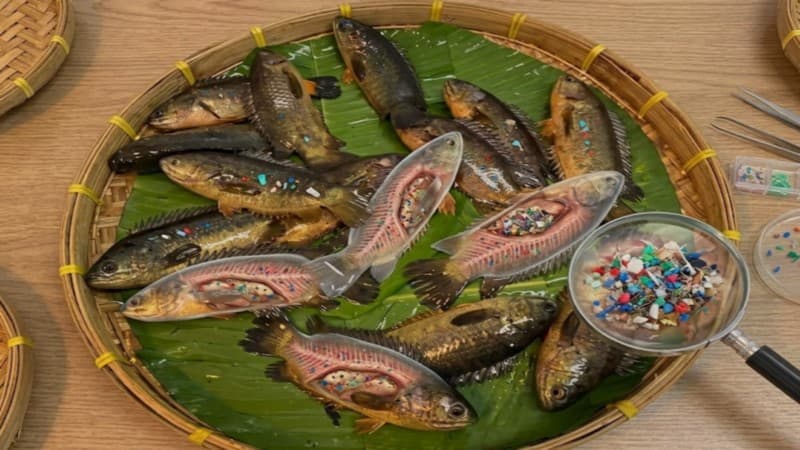

Researchers at Bangladesh Agricultural University (BAU) have detected microplastics at an alarming level in native small fish from the Arial Beel, one of the country's largest natural wetlands.
The tiny plastic particles were found not only in the fish's intestines or gills but also in the muscle tissue consumed by humans. Among the five species studied, the punti fish contained the lowest amount of microplastics. While the other four species had higher concentrations, the koi fish was found to have the highest.
According to the researchers, although there is no clear evidence of immediate health risks from consuming these fish, concerns are growing over the long-term impact on human health, aquatic ecosystems and food security.
The researchers claim this is the first comprehensive scientific study on microplastic pollution in the fish, water and sediments of Arial Beel.
The study, conducted by the Fisheries Management Department of BAU's Faculty of Fisheries, was recently published in the international research journal Journal of Hazardous Materials Advances.
For the study, samples of water, sediment and fish were collected from five locations in Arial Beel—Gadighata, Basurola Denga, Sagar Denga, Baraikhali and Alampur—during the monsoon of 2024, winter of 2024-25, and the dry season of 2025. A total of 150 native fish specimens had their intestines, gills and muscle tissue analysed separately.
The researchers conducted the study on koi, bata, meni (vheda/nandina), gulsha tengra and punti fish.
The study found that the small, omnivorous punti fish had the lowest concentration of microplastics, with only 0.50 to 0.51 particles found in its muscle tissue.
The researchers said there is no need for panic, but rather action is needed to control plastic pollution at its source. They recommended setting up waste treatment systems in rivers and connecting canals, banning the use of prohibited plastic twine and nets, effective management of open plastic waste, and reducing the use of single-use plastics in areas adjacent to the wetland.
Professor Dr Md Shahjahan of the Fisheries Management Department at BAU and lead researcher of the study said, "Microplastics have now spread to almost every part of the environment. However, the presence of microplastics in the muscle tissue of fish from Arial Beel is a significant public health concern."
He further said, "While there is currently no evidence of direct harm from consuming these fish, the accumulation of such particles in the body over time could have future consequences. Perhaps not in five or ten years, but the effects may become apparent after 25 to 30 years, or even in the next generation."
Leave A Comment