

Blueprint for extermination of Bengalis under guise of duck hunting

The prosperous Indus civilization was founded around the Sindhu River. Larkana in Pakistan is one of the cities that have developed on the banks of this river that stretches across India and Pakistan. It is one of the most prosperous and important cities in the country's Sindh province. This important chapter of the independence movement of the Bengali nation is associated with this city, thousands of miles away. Because it was in this city that the blueprint for the Bengali genocide was finalized instead of handing over power to Bangabandhu Sheikh Mujibur Rahman. The day was February 22, 1971. On the day that President Yahya Khan and Zulfikar Ali Bhutto and top Pakistani army officers finalized the plan to teach the Bengali nation a bloody lesson with heavy feasts, colorful drinks and intoxication with power.
A major figure in Pakistani politics was the power-hungry Zulfikar Ali Bhutto. Dhurandhar Bhutto was known as the Nawab of Larkana. Bhutto was the heir to a famous landlord family of Larkana. After completing his higher education in political science in the United States, he joined Pakistani politics. He became the youngest minister of Pakistan in 1958. He then served in the cabinet of Ayub Khan and Yahya Khan. The ambitious Bhutto formed the Pakistan People's Party in 1967. In the 1970 national elections, Bhutto was the leader of the second largest party. However, one thing was noteworthy. Bhutto's party did not get a single seat in East Pakistan, while Bangabandhu Sheikh Mujibur Rahman's Awami League also had zero seats in West Pakistan. Although in the decisive 1970 elections, East and West Pakistan combined, Bangabandhu Sheikh Mujibur Rahman's Awami League got a single majority. The Awami League was supposed to form a government at the center and East Pakistan as a province.
Following the election, President Yahya Khan, during conversations with journalists on at least two occasions, referred to Sheikh Mujibur Rahman as the prospective Prime Minister of Pakistan. While Yahya Khan appeared to show some interest in transferring power in accordance with the election results, Bhutto had an entirely different perspective. Bhutto was known for his strictness, rigidity, cunning nature, and strong anti-Bengali stance regarding the power transition. He had no intention or desire to relinquish power to Sheikh Mujibur Rahman, the recognized leader of the Bengali people, and to assume the role of opposition leader. Consequently, Bhutto emphasized the Six Points. He labeled this charter of Bengali liberation as a charter of separatism. Bhutto expressed skepticism towards the Six Points, attempting to assert that Pakistan could not endure if it accepted them. This led him to vehemently oppose the constitution based on the six points. At that time, several high-ranking generals from the Pakistani army supported him. Let us reflect briefly. The national election of 1970 marked the first such election in Pakistan. Pakistani intelligence had anticipated that Sheikh Mujibur Rahman might secure votes but would fail to achieve an outright majority. However, this report was proven incorrect as Sheikh Mujibur Rahman achieved a significant victory in the 1970 elections. Following this, a web of conspiracy began to unfold. The meeting that ultimately shaped the conspiracy took place at Bhutto's landlord's residence in Larkana. After the national election, President Yahya Khan traveled to Dhaka on January 11, 1971, where he met with Sheikh Mujibur Rahman. Discussions regarding the convening of the National Assembly and the constitution were held with Sheikh Mujibur Rahman and his associates. The atmosphere of this meeting between Yahya Khan and Bangabandhu was far from cordial, and they failed to reach any agreement during the seven-hour discussion. Many have described their meeting as disappointing. Subsequently, a dramatic shift occurred. Upon returning from Dhaka to Karachi, Yahya Khan unexpectedly accepted Bhutto's invitation for hospitality.
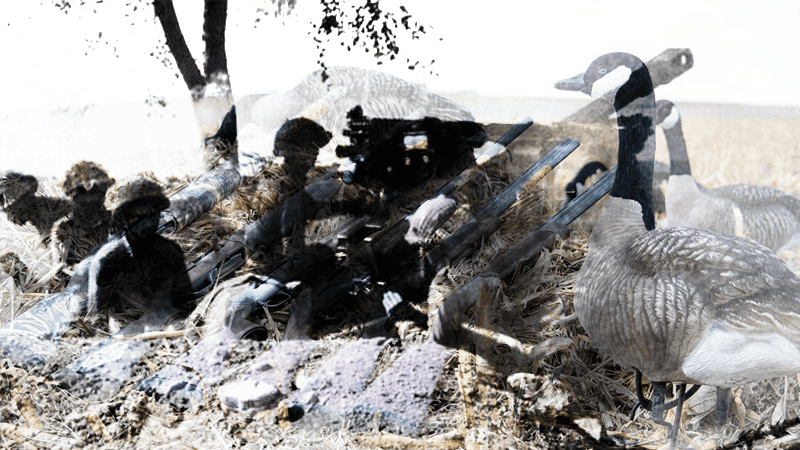
On February 17, 1971, a delegation led by the President of Pakistan visited Larkana. Accompanying him were the Chief of Staff of the Army, General Abdul Hamid Khan, Chief Staff Officer Lt. J. Parizada, along with other senior officers of the Pakistani army. The hospitality extended at the residence of the leader of the nation’s second largest political party during this period of political transition was indeed noteworthy. The stated purpose of this visit was to engage in duck hunting at the ancestral estate of Zulfikar Ali Bhutto, the chief of the Pakistan People's Party (PPP). However, historical accounts indicate that rather than facilitating a peaceful transfer of power under the pretext of duck hunting, a decision to resort to force was ultimately reached. It was in Larkana that the West Pakistanis, while hunting ducks, resolved to perpetrate genocide against the Bengali nation. Numerous news articles and accounts from Pakistani generals have disclosed that Bhutto was quite exhilarated following the lavish feast in Larkana. This meeting marked a pivotal moment where the Pakistani generals chose to sideline the leader of the majority, Sheikh Mujibur Rahman, and drew Bhutto closer to their circle. Consequently, Bhutto adopted a more inflexible stance regarding the six-point agenda.
The circumstances began to shift swiftly following the clash between Bhutto and Yahya in Larkana. A week subsequent to that meeting in Larkana, Yahya Khan decided to postpone the session of the Constituent Assembly, which was scheduled to take place in Dhaka on March 3, on March 1, 1971. The finalization of the conspiracy commenced at this point. It is important to note that Sheikh Mujibur Rahman, the leader of the majority party, was not informed prior to the postponement of the session. This indicated that Yahya and Bhutto had devised a new conspiracy. Regardless, after the session was adjourned, an unprecedented mass movement erupted across the cities, ports, and villages of Bengal. The slogans of 'Your address is Padma-Meghna-Jamuna, Dhaka or Pindi, Dhaka, Dhaka' resonated throughout Bengal, shaking the very sky and air. Amidst this movement, the structure of Pakistani rule completely disintegrated. Sheikh Mujibur Rahman emerged as the de facto leader. Conversely, the Pakistani authorities did not remain passive. To execute their plan of genocide, soldiers disguised in civilian clothing began arriving in Dhaka on commercial flights. The governor of East Pakistan, Real Admiral Ahsan, who had a reputation for respecting democracy and was relatively accommodating, was replaced by Tikka Khan, infamously known as the butcher of Balochistan. Furthermore, General Sahibzada Yakub Khan, the head of the Eastern Command, was also dismissed due to his refusal to endorse the use of force. Prior to this, the civilian cabinet had also been disbanded.
Meanwhile, the whole country, including Dhaka, was on fire from March 1. Sheikh Mujibur Rahman called for a strike on March 2. On March 7, he uttered the immortal message of Bengali liberation. Non-violent non-cooperation continued along with it. At this time, martial law was shown the thumbs up. Transport services came to a standstill. Taxes were stopped as per Bangabandhu's instructions. Financial institutions became inactive. Inter-provincial transactions were stopped. It can be said that Bangabandhu's instructions were effective everywhere. Even food and supplies for Pakistani soldiers in the cantonment were stopped. Although Pakistan had already finalized its previous plan to punish the Bengali nation. In the name of delaying negotiations, Yahya Khan most likely approved Operation Searchlight on March 18 or 19. After secretly leaving Dhaka on the afternoon of March 25, the final preparations for the most barbaric massacre in history began. When the plane carrying Yahya Khan from Dhaka to Colombo was in mid-air, he received news that the most barbaric massacre in history had begun in Dhaka. In the freezing spring air, Pakistani soldiers started the rampage like Halaku Khan in Dhaka city.
It is important to highlight the subject matter here. There exists a book that is based on the autobiography of Zulfikar Ali Bhutto, titled Zulfi Bhutto of Pakistan: His Life and Times. The author of this work is Stanley Walport. Published in 1993, the book contains a substantial chapter named Free Elections and the Birth of Bangladesh (1970-1971). However, it is quite surprising that there is not a single mention in the book regarding the conspiracy meeting that took place in Larkana on February 22, 1971. While page 187 of the book includes quotes from Zulfikar Ali Bhutto's speeches delivered at various public gatherings, it is noted that if the National Assembly session were to convene in Dhaka on March 3, the representatives from West Pakistan could potentially become hostages. Additionally, the same discussion indicates that this assembly could devolve into a slaughterhouse. Despite this, the book does not contain any reference to the blueprint that is being promoted behind this conspiracy aimed at transforming all of Bangladesh into a slaughterhouse, which was officially initiated on the night of March 25, 1971.
(Author: Assistant Professor, Department of Mass Communication and Journalism, Jagannath University)
Leave A Comment
You need login first to leave a comment