

BNP calls for reconsideration of India's Waqf bill, terms it discriminatory
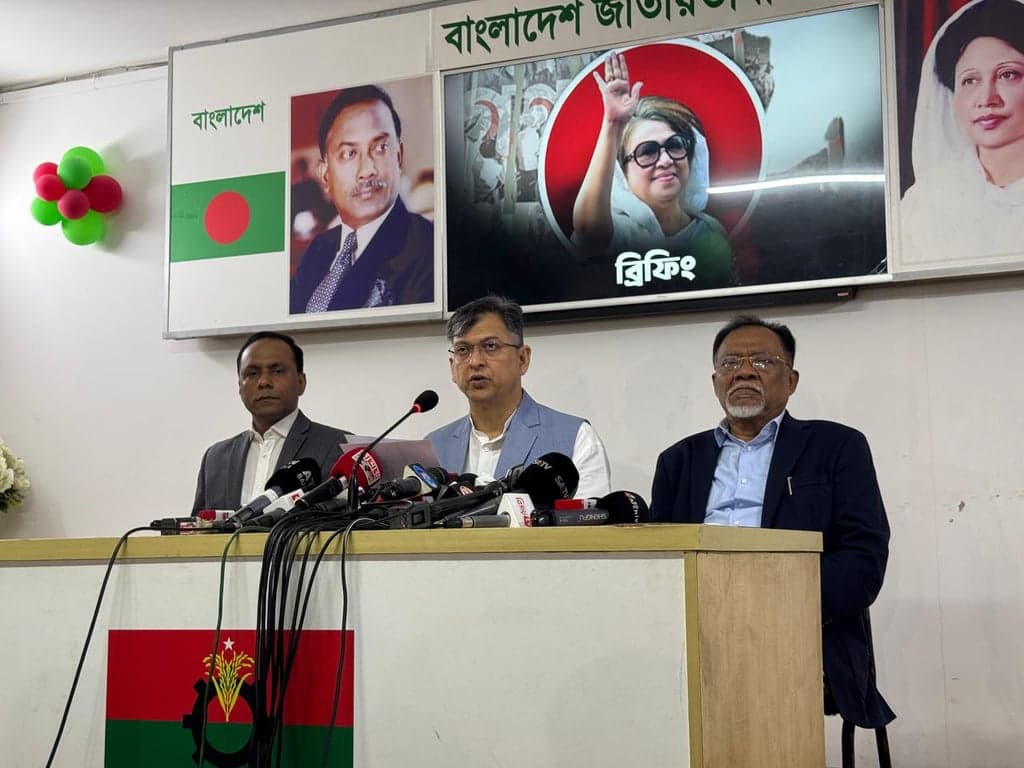

BNP has called on the Narendra Modi government to reconsider the amended Waqf Bill passed in the Indian Lok Sabha, claiming it is discriminatory.
This appeal was made by BNP Standing Committee member Salahuddin Ahmed during a press conference on Sunday (April 6) afternoon at the party chairperson's office in Gulshan.
In the written statement at the press conference, Salahuddin Ahmed said, "A few days ago, an Act called the Muslim Waqf (Amendment) Bill 2025 was passed in the Indian Parliament. After analyzing various sections of the law, we have found that it attempts to curtail the rights of India's minority Muslim population and promotes discriminatory behavior. Muslims in India and various Muslim organizations have expressed their reactions, calling the bill unconstitutional and politically motivated."
He said, "Waqf is an ancient Islamic charitable system. Through waqf, an individual donates property, usually land, for religious or public welfare purposes on a permanent basis. Such waqf properties cannot be sold or transferred in anyone's name."
Salahuddin said, "The 14% of India's population, or nearly 200 million Muslims, could face significant misuse of this law, which goes against their religious traditions, rights, culture, and interests. This could create a disastrous situation in the management of Islamic religious institutions. Under India's Waqf Boards, nearly 1 million acres of land are used for public welfare purposes such as mosques, madrasas, cemeteries, and orphanages. The inclusion of non-Muslim members in the management boards under the new law has sparked controversy, which may undermine the constitutional rights of Muslim citizens. We believe that any such action, interfering with the religious rights of Muslims and promoting discriminatory behavior, could disrupt communal harmony and is inappropriate at the national level."
This member of BNP's Standing Committee stated, "In India, there is no inclusion of non-Muslims in such boards or legal organizations for other religious communities. Therefore, this law will be considered discriminatory. The changes in the new law could jeopardize the future of mosques and other Islamic religious institutions built on Waqf land, which has been in place for hundreds of years. The power given to non-Muslim members to manage and administer these properties under the new law directly interferes with the religious rights of Muslim citizens."
Salahuddin Ahmed further said, "According to organizations like the All India Muslim Personal Law Board, this law is contrary to the fundamental principles of the Islamic Waqf system. They believe that the management of Waqf Boards should be done by Muslims. They have expressed the view that this law constitutes direct interference with the religious rights of Muslim citizens."
On behalf of the party, Salahuddin demanded, "India is a large democratic state. In a large democratic country, the government must uphold the role of guardian in protecting the religious rights of all citizens, regardless of their faith. We express our hope that the Indian government will reconsider this law while maintaining this principle. We believe this step will play a historic role in maintaining regional communal harmony."
The BNP's legal affairs secretary, Barrister Kayser Kamal, and the party's chairperson's adviser, Ismail Zabihullah, were present at the press conference.
Leave A Comment
You need login first to leave a comment