
BRTA tops corruption in public services: BBS
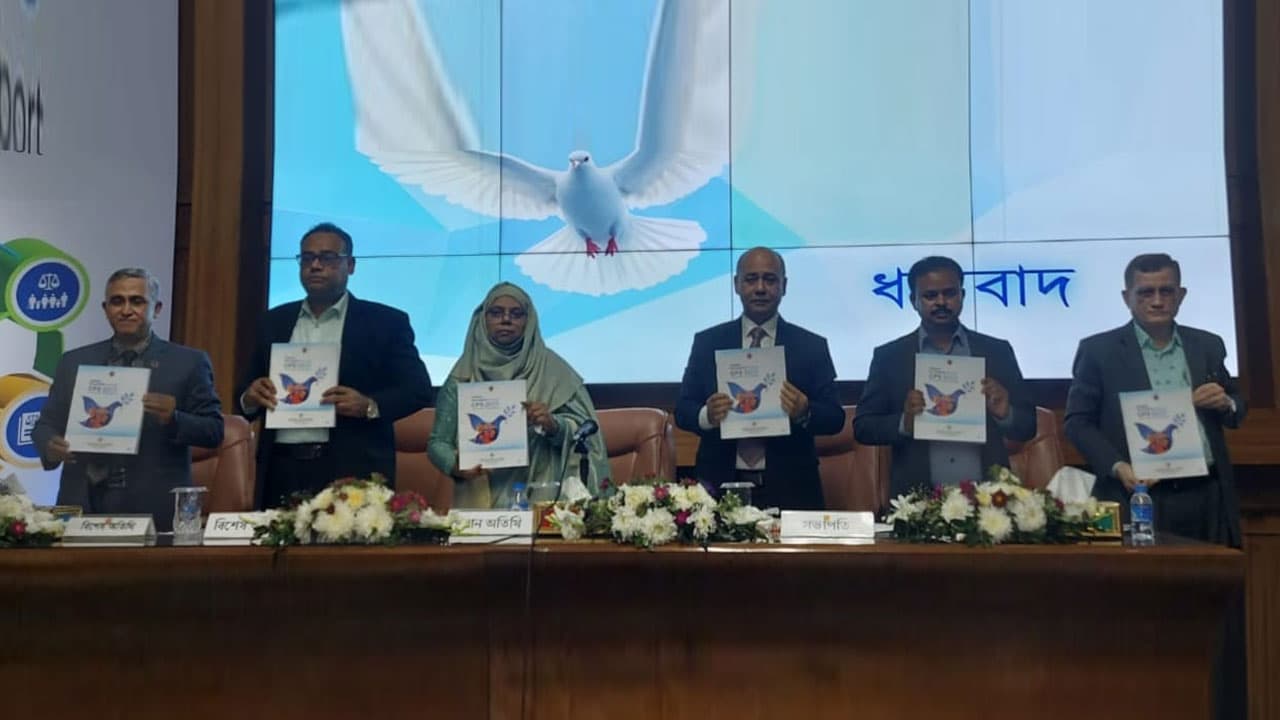

The Bangladesh Road Transport Authority, BRTA, has ranked highest for corruption among public service sectors in the country, according to the final report of the Citizen Perception Survey, CPS 2025, by the Bangladesh Bureau of Statistics, BBS.
The report was released on December 24 at a publication event held at the BBS auditorium in Agargaon, Dhaka. Secretary of the Statistics and Informatics Division, Aleya Akter, attended as chief guest, while Planning Secretary S M Shakil Akhtar and Additional Secretary of the Statistics and Informatics Division, Mohammad Masud Rana Chowdhury, were present as special guests. The event was chaired by BBS Director General Mohammad Mizanur Rahman.
According to the survey, at least 63.29 percent of citizens experienced corruption while receiving services from BRTA. Law enforcement agencies ranked second with 57.96 percent, followed by passport offices at 57.45 percent.
The survey found that 31.67 percent of respondents admitted to paying bribes directly while accessing public services in the last 12 months. The rate of bribery among men, 38.62 percent, was significantly higher than among women, 22.71 percent. In terms of the form of bribes, 98.48 percent reported paying money.
The nationwide survey was conducted from February 6 to February 23, 2025, covering 45,888 households across 1,920 primary sampling units in all 64 districts. Interviews were conducted with 84,807 individuals aged 18 and above.
Based on citizens’ experiences and perceptions, the survey assessed progress on six indicators of SDG 16, including security, good governance, quality of public services, corruption, access to justice and discrimination.
The report showed that 84.81 percent of citizens feel safe walking alone in their neighbourhood after dark, though the rate was lower among women, 80.67 percent, compared to men, 89.53 percent.
Only 27.24 percent of respondents believed they could influence government decision-making, while the figure dropped further to 21.99 percent for political decisions. Nearly one-quarter of citizens felt that the country’s political decision-making process is inclusive and responsive.
Over the past year, 47.12 percent of people accessed government healthcare services, and 40.93 percent reported that their children studied in government schools. Satisfaction rates stood at 72.69 percent for healthcare, 81.56 percent for primary education and 66.91 percent for other public services.
The survey also found that 19.31 percent of people experienced some form of discrimination, mainly based on socio-economic status and gender. However, only 5.37 percent of victims reported incidents of discrimination to the authorities.
Leave A Comment
You need login first to leave a comment