

Business-politics nexus affecting country's media freedom: TIB
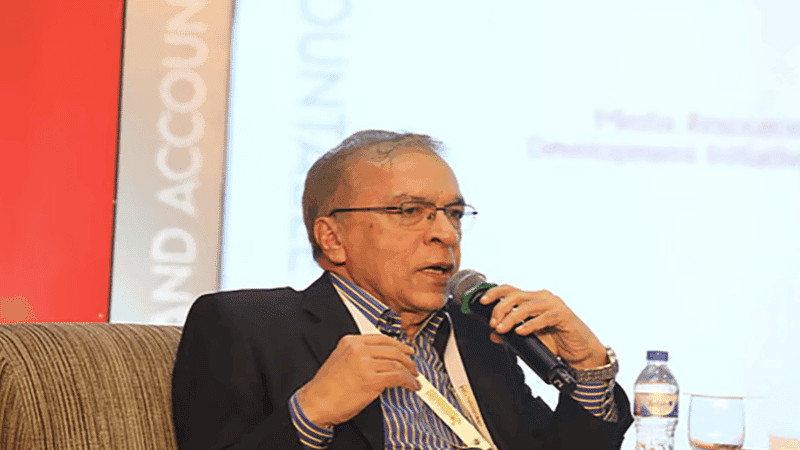
Transparency International Bangladesh (TIB) Executive Director Iftekharuzzaman has warned that the growing nexus between business and politics in the country is not only weakening governance but also increasingly affecting media freedom and independent journalism.
Speaking at the concluding day of the “Bangladesh Journalism Conference 2026” in Dhaka on Saturday (May 9), he said press freedom cannot be viewed in isolation, as it is deeply connected to the country’s broader political and governance structure.
“The more democracy, accountability, freedom of expression, and civic rights shrink, the more pressure the media faces,” he said during the opening session titled “Politico-Governance Ecosystem and Free Media.”
Iftekharuzzaman noted that there is nothing inherently wrong with businesspeople entering politics. However, he warned that problems arise when business becomes a tool for political influence and politics itself turns into a form of business investment.
“When politics becomes business and business merges with political power, accountable governance becomes weaker,” he said.
The TIB executive director also argued that, much like other state institutions, the media in Bangladesh is struggling to function independently due to the influence of capital, money, religion, patriarchy, and majoritarian politics within the country’s governance structure.
According to him, political and economic interests are increasingly shaping media ownership, policymaking, and news coverage, limiting the ability of journalists and media outlets to operate freely.
He further said Bangladesh’s political culture has long been dominated by a “zero-sum game” mentality, where one side’s gain is viewed as another side’s loss. This culture, he argued, has encouraged political monopolisation, suppression of dissent, and restrictions on information flow.
“As a result, criticism and the publication of information are often perceived as threats, creating different forms of pressure on the media,” he added.
Iftekharuzzaman also pointed to the growing politicisation of state and professional institutions over the past two decades, saying leadership and institutional positions often shift depending on changes in political power.
He stressed that media freedom is not solely a journalists’ issue, but one fundamentally tied to human rights, freedom of expression, and democratic accountability.
Criticising laws such as the Digital Security Act, he said hundreds of journalists have faced legal cases under such legislation, with many allegedly subjected to harassment simply for carrying out their professional duties.
Leave A Comment
You need login first to leave a comment