
CA directs creation of independent power, energy research institute
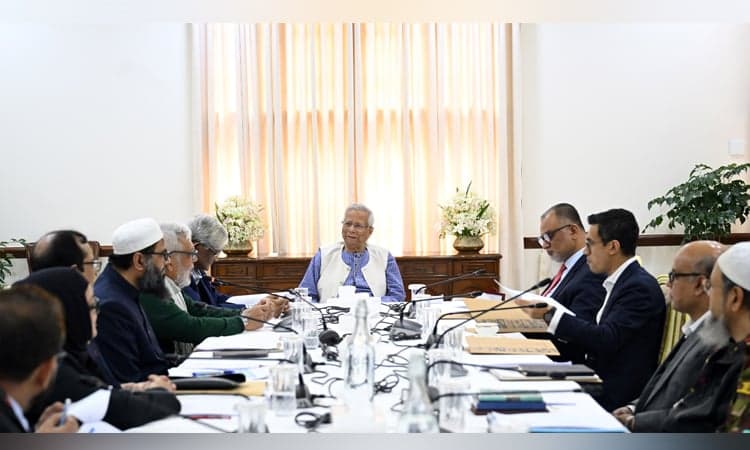

Chief Adviser (CA) Dr. Muhammad Yunus has directed the formation of a strong and independent research institution for the power and energy sector, saying it should operate outside any ministry and support government policymaking through global collaboration.
The directive came at a meeting held at the state guesthouse Jamuna on Wednesday (Jqnuqry 7), where the Power, Energy and Mineral Resources Ministry presented the draft Power and Energy Sector Master Plan for 2026–2050.
Advisers and senior officials from relevant ministries and agencies attended the meeting.
The proposed master plan aims to ensure affordable and sustainable power and energy supply by maximising domestic resources, strengthening energy security, improving efficiency and ensuring environmental responsibility. It also identifies policy gaps in previous master plans and proposes implementation in three phases: 2026–2030, 2030–2040 and 2040–2050.
For 2026–2030, priority projects include offshore exploration, increased gas production, LNG supply and security, refinery capacity expansion and strategic energy stockpiling. Long-term initiatives feature offshore gas development, large-scale refining and petrochemicals, hydrogen and ammonia infrastructure, geothermal energy, and tidal and wave-based power generation.
“Power and energy are the backbone of Bangladesh’s economy. Without strengthening this sector, sustainable economic growth is not possible,” Yunus said, stressing the need for research-driven, well-structured planning to avoid past mistakes.
He also called for extensive research into alternative energy sources.
According to ministry data, electricity demand is projected to rise from 17 gigawatts to 59 gigawatts by 2050. Despite higher generation, cleaner technologies are expected to significantly reduce per-unit carbon emissions, cutting an estimated 1.6 billion tonnes of CO₂ by 2050.
The plan estimates investment needs of $70–85 billion in energy and about $107 billion in power between 2026 and 2050.
Leave A Comment
You need login first to leave a comment