
Cabinet approves 22 government holidays, solar power initiatives, procurement laws

The Cabinet has approved the list of government holidays for 2027. There will be 22 days of government holidays next year excluding weekly holidays. Of these, 15 days are general holidays and 14 days are government holidays by executive order. Altogether seven days of the proposed 29 days of holidays fall on weekly holidays. As a result, effective holidays will be 22 days.
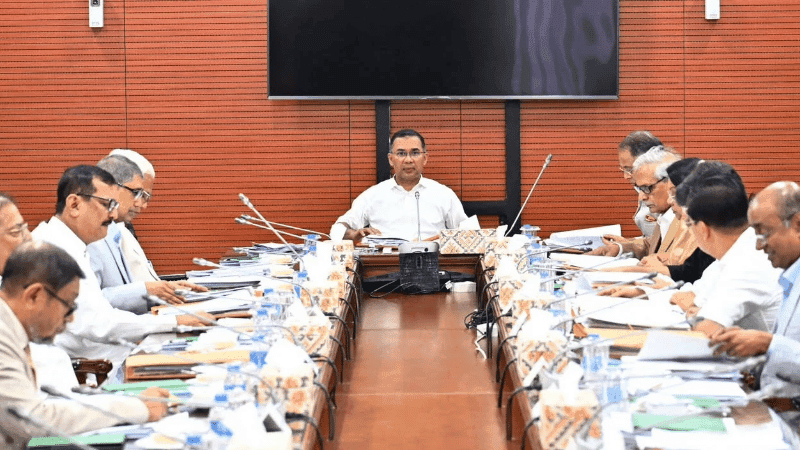
The holiday list was approved at the 26th meeting of the Cabinet held at the Secretariat under the chairmanship of Prime Minister Tarique Rahman on Monday (November 2). This information was announced in a press release of the Cabinet Division after the meeting informing the Cabinet decisions.
Later at a press briefing in the conference room of the Department of Information at the Secretariat in the evening, Cabinet Secretary Nasimul Gani said proposals have been made for 15 days of general holidays on the occasion of national days and important religious festivals of different communities in 2027. Of these, four days fall on weekly holidays. Among them two are Fridays and two are Saturdays.
Besides, there will be 14 days of government holidays by executive order on the occasion of Bangla New Year and various important religious festivals. Of these, three days fall on weekly holidays. One is Friday and two are Saturdays.
The Cabinet Secretary said altogether effective holidays will be 22 days as seven days of the proposed 29 days of holidays fall on weekly holidays.
He said government employees will be able to take a maximum of three days of optional holidays in a year according to their own religion for observing religious festivals. Besides, government employees belonging to small ethnic groups working in different areas of the country including the Chittagong Hill Tracts will get two days of optional holidays for observing their main social festival Boisabi or similar festivals.
Law coming for solar power installation
The draft of the ‘Special Solar Power Installation Act, 2026’ has also been approved at the Cabinet meeting with the aim of rapidly expanding special solar power installation activities. The draft prepared on the initiative of the Power Division has received final approval subject to vetting by the Legislative and Parliamentary Affairs Division.
The ‘Special Solar Power Ordinance, 2026’ has already been issued for rapid expansion of special solar power installation activities. According to Article 93 of the Constitution, an ordinance issued by the President has to be placed at the first meeting of the National Parliament. The draft of the new law has been prepared from the obligation of turning the ordinance into a law through Parliament.
New provisions coming in public procurement
The Cabinet has also given policy and final approval to the draft of the ‘Public Procurement (Second Amendment) Act, 2026’ to ensure transparency, accountability, equal treatment and free competition in public procurement management. The draft prepared on the initiative of the Implementation Monitoring and Evaluation Division (IMED) has been approved subject to vetting by the Legislative and Parliamentary Affairs Division.
Provisions have been kept in the new law to protect the interests of domestic industries, increase competition and expand opportunities for participation of different categories of tenderers. Among them there are proposals for reserving special facilities for new, micro and small entrepreneurs, women tenderers and disadvantaged tenderers.
Besides, initiatives have been taken to modernise the working procedures of the open tender method, greater application of the limited tender method for equitable distribution of resources and clarification of provisions related to professional misconduct. Provisions for alternative procurement systems in case of state emergency needs are also being added.
The press release of the Cabinet Division said the main legal framework for public procurement ‘Public Procurement Act, 2006’ has been amended six times so far. Most recently on September 21 the ‘Public Procurement (Amendment) Ordinance, 2026’ was issued amending the law.
The draft of the new amendment law has been published on the websites of the Bangladesh Public Procurement Authority (BPPA) and IMED for public opinion. According to Article 93 of the Constitution, the bill will be placed in the next session of the National Parliament to turn the issued ordinance into a law.
Leave A Comment