
Cyber law will not be allowed to become repressive: Home Minister
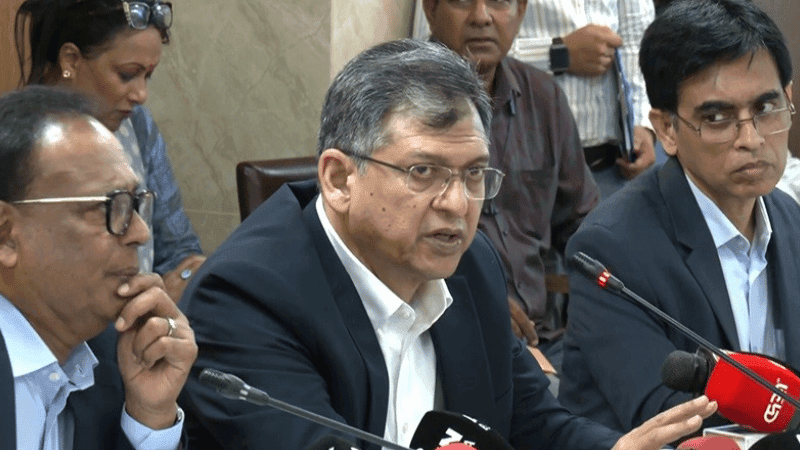

Home Minister Salahuddin Ahmed has said the proposed Cyber Security (Amendment) Act 2026 will not be allowed to become a repressive law and that the government will ensure journalists and media outlets are not targeted through its misuse.
Speaking at a consultation meeting with print and electronic media stakeholders at the Secretariat on Monday (September 28), Salahuddin said the draft would be finalised only after extensive discussions and consideration of recommendations from all relevant stakeholders.
He said the draft had already been placed before the Cabinet, which directed the government to consult IT experts, media professionals and other stakeholders before finalising it.
Opinions from institutions, rights groups, students and cyber-space users have already been collected, he added.
The minister said the government had accepted a proposal to include safeguards for journalists in the law. One proposal under consideration would require prior court approval before legal action or arrest of a journalist. Stakeholders have been given 15 days to submit formal recommendations on the issue.
A time limit would also be considered for resolving cases and appeals so that proceedings do not remain pending indefinitely, he said.
Salahuddin said a coordination mechanism would be formed, with the principal information officer serving as the focal point. Representatives of the Editors Guild, electronic media organisations and a panel of cyber experts would work with the relevant ministries to submit recommendations within 7–15 days.
The revised draft will then be published again for public feedback before being sent for inter-ministerial review and Cabinet approval. If approved, it will be placed before Parliament, where the government says it will undergo further discussion before a final decision.
The minister said the proposed law aims to strengthen protection against cybercrime while safeguarding social and religious harmony, family values and local culture in line with international standards.
Leave A Comment