
Damaging July Uprising Museum artifacts could draw up to 10 years in Jail
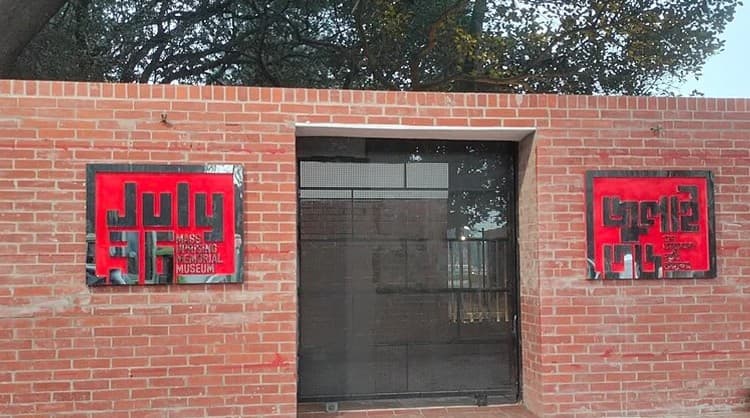

Destroying, defacing, altering or damaging any immovable artifact of the July Uprising Memorial Museum could result in up to 10 years in prison, a fine of up to Tk 1 million, or both under the July Uprising Memorial Museum Act, 2026.
The law also provides for up to five years in prison, a fine of up to Tk 500,000, or both for stealing, smuggling, destroying or damaging movable artifacts preserved at the museum.
The July Uprising Memorial Museum Act, 2026 was enacted on April 10 and is listed as Act No. 90 of 2026 in government records.
The law aims to establish a statutory institution dedicated to collecting, preserving, researching and displaying the history, documents, memorabilia and other artifacts related to the July-August 2024 mass uprising.
Under the law, the museum’s headquarters will be located at Ganabhaban in Dhaka. It also allows secret detention facilities identified as sites of crimes against humanity between 2009 and August 5, 2024, to be declared, preserved and operated as branch museums. Facilities currently under government agencies may be transferred to the museum under prescribed procedures.
The museum’s mandate extends beyond the July uprising and the anti-fascist movement. It will also collect, preserve and display artifacts related to the history of East Bengal, the Language Movement, the independence struggle and the Liberation War.
The institution will also conduct research and exhibitions involving documents, objects and memorabilia linked to activities against democracy and human rights and the rise of fascism.
The law introduces additional penalties to protect the museum’s collection. Anyone who engraves, writes, inscribes or signs on a registered museum artifact could face up to one year in prison, a fine of up to Tk 10,000, or both.
If a museum employee is found involved in such offences, departmental action may be taken in addition to the applicable criminal punishment.
The law further empowers the director general or an authorised official to inspect premises where there are reasonable grounds to believe that a museum artifact is being held by an individual or institution and to take action in accordance with the law.
Members of the public will be allowed to visit the museum upon payment of the prescribed admission fee.
According to government records, the Act now forms part of the country’s applicable legal framework. An ordinance on the matter had previously been issued in 2025. The subsequent enactment of the law provides a permanent legal framework for establishing and operating the museum and protecting its artifacts.
Source: BSS
Leave A Comment