

13 years of Rana Plaza tragedy
Demands for justice, compensation and a worker-friendly state
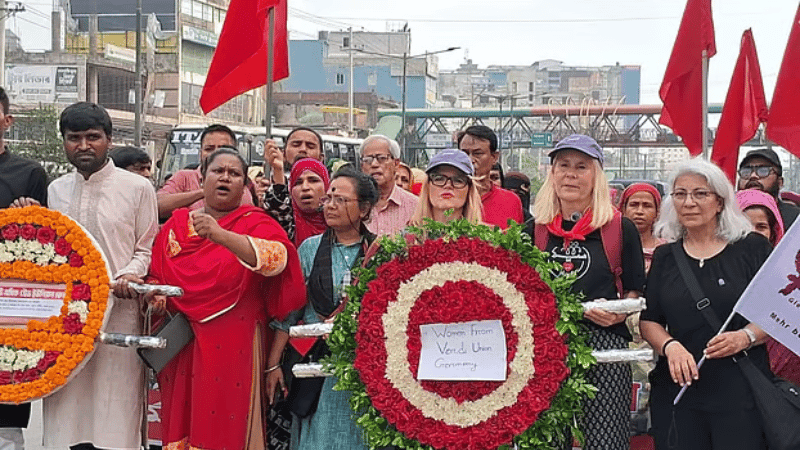

Marking 13 years since the Rana Plaza tragedy in Savar, Dhaka, labour leaders have renewed their demands for justice, compensation, and a worker-friendly state while paying tribute to the workers who lost their lives.
Khairul Mamun, general secretary of the Bangladesh Garment and Sweater Workers Trade Union Centre, said garment workers do not work to buy cars and houses. They work hard merely to survive with their families. Yet, the owners become wealthy exporting products made by these workers. Workers must agitate for their wages and bonuses, and they even lose their lives to police bullets during protests. He added that they are still waiting for a worker-friendly state.
Mamun said negligence on the part of factory owners, building owners, and relevant government departments has led to fires and building collapses that kill workers. Many workers are also left permanently disabled. But workers must agitate for years for justice, fair compensation, rehabilitation, and proper medical treatment.
Relatives of the deceased, injured workers, leaders and activists of various labour organisations, a women's delegation from the German labour organisation Verdi, and members of the Industrial Police gathered at the site near Savar bus stand on Friday morning. They paid tribute by placing flowers at a temporary altar built in memory of the deceased and later held a brief rally and discussion.
Leaders of labour organisations demanded a worker-friendly government to ensure a safe and supportive environment in factories. Arvind Bepari, president of the Revolutionary Garment Workers Federation, said major disasters like the 2012 Tazreen Fashion fire and the 2013 Rana Plaza collapse occurred, but the perpetrators have still not been punished.
Rafiqul Islam, president of the Bangladesh Garments and Industrial Workers Federation, said according to government figures, 1,138 workers were killed, but the actual number is higher. Nearly 2,500 workers still suffer from disabilities and various physical complications, and 13 years on, these demands remain unmet.
Also present was Ferdousi Begum, mother of missing worker Nahidul Islam, who still does not know whether her son is alive or dead. She said, "We neither got his body, nor did we get our son back. We still do not know if he is alive or dead."
At the rally, labour organisations presented the government with a seven-point charter of demands. These included ensuring compensation, rehabilitation, and proper medical treatment for killed and injured workers through re-evaluation; forming a specialised medical team; inclusion in the workplace accident insurance scheme; forming a special tribunal for the speedy trial of those responsible; publishing accounts of any aid funds; confiscating the assets of guilty owners and using them for worker welfare; constructing a permanent memorial in front of Rana Plaza; and declaring April 24 as 'Workers' Murder Day' with a general holiday in the ready-made garment sector.
Leave A Comment
You need login first to leave a comment