
Discussion on July Charter by December, report to be placed in parliament: Home Minister
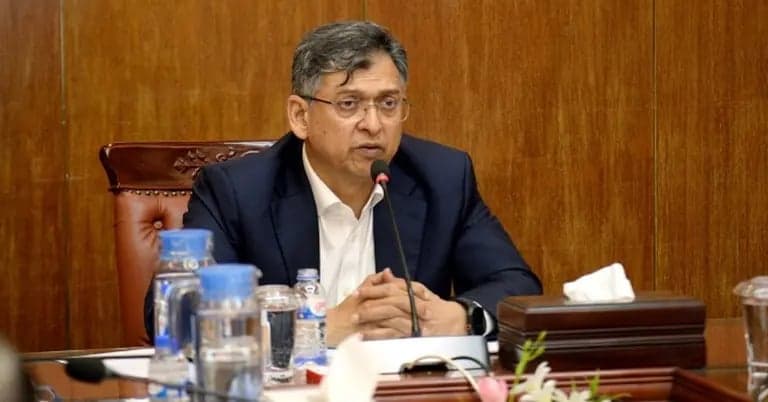

Home Minister Salahuddin Ahmed has said the process of finalising the recommendations of the July National Charter and amending the Constitution will be completed by December, and the final report will be submitted to the National Parliament. He said if any important proposal related to the country and national interest comes up outside the main structure of the charter, it will also be considered with importance.
He made these remarks while speaking to journalists after a meeting of the special committee on constitutional amendment in the National Parliament on Sunday, September 20.
The Home Minister said that of the 26 political parties that signed the July Charter, 15 parties directly participated in the meeting. Two to three representatives from each of these parties were present. Several parties also submitted written statements. He said that although representatives of some parties could not be present at the last moment due to illness or unavoidable reasons, their position was positive.
Salahuddin Ahmed mentioned that political parties that did not sign the charter or did not participate in the meeting also have the opportunity to give their opinions. In his words, if any registered or unregistered party sends a written proposal or opinion, the committee will review it with importance. To move the work forward quickly, the Parliament Secretariat and the special committee will hold at least one meeting every week.
He said the National Consensus Commission prepared the July National Charter after reviewing the reports of six reform commissions and lengthy discussions. Therefore, if the proposals of the previous reform commissions are added verbatim anew, complications could arise in the entire process. If political parties have notes of dissent or differing opinions on any issues, they will have the opportunity to implement them in the future if they get a public mandate by including them in their election manifestos.
Regarding the proposal to amend the Constitution, the Home Minister said an important aspect of the July Charter is the establishment of a bicameral National Parliament and the formation of a 100-member upper house. He said this idea was included in the charter with the aim of involving experienced and qualified people from various classes and professions of society in running the state.
However, there are differences of opinion among political parties on the method of electing upper house members. The Home Minister said there are differing views on whether the upper house will be formed in proportion to the seats won in parliament or in proportion to the total votes cast. In his view, even if the upper house is established, the legal power to amend the Constitution will remain with the lower house.
Salahuddin Ahmed also rejected allegations that BNP is delaying the implementation of the July Charter due to its single-party majority. He described such claims as baseless and untrue.
Meanwhile, the Home Minister also spoke about the proposal to change the fiscal year. He said that as the fiscal year currently ends on June 30, there is a tendency to hastily allocate and release funds in the last quarter. At the same time, as it is the monsoon season, obstacles are created in implementing development projects, the quality of work is affected, and opportunities for irregularities and wastage of money increase.
He said that to reduce these problems, a decision has been taken to set the fiscal year from April 1 to March 30, in keeping with Bangladesh's weather and seasonal cycle. He also mentioned that two places in the Constitution and existing laws need to be amended to implement this change.
In response to journalists' questions on forming a constitutional reform council and rewriting the Constitution, he said there is no need to rewrite the Constitution anew or form a separate constitutional reform council in an established and independent state. Amending any article of the Constitution through the parliamentary process is also a form of reform.
Noting that there are examples in various democratic countries of amending the Constitution in light of the needs of the time and public demands, Salahuddin Ahmed said that in the future, any government elected with a public mandate will be able to bring necessary changes to the Constitution if it achieves the required majority in parliament or can reach an understanding with other parties.
He further said preparations are underway to place the 18th Constitution Amendment Bill in parliament based on political consensus. Necessary work in this regard is being advanced through parliamentary affairs and the Ministry of Law.
Leave A Comment