

Drug-resistant ‘superbug’ fungus spreading in Dhaka ICUs: icddr,b study
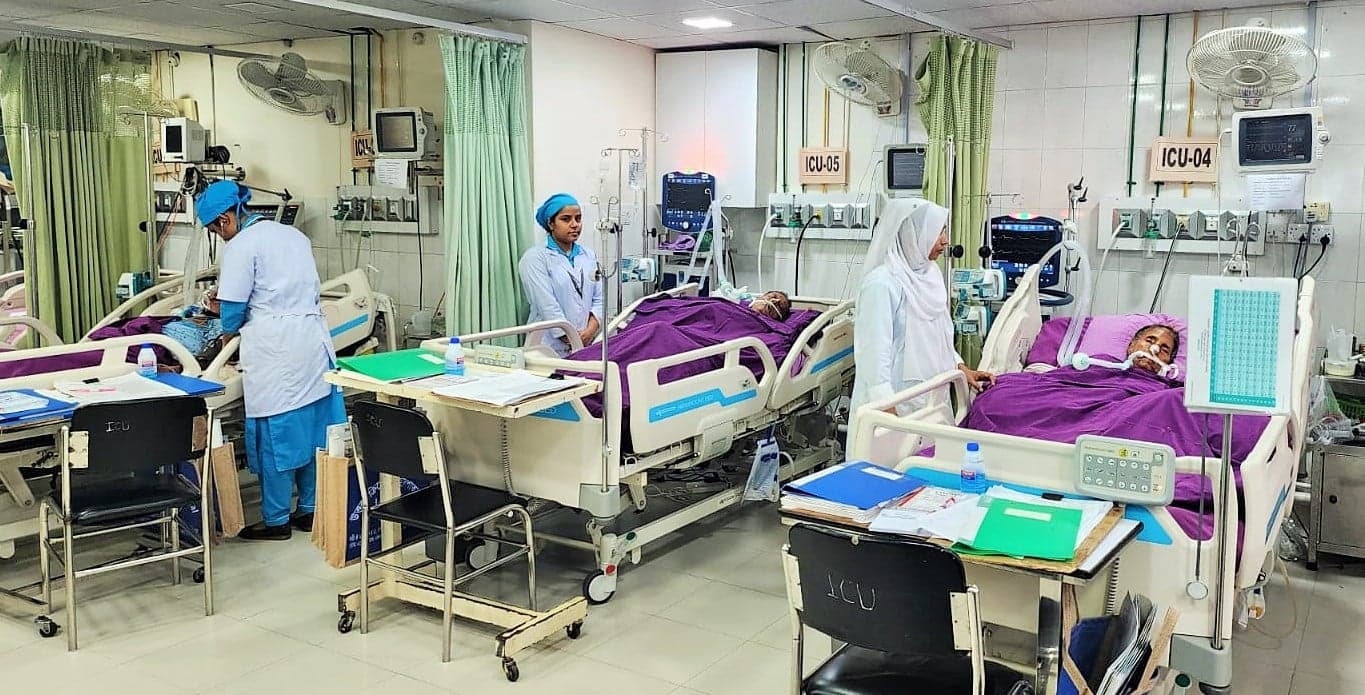

A drug-resistant fungus, 'Candida auris', is spreading rapidly in intensive care units (ICUs) across hospitals in Dhaka, according to new research conducted by icddr,b.
The findings were disclosed in a press release issued Tuesday (March 3) by the research institute.
The study warns that the so-called “superbug” is not confined to neonatal ICUs but is also infecting critically ill adult patients, raising concerns about wider hospital-acquired transmission.
The research, published in the international scientific journal Microbiology Spectrum, was carried out in the ICUs of one public and one private hospital in Dhaka.
The study was conducted in collaboration with the Institute of Epidemiology, Disease Control and Research (IEDCR), with technical support from the Centers for Disease Control and Prevention (CDC), United States.
Between August 2021 and September 2022, a total of 372 ICU patients were enrolled in the study. Results showed that nearly 7 per cent of patients tested positive for 'Candida auris' at some point during their ICU stay. More than one-third of these cases were acquired while patients were in the ICU, indicating clear evidence of in-hospital transmission.
The infection rate was significantly higher in the public hospital. About 13 per cent of ICU patients in the public facility contracted the fungus during admission, compared with approximately 4 per cent in the private hospital. Internationally, such rates are considerably lower — typically below 0.5 per cent in countries such as Canada and the United Arab Emirates.
Laboratory analysis found that all 'Candida auris' isolates were resistant to fluconazole, and nearly all — except one — were resistant to voriconazole. This suggests that commonly used first- and second-line antifungal treatments are largely ineffective. Some samples also demonstrated resistance to multiple antifungal agents, further complicating treatment options.
Critically Ill Patients at Higher Risk
The study found that patients who tested positive for 'Candida auris' were generally more severely ill and had prolonged ICU stays. Many required invasive interventions, including mechanical ventilation, central venous catheters, and urinary catheters — procedures that can increase infection risk if strict infection prevention measures are not maintained.
Dr. Fahmida Chowdhury, head of the Antimicrobial Resistance Research Unit at icddr,b’s Infectious Diseases Division and principal investigator of the study, said 'Candida auris' now poses a major threat to all types of ICUs.
She noted that the study provides clear evidence of in-hospital transmission and highlights alarming levels of antifungal resistance.
Genomic analysis of selected samples showed that the strains circulating in Dhaka ICUs belong predominantly to the South Asian clade, indicating that the pathogen is locally established rather than being introduced sporadically from abroad.
Recommended Measures
Researchers emphasised the need for routine cleaning with chlorine-based disinfectants, strict adherence to hand hygiene protocols among healthcare workers, regular screening in high-risk units, and rational use of antifungal medications.
They also called for expanded surveillance and large-scale studies in hospitals across Dhaka and other parts of the country to determine the full extent of the threat and to inform effective containment strategies.
Leave A Comment
You need login first to leave a comment