
Ensure access to justice for female migrant workers
Rehana Akter ( 26), a Bangladeshi divorcee poor woman of Ibrahimpur village, under Keraniganj subdistrict in Dhaka. She has two minor gilr children. After being divorced by her husband for unable to pay dowry, she found no option to survive. Once her neighbor advised to fly abroad for a lucrative job with high salary.
Rehana sold her land and took a loan from an NGO. She gave the money to an agent of unknown recruiting agency through her neighbor. After a few months she flied to the destination country in the name of so called “free visa”.
In fact, she was cheated and did not get any suitable job there. She just got a low paid job and faced physical and sexual harassment. After five months somehow she manged to come back home with severe sickness in Bangaldesh and live with hunger and poverty with her children. There are hundreds of illfated women in Bangaldesh like Rehana that their saga and plights are unheard and undereported. And they are waiting for a long time for access to justice.
BACKGROUND OF FEMALE MIGRATION
Research shows that the liberation war of Bangladesh in 1971 caused huge losses to both human and infrastructural assets, which was worsened by the country-wide famine in 1974. The consequences of the economy in shambles marked by the war, joblessness, scarcity of food, and eventually famine were more severely felt by women than men. An increasing number of women with abject poverty began to participate in economic activities outside their homes, defying social barriers like restrictions on women's mobility.
It proves that poverty and hunger have pushed the women to work beyond their homes. Thus gradually thousands of women garment workers migrated from rural areas to the cities.
The women migrant workers working abroad are a major source of a large amount of foreign exchange earnings these days. It helps move the wheel of national development of the country. But, unfortunately, these women migrant workers are being deprived of their due rights and they face many hostile situations.
According to the Bureau of Manpower Employment and Training (BMET), 105,466 women workers went abroad in 2022. This figure dropped to 76,108 in 2023, marking a 28 per cent decline. In 2024, the number further decreased to 61,158, a 20 per cent reduction from the previous year.
In Bangladesh, many people are being deceived, harassed and even killed during the process of going abroad by syndicates, in which an unscrupulous section of recruiting agencies are allegedly involved. As a result, the migration market has long been facing obstacles.
The important issues like due wages of the migrant workers, reducing migration cost, enforcing the relevant 'code of conduct' for the recruiting agencies of Bangladesh, removing all the restrictions imposed on women's migration and increasing the number of men and women migrants, improving working environment, preventing discrimination, deprivation, sexual harassment and violence against them, upholding the right to health services, the right to vote in national elections from abroad, acess to justice, among other issues should be given top priority to ensure safe migration.
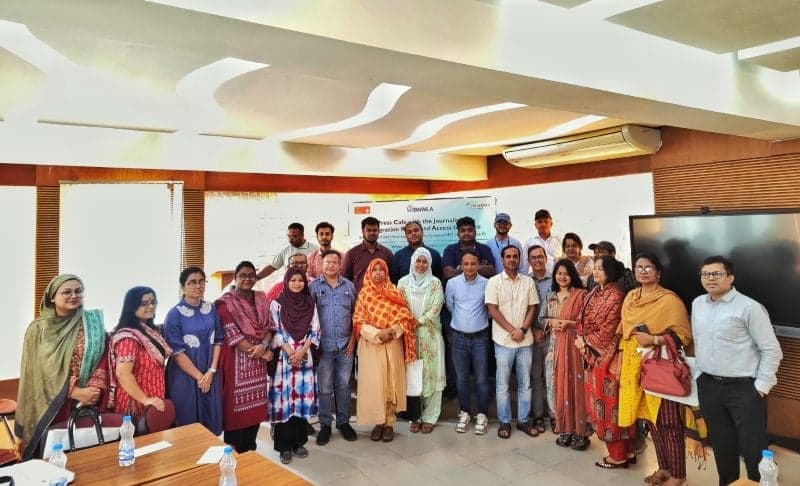
Recently, Bnagladesh National Women Lawyers Association (BNWLA) organized an event in Dhaka titled: Press Café on ‘Migration Rights and Access to Justice,’ as part of their proejct: Strengethened and Informative Migration Systems ( SIMS II). It was in collaboration with HELVETAS, a Switchzerland-based interntaional development agnecy. I had the opportunity to join the event and enjoy the discussions of different brilliant discusants.
At the event, to ensure acess to justice was the top priority discussion. And journalists were urged to promote evidence-based and ethical reporting on migration to help protect migrant workers' rights and improve their access to justice.
Ovibashi Karmi Unnayan Program (OKUP) is a community-based migrant organization in Bangladesh, and a partrner of the project. Nusrat Tabassum, advocacy officer, OKUP said, “Existing arbitration mechanisms often fail to provide timely and effective justice for migrant workers due to policy gaps, limited enforcement of existing laws, and inadequate human resources within BMET and DEMO.”
“ Capacity building on gender-responsive case management and survivor-centred service delivery for relevant government officials is also needed. The Government should strengthen accountability, effectively implement existing laws and policies, improve institutional capacity, and ensure ethical, rights-based, and gender-responsive migration governance so that female migrant workers can access justice without discrimination or delay, ” Nusrat mentioned.
ROLE OF MEDIA
Linkages between media and migration refer to a large number of issues relating to international migration. Today international migration has become a global phenomenon. The media should contribute to the process of integrating migrants. Journalists must portray the facts and figures on migration. Close attention should be paid to the way in which information on issues relating to migration and integration are conveyed and analysed.
A specific human resources policy should be put in place in the media, taking into account the multicultural dimensions of society.
In Bangladesh, the migration sector has not been given priority in any annual budget or any human resource development programme under the ADP.
Experts, trade union leaders and representatives of civil society organisations have recommended to, both at home and abroad, recognise domestic work as the real work and ensure human rights of the domestic workers as real workers; ensure job security for them; fix working hours, rest days and holidays; create good and friendly working environment to ensure health and security at their workplaces; offer them legal support; ensure human rights and adopt gender-sensitive attitude towards women domestic workers; pay equal wages to women workers as male workers and provide them social security; and implement CEDAW to protect the rights of women migrant workers.
ROLE OF THE GOVERNMENT AND STAKEHOLDERS
We should have a time-befitting migration policy to ensure equal human rights of migrant workers. Above all, rights of the migrant workers are, in fact, human rights. We need to encourage women's participation in decision-making, mainstream development and empower them through ensuring gender equality. The integration of four ministries is a must in fulfilling female migrants' needs and demands, and keeping the promises regarding migration. These ministries are overseas employment ministry, foreign ministry, labour ministry and the ministry of information.
The Refugee and Migratory Movements Research Unit (RMMRU) is the pioneer organization, which brought international labour migration into the policy discourse of Bangladesh. While contacted, Tasneem Siddiqui, executive director, RMMRU and former Prof. university of Dhaka said, “In order to increase participation of women in international labor market, skills training of women workers is a must. increase in nursing education can create scope for skilled migration of women workers, which is less exploitative and which earns much more remittances than unskilled domestic workers . To ensure protection of women in different Middle Eastern countries right to communication with government authorities in case of emergency is a mask Labour attaches should have a system of monthly inquiry of women who are working inside houses. Hotlines has to be on for 24 hours so that in case of emergency women can contact concerned authorities. Bilateral agreement should mention the rights that a woman worker will enjoy when she buys as a unskilled worker.”
“To protect the income that is sent by the female migrants separate savings account should be mandatory so that family cannot spend all the money she’s been sendin, ” Tasneem Siddiqui addeed.
Unfortunately, Bangladesh`s cost of migration is twice or thrice as much as that of Pakistan, India, Nepal, Indonesia, Philippines, and other countries. Bangladesh missions abroad need to employ trained, skilled, experienced and well-behaved diplomats and employees too to offer necessary services to the Bangladeshi migrants.
Rationally speaking, although migrant workers have contributed a lot to the national economy of Bangladesh for a long time, what have they got in return?
The Bangladesh Nari Sramik Kendra (BNSK), since 2009, has been committed to protecting the rights, dignity, and wellbeing of female migrants during their migration journey. While reached her on phone, Sumaiya Islam, executive director of Bangladesh Nari Sramik Kendra (BNSK) said, “In order to provide further protection for the women migrants, the Government should take steps to strengthen regulate recruitment agencies, ensure access to justice and support services abroad, and promote more reintegration programs. In addition, recruitment agencies, employers, civil society organizations, international partners, and the communities should collaborate in ensuring safe, ethical, and gender-sensitive migration for women workers.”
It is a matter of great regret that the list is long when it comes to cheating, harassment, sufferings, deprivation, injustice and even premature deaths! We have become used to reading in the newspapers about violence against female domestic workers. They are very poor and cannot pay the cost of lawsuit against the oppressors. Poverty makes these women helpless and voiceless merely because of the fact that they are born in a male-dominated society. Society in general should come forward to put behind the bitter ordeals the women of Bangladesh face either as a domestic help in her own country or as a migrant worker in a distant land.
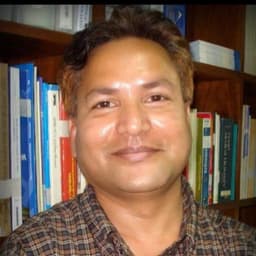
[Parvez Babul is an award-winning migration, climate change, enviornment, health journalist, columnist, essayist and researcher. Email: parvezbabul@gmail.com]
Leave A Comment