
‘Female Zone’ at DU TSC sparks debate among students
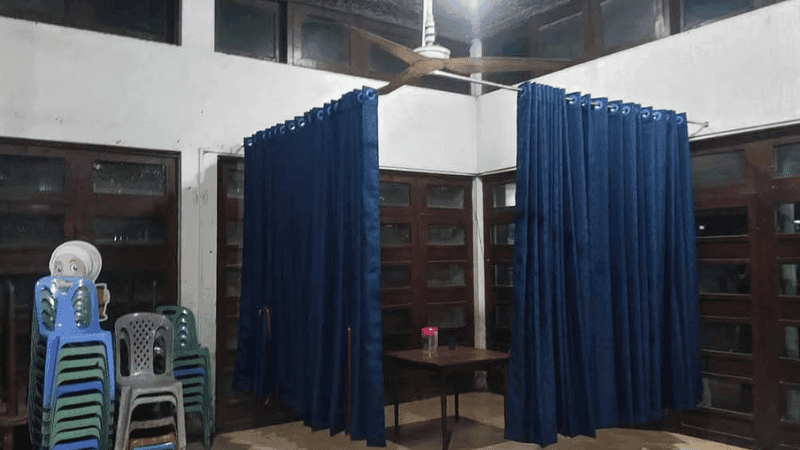

A newly introduced curtain-enclosed ‘Female Zone’ at the cafeteria of Dhaka University’s Teacher-Student Centre (TSC) has triggered widespread debate, drawing mixed reactions from students, political leaders and academics over questions of inclusivity, religious accommodation and campus priorities.
The designated seating area for female students was inaugurated on Thursday afternoon (July 23) by DU Central Students’ Union (DUCSU) General Secretary SM Farhad.
Defending the move, DUCSU Common Room and Cafeteria Affairs Secretary Umme Salma said the initiative came in response to requests from a section of female students.
She said the DUCSU cafeteria already has a separate space where female students who prefer privacy while maintaining hijab or purdah can dine comfortably, but no such arrangement existed at TSC.
“We simply partitioned one table with curtains for those who wanted such a facility. It should not be a problem for anyone. Unfortunately, some groups are trying to politicise the issue,” she said.
The initiative, however, has drawn criticism from several student leaders and campus stakeholders, who argue that pressing issues affecting female students remain unresolved.
Dhaka University unit Jatiotabadi Chhatra Dal General Secretary Nahiduzzaman Shipon alleged that the move reflects an attempt to use religion for political purposes instead of addressing practical concerns.
He argued that improving women’s washroom facilities, sanitation and overall campus safety should have been prioritised before introducing a segregated dining space.
Former DUCSU vice-presidential candidate Abdul Kader, who contested under the Bangladesh Democratic Students' Council banner and is a former coordinator of the Anti-Discrimination Student Movement, also questioned the initiative.
In a Facebook post, he acknowledged that some female students may prefer a private dining space but criticised DUCSU for overlooking long-standing complaints about poor and inadequate female washroom facilities at TSC.
He further alleged that DUCSU's activities increasingly appear to favour a particular ideological perspective, while broader student concerns remain neglected.
Several students said the move has created unnecessary divisions within an open campus space.
Some argued that if privacy was genuinely needed, a separate room could have been arranged instead of creating a curtain-enclosed section inside the cafeteria.
Others expressed concern that the initiative symbolically categorises female students based on personal choices regarding dress or religious practice.
Female residential students from Shamsunnahar Hall and Sufia Kamal Hall also questioned why unresolved issues such as sanitation, security and harassment were not given greater attention.
The issue quickly spread across social media, where academics, writers and public figures offered differing opinions.
Writer Bratya Raisu questioned the political purpose behind creating a partitioned discussion space inside the cafeteria, while author Sejan Mahmud compared the initiative unfavourably with his experiences at international universities.
BNP lawmaker Mansura Alam also criticised the decision, questioning the rationale behind introducing a segregated space inside the cafeteria of a co-educational public university.
Despite the criticism, DUCSU leaders insist the initiative is intended solely to accommodate female students seeking greater privacy while using the cafeteria and deny allegations of political or ideological motivation.
Leave A Comment