
Govt declares 'zero tolerance' against human trafficking, online scams: Home Minister
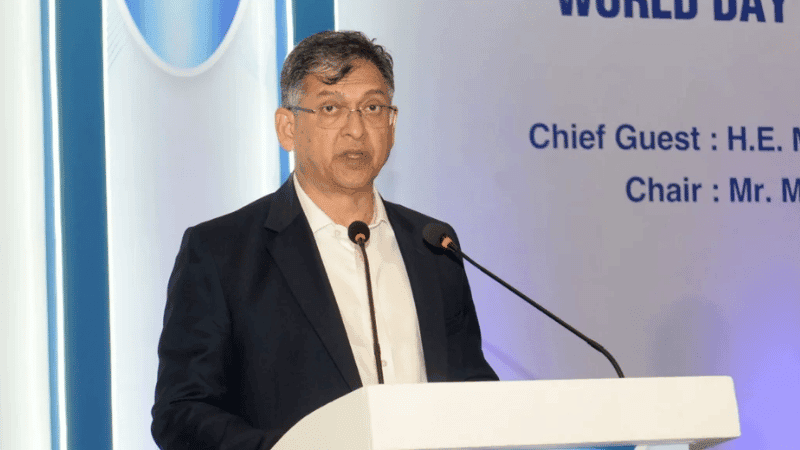

Home Minister Salahuddin Ahmed has reaffirmed the government's "zero tolerance" policy against international human trafficking syndicates and technology-driven online scam networks, saying Bangladesh is strengthening legal and institutional measures to combat increasingly sophisticated forms of transnational crime.
Speaking as the chief guest at a high-level national dialogue marking World Day Against Trafficking in Persons in Dhaka on Thursday (July 30), the minister said protecting citizens from human trafficking and cyber-enabled exploitation remains one of the government's highest priorities.
The dialogue, titled "Trapped Behind the Scam: Ending Human Trafficking for Forced Criminality," was jointly organised by the Ministry of Home Affairs, the United Nations Office on Drugs and Crime (UNODC) and the UN Network on Migration's Counter-Trafficking Technical Working Group.
The home minister warned that trafficking networks are increasingly exploiting digital technology, fake online recruitment platforms and social media to lure young people and job seekers with false promises of lucrative overseas employment.
"Victims are taken abroad under the pretext of better jobs and brighter futures, only to be confined in cyber scam centres where they face intimidation, abuse and are forced into criminal activities," he said.
He stressed that traditional law enforcement alone is no longer sufficient to address the evolving threat.
"Technology companies, financial institutions, the private sector and civil society must work together with the government to build an effective, coordinated response," he added.
Highlighting recent reforms, Salahuddin said the government has enacted the Human Trafficking and Migrant Smuggling (Prevention and Suppression) Act, 2026, aligning Bangladesh's legal framework with the UN Convention against Transnational Organized Crime (UNTOC) and its related protocols.
According to the minister, the new law specifically criminalises modern forms of trafficking, including online scam operations, technology-enabled recruitment fraud and forced criminality, with tougher legal penalties.
He also said work is underway to update the Human Trafficking Prevention and Suppression Rules, 2017, to ensure more effective implementation of the new legislation.
The minister said the government is finalising the National Action Plan 2026–2030, which will strengthen four key pillars: prevention, victim protection, prosecution of offenders and institutional partnerships.
He emphasised that protecting trafficking survivors is both a legal and moral responsibility.
To improve victim assistance, the government is enhancing the National Referral Mechanism (NRM) to ensure faster rescue operations and provide legal, medical, psychological and rehabilitation services.
He further announced the development of a digital anti-trafficking information management platform aimed at improving case monitoring, evidence management and data-driven policymaking.
Calling for broader public participation, the minister urged media organisations and civil society to help raise awareness about safe migration and expose fraudulent recruitment networks targeting vulnerable people.
The event, chaired by Senior Secretary of the Public Security Division Manjur Morshed Chowdhury, was attended by senior government officials, diplomats, law enforcement representatives, development partners and international organisations.
It also featured a panel discussion on trafficking for forced criminality, survivor experiences and awareness programmes highlighting the growing threat of online exploitation.
Leave A Comment