

Govt to spend 5% of GDP on education sector: Minister
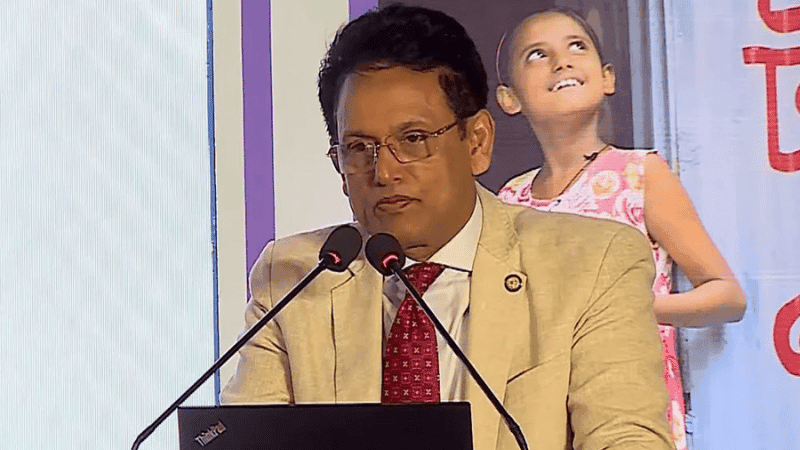

The Education and Primary and Mass Education Minister ANM Ehsanul Hoque Milon has expressed disappointment over the lack of expected outcomes in the country’s primary education sector despite massive government investment.
He made the remarks at a seminar in the capital’s Banani area titled “From Evidence to Action: Strengthening Learning, Inclusion and Innovation in Classrooms in Bangladesh”, organized by the United Nations Children’s Fund (UNICEF) on Thursday morning (May 7).
The minister said that even after 55 years of independence, fundamental problems in the education system remain unresolved. He raised concerns over students’ learning capacity, teaching quality, and overall field-level implementation.
The UNICEF-led research found that a majority of students entering Grade 6 had not achieved basic competencies expected at the Grade 5 level. The situation was particularly alarming in mathematics.
According to the findings, more than 90% of surveyed students were at a “beginner” level, meaning they could not correctly answer even half of the questions designed to test Grade 5-level skills.
The study also indicated that around 80% of students struggle with basic reading skills.
The minister questioned whether the country is effectively addressing these issues despite significant spending on education projects.
He noted that the government has invested heavily in the sector, including nearly Tk 51,000 crore under the Fifth Primary Education Development Program (PEDP-5), along with about Tk 32,000 crore in previous phases.
“After spending so much money, who will answer for where we stand today?” he said, adding that infrastructure development such as computer labs and multimedia classrooms has not always translated into effective learning outcomes.
He also stressed that responsibility must be shared by teachers, policymakers, field officials, and education administrators.
The minister urged authorities not to let research findings remain only on paper, saying they should be translated into real action.
He emphasized the need for a joyful learning environment under the concept of “learning with happiness”.
At the event, Prime Minister’s Education and Primary and Mass Education Adviser Mahdi Amin said the government aims to make education more skill-based and inclusive, moving away from certificate-based learning.
He also mentioned plans for technology-driven education, “one teacher one tablet” initiatives, multilingual learning opportunities, and teacher training reforms.
UNICEF Bangladesh Representative Stanley Gwavvuyia stressed that real improvement depends on effective implementation rather than policy alone, highlighting the importance of student-centered teaching and evidence-based reforms.
Leave A Comment