
HC orders verification from central database to prevent fake arrest warrants
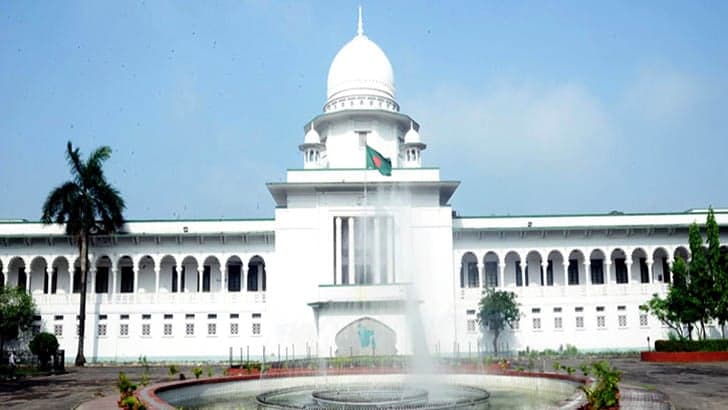

The High Court has directed police officers to verify the authenticity of arrest warrants from the Central Data Management System to prevent arrests and harassment through fake warrants, and has ordered the Inspector General of Police (IGP) to issue a circular in this regard.
The order came after Human Rights and Peace for Bangladesh (HRPB) filed a writ petition following media reports on the arrest and harassment of political opponents using fake arrest warrants. After hearing the petition, a High Court bench issued a rule on January 30, 2013, and directed the Officer-in-Charge of Gulshan Police Station to submit a report regarding the arrest of Arif Niazi.
The bench of Justice KM Hafizul Alam and Justice Murad A Molla Sohail disposed of the rule and delivered the verdict on Monday, September 14, after hearing the matter.
In its verdict, the court said that when a police officer moves to execute an arrest warrant, its authenticity must be verified from the Central Data Management System before taking steps for arrest. The court also directed the IGP to issue a circular containing these directives and send it to all law enforcement agencies. In another order, the court directed the Registrar General of the Supreme Court to send directives to judges of all lower courts, including District and Sessions Judges, Metropolitan Sessions Judges, CMMs and CMMs, to ensure that copies of the lawyer's professional identity card and the complainant's national identity card are attached to the case file while filing any complaint case, in order to verify the identity of the complainant and the lawyer.
In the verdict, the court said that any citizen must be arrested following the provisions of the Criminal Procedure Code, otherwise it would violate the law. The court observed that arrest through fake warrants violates a citizen's fundamental and constitutional rights, which it is the duty of all law enforcement agencies to ensure. In the court's words, caution must be exercised in filing cases and making arrests so that people are not harassed through the judicial system, otherwise the harm caused to citizens cannot be remedied.
Senior Advocate Manzil Morshed, representing HRPB, said Arif Niazi, a resident of Gulshan, was arrested in 2012 from his home in Gulshan based on a fake arrest warrant, and after being produced in court, he learned that a fake case and fake warrant had been created against him. He said a report by an investigation committee formed on the court's orders also proved that the arrest warrant was issued through a fake case. Subsequently, several media outlets reported that influential people were harassing citizens in various ways to settle scores through fake warrants. HRPB filed the writ petition in the public interest, attaching these reports and seeking directives to stop such fake warrants and complaint cases. Manzil Morshed further said that under the law, there is no scope to harass any citizen, yet in many cases people are being harassed due to fake arrest warrants.
Deputy Attorney General JR Khan Robin opposed the rule on behalf of the government, saying the Central Data System has already been introduced, which eliminates the scope for arrest through fake warrants. He also argued that since the case was not filed by a directly affected party, there was no scope for remedy in it.
The writ petitioner was Human Rights and Peace for Bangladesh. The respondents were the Home Secretary, IGP, Director General of RAB, DIG of Chattogram Division, Dhaka Police Commissioner and Officer-in-Charge of Gulshan Police Station, among eight others. Senior Advocate Manzil Morshed appeared for the petitioner, assisted by Advocates Mohammad Sarwar Ahad Chowdhury, Sanjay Mandal and Nasrin Sultana. Deputy Attorney General JR Khan Robin and Assistant Attorney General Mohammad Humayun Hossain Tuhin appeared for the state.
Leave A Comment