

High Court issues rule challenging legality of government's failure to appoint Ombudsman
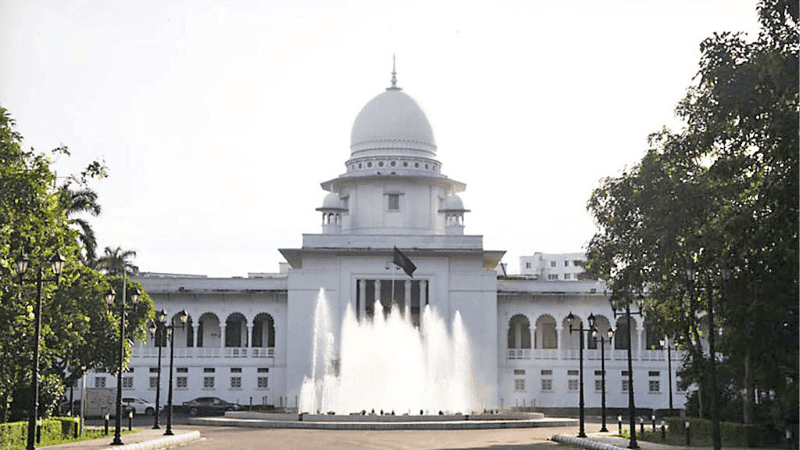

The High Court has issued a rule asking why the government’s long-standing failure to appoint an Ombudsman to investigate corruption, maladministration and irregularities in public offices should not be declared illegal.
The bench of Justice Bhishmadev Chakrabortty and Justice Abdur Rahman passed the order on Thursday (May 21) following a writ petition filed by Supreme Court lawyer Ishrat Hasan.
The court also sought an explanation as to why no effective steps have been taken to implement the constitutional provision for appointing an Ombudsman despite the existence of a related law enacted in 1980.
According to the writ petition, citizens continue to face widespread harassment, delays in public services, negligence, abuse of power and administrative irregularities, yet no independent mechanism has been established to address such complaints.
The petition argued that although the Constitution mandates the appointment of an Ombudsman, the provision has remained unimplemented for more than five decades since independence, undermining citizens’ constitutional rights and principles of good governance.
It further stated that an independent Ombudsman institution could ensure greater transparency, accountability and an effective system for resolving complaints against public administration.
In its rule, the High Court asked the government to explain why no meaningful progress has been made in appointing an Ombudsman and why such inaction should not be declared unlawful.
Leave A Comment
You need login first to leave a comment