
High Court says unpaid dower must be paid when wife demands it
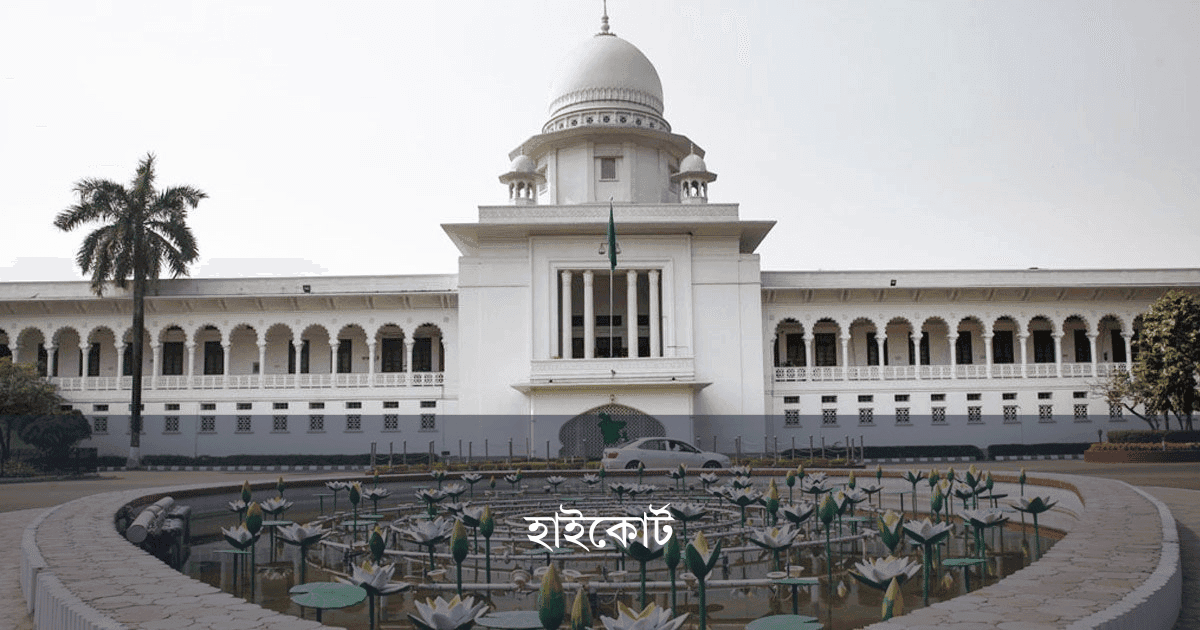

The High Court of Bangladesh has ruled that Muslim women are not required to wait until a divorce or their husbands' deaths to claim their dower, or denmohor, establishing that the payment must be settled promptly upon demand.
In a landmark 32-page full verdict published on Tuesday (Oct 6) on the Supreme Court website, Justice Md Abdur Rahman emphasized that denmohor constitutes an independent financial right and a legal obligation stemming from marriage that husbands cannot reclaim. The bench delivered the ruling on September 3 following the final hearing of a civil revision petition titled Yakub Ali versus Sanjida Nasrin.
The court underscored that if a wife is compelled to seek judicial intervention to recover her rightful dues, trial courts possess the explicit jurisdiction to order husbands to pay financial compensation if they deliberately delay payment despite having the financial capacity to do so.
Citing verses from the Holy Quran, the bench reiterated that there is no scope under the law to delay dower in a lawful marriage, and any portion of it cannot be reduced or waived by the courts. Furthermore, the verdict stated that while a wife holds the legal right to voluntarily waive all or part of her dower, such a relinquishment must be conscious, unambiguous, and entirely free from coercion, undue influence, fraud, or any infringement upon free consent.
The legal proceedings originated from a family dispute following the marriage of the couple on December 29, 2014, with a fixed denmohor of Tk 22 lakh in the presence of family members. Amid marital discord and dowry demands, the couple eventually separated, prompting the wife to file a case in the Chattogram Family Court seeking denmohor and maintenance.
On May 5, 2022, the family court delivered an ex-parte decree instructing the husband to pay a total of Tk 20.40 lakh, encompassing Tk 18 lakh in dower, Tk 30,000 for the three-month iddat period maintenance, and Tk 2.10 lakh in arrears for their minor daughter, alongside a monthly maintenance of Tk 7,000 until the child's marriage.
After lower courts rejected his attempts to overturn the ruling, the husband filed a revision petition in the High Court in 2024, pleading for installment facilities due to severe financial distress and business losses. Dismissing the petition on September 3, the High Court directed the husband to implement the decree by paying all outstanding dower and maintenance dues.
Advocate Ishrat Hasan, who represented the wife during the hearings, noted that this ruling introduces the novel provision of court-mandated compensation for denmohor harassment, which is expected to deter protracted litigation and encourage amicable settlements.
Leave A Comment