
Inherited 1,300 projects now a liability for government: Finance Minister
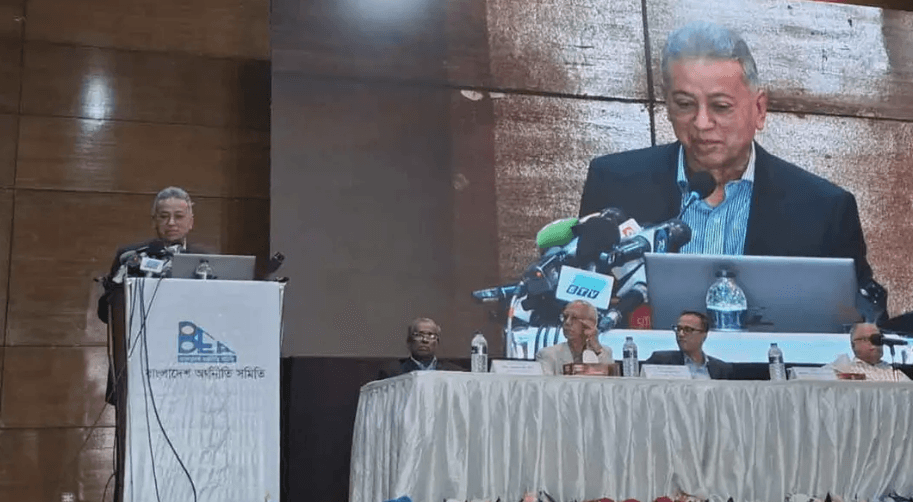

Finance Minister Amir Khosru Mahmud Chowdhury has said the 1,300 development projects inherited from the previous administration as a significant financial and administrative burden, saying many of them cannot be scrapped despite concerns over their viability because substantial portions of the work have already been completed.
Speaking at a seminar titled “Debating Budget and Beyond” in Dhaka on Thursday (June 25), the minister said the government had been forced to continue numerous projects despite reservations about their effectiveness and economic value.
“We inherited around 1,300 development projects, many of which have become liabilities. Some can be discontinued, but many cannot, as 50 to 60 percent of the work has already been completed,” he said.
The finance minister said the government assumed office amid multiple challenges, including global economic uncertainty and geopolitical tensions, while also dealing with the legacy of large-scale development spending. He stressed that the administration is seeking to shift the economy away from what he described as a patronage-driven model toward a more inclusive and democratic economic framework.
Highlighting the government's economic priorities, Khasru said efforts are underway to bring marginalized groups—including rural artisans, cottage industries, weavers, cultural workers and women—into the mainstream economy through targeted support programmes.
He also defended initiatives such as Family Cards and Farmer Cards, arguing that direct support mechanisms are more sustainable than pushing farmers into debt. According to the minister, the government recently had to absorb nearly Tk 10,000 crore in unpaid agricultural loans.
The minister revealed that the government is currently servicing around Tk 125,000 crore in debt obligations, a factor that has narrowed fiscal space and constrained public spending. Despite these pressures, he said the administration remains committed to creating 10 million jobs and pursuing long-term economic reforms.
Among the government's key priorities are universal preventive healthcare, strengthening the creative economy, revitalising the capital market, and expanding opportunities for small and medium enterprises. He also announced plans to introduce a digital dashboard system to monitor development projects in real time, allowing ministries and oversight agencies to track progress and address delays more effectively.
Khosru expressed optimism that ongoing tax, legal and financial reforms would improve investor confidence, noting that several major international fund managers have already shown growing interest in Bangladesh as a future investment destination.
He said achieving at least 80 percent implementation of the national budget would significantly contribute to economic growth, employment generation and the government's broader development agenda.
Leave A Comment