
Jamaat has accepted its anti-independence role in 1971: Law Minister
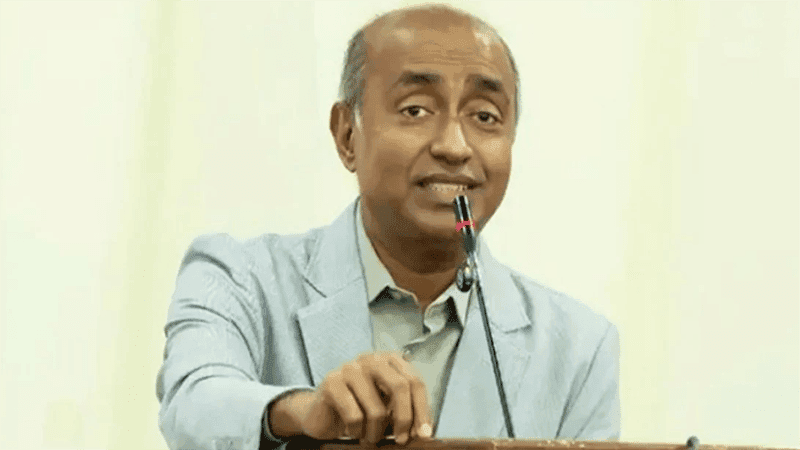

Law, Justice and Parliamentary Affairs Minister Md Asaduzzaman has said that Jamaat-e-Islami had demanded the removal of its name from the definition of freedom fighter during the amendment of the National Freedom Fighters Council Act. He claimed that no Jamaat member voted 'no' when the amended law was passed in parliament. Therefore, by participating in the parliamentary process, the party has indirectly accepted its anti-independence role in 1971.
He made these remarks at the launch ceremony of the book 'Bangladesh Jamaat-e-Islami: Its History and Politics' at Lakeshore Grand in the capital on Friday, September 18. The book, written by former Assistant Secretary General of Jamaat Barrister Abdur Razzaq, has been published by University Press Limited.
Speaking at the event, the Law Minister said that in 2016, Barrister Abdur Razzaq had called on Jamaat to apologise to the nation for its role in 1971. He also remarked that if Jamaat had accepted that position at the time, many questions about the party would have been resolved.
The Law Minister said a definition of freedom fighter was provided in the National Freedom Fighters Council Act 2022. It defined those who opposed the pro-independence people of Bangladesh in 1971, including Jamaat-e-Islami and several other political organisations, and those who struggled for independence, as freedom fighters. Later, during the 2025 amendment and when the law was placed in parliament in 2026, the matter was discussed.
The minister said that at one stage of the discussion on the amendment, Jamaat had demanded the removal of its name from the definition. However, historical truth cannot be denied, and from that position, the law later referred to 'the then Jamaat-e-Islami', 'the then Muslim League' and 'the then Nizam-e-Islam'.
The law was then placed in parliament and passed through 'yes' and 'no' votes. The Law Minister claimed that no member of parliament from Jamaat-e-Islami voted 'no' against the law. In his words, by participating in the parliamentary process, Jamaat has 'indirectly' accepted its role in 1971.
Referring to Barrister Abdur Razzaq's book, Asaduzzaman said that in 2016, Razzaq had drafted a statement from a political position that sought to bring Jamaat's role in 1971 before the nation. According to him, Jamaat's position in the parliamentary process later was related to that statement.
The Law Minister also spoke on the Islamic state system at the event. He said the idea of forcibly imposing Islamic rule is not correct; rather, the proper path for such a state system is for the state to be run by establishing Islamic values in society.
At the event, he praised the political and social views of the book's author, Barrister Abdur Razzaq. He also commented on the absence of several lawyers and leaders of Jamaat's current leadership at the event. He said that if anyone disagrees with any statement in the book, expressing it publicly is part of the democratic process.
Besides the Law Minister, local and foreign academics, researchers, lawyers and concerned individuals were present at the event.
Leave A Comment