

JS cancels ordinances on Supreme Court judge appointments, separate Secretariat
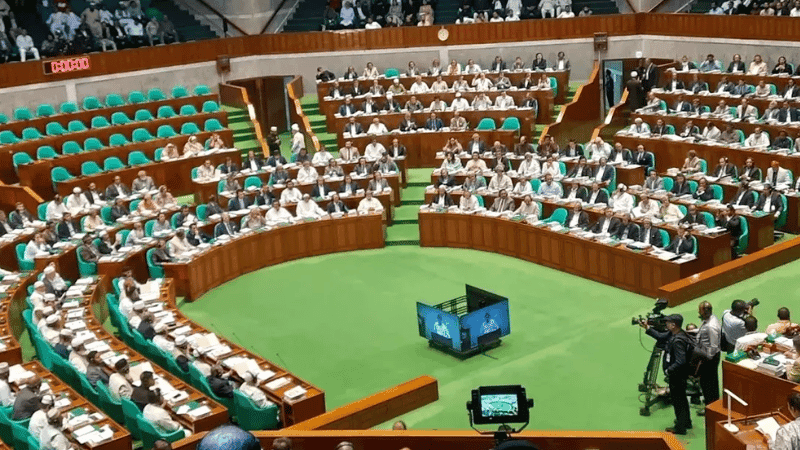

The parliament has passed two bills scrapping ordinances issued during the interim government regarding the appointment of Supreme Court judges and the establishment of a separate Supreme Court Secretariat, despite strong objections from the opposition.
The bills—Supreme Court Judges Appointment (Repeal) Bill and Supreme Court Secretariat (Repeal) Bill—were passed by voice vote after opposition protests were rejected.
As a result, three related ordinances issued earlier will be repealed, effectively restoring the judiciary to its previous framework. Although the ordinances will be annulled, the appointment of 25 judges and other actions already taken under those provisions will remain legally valid.
With the repeal of the ordinances related to the Supreme Court Secretariat, the separate secretariat established under those provisions will be dissolved. Its budget, ongoing projects and programmes will be transferred to the Ministry of Law, Justice and Parliamentary Affairs. Positions created under the secretariat will also be abolished, while judicial officers working there will return to their previous administrative structure under the earlier legal framework.
The bills will become law after receiving presidential assent and subsequent gazette notification by the government.
Under Article 95 of the Constitution, the President appoints Supreme Court judges in consultation with the chief justice. However, Article 48(3) states that the President acts on the advice of the Prime Minister in most matters, except in specific cases.
The interim government introduced an ordinance in 2025 establishing a Supreme Judicial Appointment Council, led by the chief justice, to recommend suitable candidates for appointment to the Appellate and High Court divisions. With the repeal of the ordinance, this provision will no longer remain in effect and appointments will revert to the earlier constitutional process.
Similarly, another ordinance had established a separate Supreme Court Secretariat to oversee administrative functions of subordinate courts and tribunals, including postings, promotions, transfers, discipline and leave of judicial officers. These provisions also cease to exist following the passage of the repeal bill.
Leave A Comment
You need login first to leave a comment