
Maha Saptami observed today
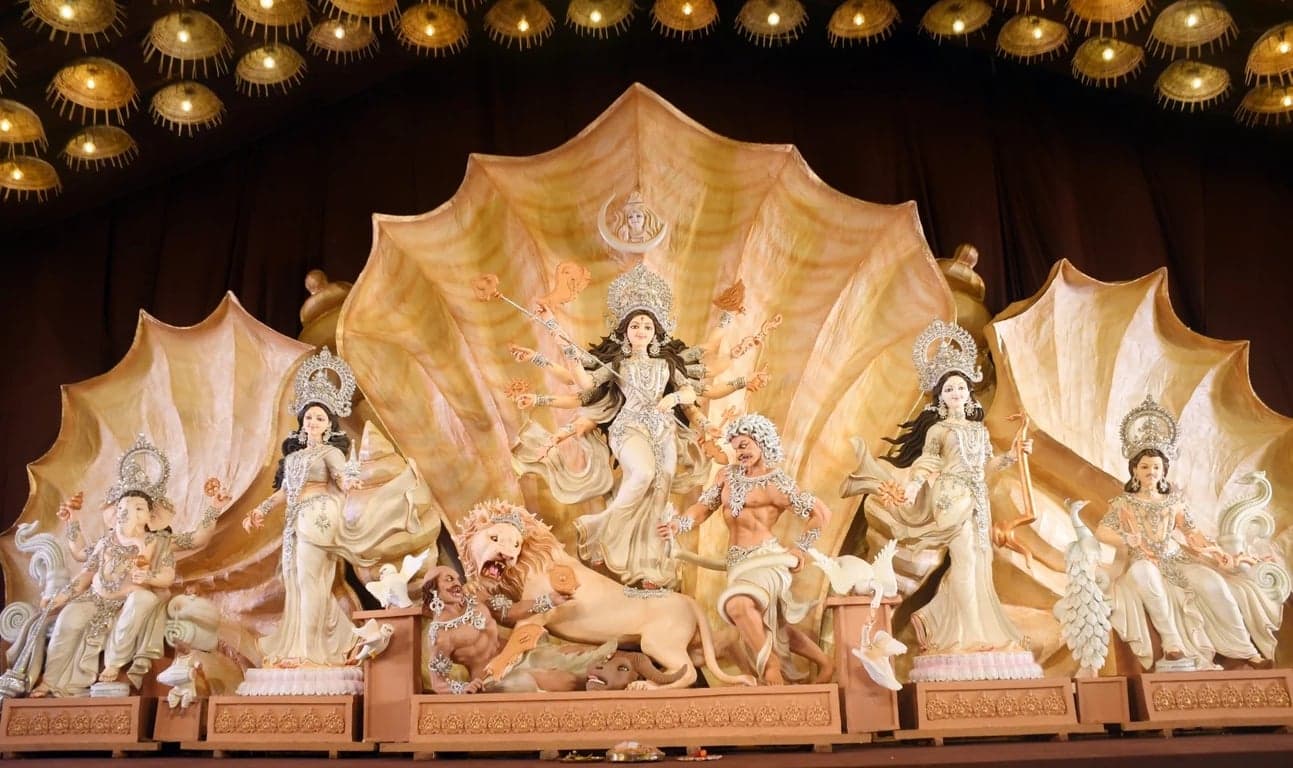

Puja mandaps across the country have come alive with the beat of dhak drums, the sound of conch shells and ululation. The fragrance of flowers, incense and agarbatti has spread the festive mood all around. After the rituals of Shashthi's Bodhon, Amantran and Adhivas, Maha Saptami, one of the most important days of Sharadiya Durgotsav, is being celebrated on Saturday in a solemn and festive atmosphere. Since morning, devotees have been crowding the mandaps for the chanting of mantras and darshan of the goddess.
On Maha Saptami, devotees pray to the goddess for peace, harmony, strength and well-being across the world. Beyond the religious rites, the day carries a deeper significance: the awakening of goodness against evil forces, gratitude toward nature, and a resolve to build an equal and harmonious society.
One of the main rituals of Maha Saptami is the installation of the Nabapatrika, commonly known as "Kalabou." A banana plant is tied together with arum, turmeric, jayanti, bael, pomegranate, ashoka, mankachu (giant taro) and a paddy plant. After being bathed, it is dressed in a new sari and installed in the puja mandap. According to prevailing religious belief, these nine plants are regarded as symbols of the goddess's nine powers.
The Nabapatrika worship also reflects the close bond between humans and nature. Plants play an essential role in food, medicine, agriculture and many other areas of life. For this reason, beyond the religious formalities, the ritual also draws attention to protecting trees and plants, keeping water bodies free from pollution, and maintaining the balance of the environment.
Another important rite of Saptami is the goddess's Mahasnan (grand bathing). In this ritual, the reflection of the deity's image is placed in a mirror and bathed with Ganges water, milk, honey and fragrant offerings. In religious belief, it symbolizes outer and inner purity. Its underlying lesson is that moral values must be expressed not merely through ritual, but also by protecting the rights of others, avoiding discrimination and violence, and standing by helpless people.
According to mythology, by slaying Mahishasura, Goddess Durga has become a symbol of the victory of good and the defeat of evil. The weapons in her ten hands signify the power to resist injustice and establish justice. Lakshmi, Saraswati, Kartik and Ganesh, who stand beside the goddess in the idol, symbolize prosperity, knowledge, valour and wisdom respectively. Symbolically, prosperity has no meaning without knowledge, establishing justice is difficult without courage, and power cannot be properly applied without wisdom.
In Bengali culture, Durga Puja is not only a festival of worshipping the goddess but also reflects the emotional family feeling of a daughter returning to her father's home. At the same time, through the labour of idol makers, potters, dhakis (drummers), lighting workers and small traders, Durgotsav takes the form of a large social and economic undertaking. The festival creates employment and livelihood opportunities for people from various professions.
In the context of Bangladesh, the significance of Maha Saptami is also linked to religious harmony, mutual respect and a commitment to citizens' safety. Ensuring the dignity and the right to religious practice of every person, irrespective of religion or ethnicity, is an important condition of an inclusive society. The joy of the festival is complete only when people of all faiths can observe their own religious rites without fear.
The beat of the dhak will eventually fall silent, and the festival's formalities will come to an end. But the lessons of Maha Saptami, which are to stand against injustice, care for nature and show compassion toward people, need to be carried into daily life as well. The significance of the festival can come alive through the practice of goodness, humanity and harmony.
Leave A Comment