
ESDO Study
Microplastics found in 26 of 34 toothpaste brands available in domestic markets
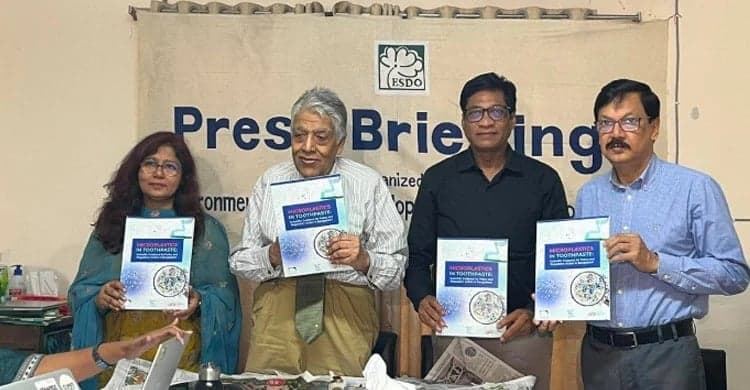

A year-long study by environmental research organisation Environment and Social Development Organization (ESDO) has found harmful microplastic particles in 26 out of 34 toothpaste brands available in the country's market, raising fresh concerns over consumer health and product safety.
The findings, unveiled at the organisation's Lalmatia office in Dhaka on Sunday (July 26), indicate that nearly three-quarters of the tested toothpaste brands contained microplastics, including several products marketed for children.
Researchers surveyed around 2,760 consumers nationwide and analysed toothpaste samples at the Environmental Health and Ecotoxicology Laboratory of Jahangirnagar University's Department of Environmental Sciences.
The samples were examined using advanced stereomicroscopy and Fourier Transform Infrared (FTIR) spectroscopy, detecting between 20 and 320 microplastic particles per 100 grams of toothpaste.
The study found that 22 of 25 locally manufactured brands contained microplastics, a significantly higher proportion than imported products. Among imported brands, one of five Indian products, one of two Thai products and both Vietnamese brands tested positive for microplastics.
The highest concentration was detected in Mediplus Fluoride Gel, with 320 microplastic particles per 100 grams. It was followed by Close Up Red Hot and Close Up Menthol Fresh (160 each), Kodomo Ultra Shield Formula Strawberry (140), Signal Green Tea (120), Pepsodent Advanced Salt and Himalaya Complete Care (100 each), and Sensodyne Fresh Mint (80).
The findings are particularly concerning for children's oral care products. Of the six children's toothpaste brands tested, four contained microplastics, including Kodomo Ultra Shield Formula (140 particles), Meril Baby Strawberry (60), Meril Baby Orange (40) and Pepsodent Kids Orange (20).
However, the study also identified several products that were free of detectable microplastics. These include locally produced Zenfresh, Parachute Just for Baby (Mango) and Close Up Red Hot Zinc Fresh Technology, as well as imported Kodomo Orange.
ESDO described the research as the first comprehensive scientific assessment of microplastics in toothpaste sold in Bangladesh.
The organisation warned that prolonged exposure to microplastics through daily-use products could pose potential health risks and urged manufacturers to strengthen raw material quality control.
It also called on the government to introduce stricter regulations and monitoring mechanisms to ensure consumer safety.
Leave A Comment