
Mohammad Shahabuddin bows out amid political turbulence
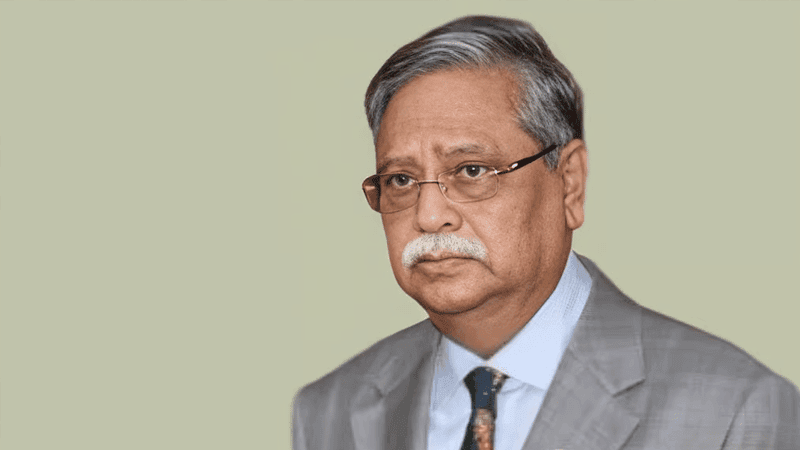

The presidency of Mohammad Shahabuddin, Bangladesh's 22nd President, has come to an end amid political turbulence. He resigned on Friday (July 24), citing personal reasons, before completing his constitutional term. His departure marks the final chapter of a long public career in which he served as a student leader, freedom fighter, judge, Anti-Corruption Commission commissioner and, ultimately, Head of State.
When Shahabuddin assumed office as President in April 2023 after being elected unopposed, there was little indication that his tenure would coincide with one of the most turbulent periods in Bangladesh's recent political history. Within a year, however, the country's political landscape changed dramatically.
Following the mass student-led uprising of August 5, 2024, the departure of then Prime Minister Sheikh Hasina, the dissolution of Parliament and the formation of the interim government, President Shahabuddin found himself at the centre of a series of crucial constitutional decisions.
As President, he dissolved the Jatiya Sangsad (Parliament) and administered the oath of office to the Advisory Council of the interim government led by Professor Muhammad Yunus. During the political transition, each of his constitutional decisions came under close national and international scrutiny.
However, the situation changed only a few months later. In an interview, Shahabuddin said he had not received Sheikh Hasina's resignation letter. The remark sparked fresh political controversy, prompting the Anti-Discrimination Student Movement and several political parties to demand his resignation.
Demonstrations were also held outside Bangabhaban, the presidential residence.
Although the interim government did not move to remove him due to constitutional complexities, his role as President gradually became more limited. Apart from carrying out ceremonial state duties, his political presence largely receded from public view.
Following the 2026 general election, which brought a BNP-led government to power, discussions over a change in the presidency resurfaced. While the new government initially refrained from making its position public, political debate over Shahabuddin's resignation intensified. He eventually stepped down, citing personal reasons.
In a brief remark to the media, he said, "I am sick, so it is done." He subsequently submitted his resignation letter to the Speaker of Parliament, formally bringing his presidency to an end.
Yet Shahabuddin's public life extended far beyond the presidency.
Born on December 10, 1949 in Shibrampur, Pabna, he became involved in Bangladesh Chhatra League politics in the late 1960s. During the 1971 Liberation War, he served as convener of the Swadhin Bangla Chhatra Sangram Parishad in Pabna, received military training in India and took part in the war as a member of the Mujib Bahini.
After independence, he was active in Jubo League politics before joining the judiciary. Entering the Bangladesh Civil Service (Judicial) in 1982 as an Assistant Judge, he went on to serve in various judicial positions, eventually becoming a District and Sessions Judge. He also chaired the judicial commission that investigated post-election violence following the 2001 general election and served as coordinator of the Bangabandhu assassination case.
In 2011, Shahabuddin was appointed a commissioner of the Anti-Corruption Commission (ACC).
During his tenure, he played a prominent role in the investigation into corruption allegations surrounding the Padma Bridge project, an issue that attracted widespread national attention. After retiring from the judiciary, he returned to active politics with the Awami League, serving as a member of the party's Advisory Council.
In 2023, he was elected Bangladesh's 22nd President after securing the Awami League's nomination and facing no challenger.
His presidency can broadly be divided into two phases. The first was marked by the routine discharge of constitutional responsibilities. The second began with the political upheaval of 2024, when he was required to make a series of critical constitutional decisions during an unprecedented political transition. Those decisions—and some of his subsequent public remarks—later became the subject of intense political debate.
To his supporters, Shahabuddin was a Head of State who helped preserve constitutional continuity during a historic political transition. His critics, however, argued that some of his decisions and statements raised serious political questions.
Whatever the differing assessments, Mohammad Shahabuddin's presidency will remain closely associated with one of the most consequential and politically volatile periods in Bangladesh's contemporary history.
With his resignation, not only has the chapter of Bangladesh's 22nd President come to a close, but so too has an important chapter in the country's recent political transformation.
Leave A Comment