
Multidimensional malnutrition crisis in Bangladesh: One in four children suffer from stunting

Malnutrition in Bangladesh is no longer just a food crisis; it has become a major challenge to public health and the national economy. One in four children under five is stunted, 13 percent of children are wasted, and over half of pregnant women suffer from anaemia. At the same time, obesity and overweight among women of reproductive age have also increased at an alarming rate. According to experts, this multidimensional malnutrition crisis is costing the country more than 8 percent of its Gross Domestic Product (GDP) annually.
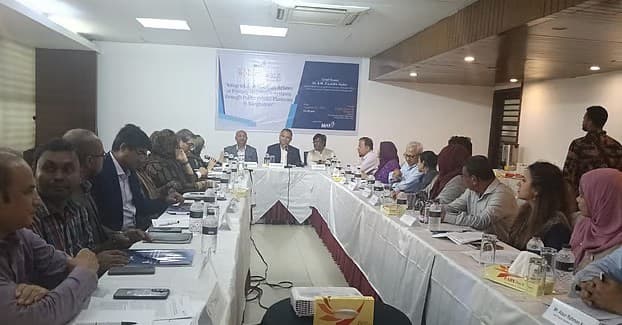
These findings were presented at a roundtable titled 'Integrating Nutrition Services into Primary Healthcare and Public-Private Partnerships' in the capital on Monday, August 3. Experts from the health and nutrition sectors attending the event, organised by the Max Foundation Bangladesh, said merely increasing food supply is not enough to tackle malnutrition. Ensuring maternal nutrition, safe water and improved sanitation, preventive healthcare and coordinated initiatives between public and private institutions are also necessary .
Sayka Siraj, head of BRAC's Climate Bridge Fund, said around 70 percent of the country's population still has a carbohydrate-dependent diet, leading to persistent nutritional deficiencies. Nutrition services in char, haor, slums and other marginalised areas remain inadequate. Additionally, the nutritional needs of adolescent girls affected by child marriage, readymade garment workers, persons with disabilities and the elderly need greater attention in policy-making.
Dr Tahmid Ahmed, Executive Director of the International Centre for Diarrhoeal Disease Research, Bangladesh (icddr,b), said child stunting is not solely due to a lack of food. Maternal malnutrition, lack of safe water, poor sanitation and an unhealthy environment are also contributing factors. In many cases, the foundation for stunting is laid even before a child is born.
He said around 400,000 children in the country are currently suffering from severe acute malnutrition, but most of them can be treated through community-based healthcare and nutrition services. He added that stunting rates could be brought down from the current 24 percent to 12 percent if investment in the health sector is increased to 3-5 percent of GDP, consistent with national data showing moderate decline despite persistent regional disparities .
Professor Dr Prabhat Chandra Bishwas, Director General of the Directorate General of Health Services, said 60-70 percent of the population still relies on the private sector for primary healthcare. Non-communicable diseases, including hypertension, heart disease and kidney disease, are rising rapidly due to the effects of malnutrition. Currently, nearly 70 percent of all diseases in the country fall under non-communicable diseases, which is a major public health concern, reflecting regional trends of rising NCDs alongside undernutrition .
Speaking as chief guest, the Prime Minister's Health Affairs Special Assistant S M Ziauddin Haidar said the government plans to establish 'Primary Healthcare Units' in every union and ward across the country. Under this plan, alongside the currently employed 43,000 health workers, another 100,000 new health workers will be recruited. Digital health cards for every citizen and expansion of AI-based healthcare services are also being initiated .
Experts believe that overcoming this triple burden of malnutrition requires nutrition-focused health policies, awareness-raising and sustainable public investment alongside food security. Otherwise, the long-term negative impact on the physical and mental development of future generations as well as the country's economy will continue.
Leave A Comment