
Nari Sanghati demands 33 percent women lawmakers in parliament
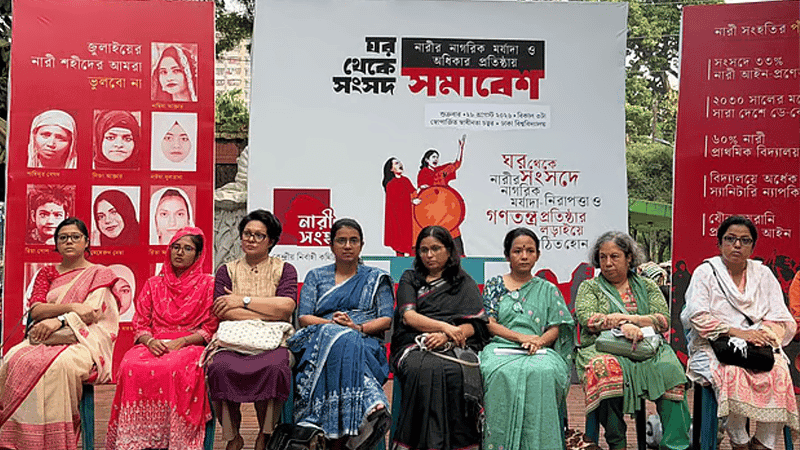

Nari Sanghati has put forward a five-point demand, including ensuring 33 percent women lawmakers in the national parliament. Leaders of the organisation said that despite women playing a crucial role in the July uprising, their participation in policymaking levels in subsequent political and state reforms has not yet been ensured.
The demands were made at a rally organised at Dhaka University's Swoparjita Swadhinata Chattar on Friday afternoon (August 28).
The five-point demands include: ensuring 33 percent women lawmakers in parliament, meeting the demand for daycare centres across the country by 2030, reinstating the provision of recruiting 60 percent female teachers in government primary schools, supplying sanitary pads at half price to all schools through a 'bulk procurement model', and the swift passage of the Sexual Harassment Prevention Act in parliament.
At the rally, Nari Sanghati President Shyamali Sheel said women, along with students, the public and ordinary citizens, played a pioneering role in the fall of the 15-year autocratic rule. However, the reflection of women's contribution has not yet been seen in post-July political and state reforms.
She said although demands have been raised for direct elections for women in parliament and ensuring 33 percent nominations by political parties, these remain ignored.
Bangladesh Garment Workers' Solidarity President Taslima Akhtar said their core demand is establishing women's civil rights and dignity everywhere—from the household to parliament. Although 51 percent of the country's voters are women, their representation in parliament is extremely low. Women do not seek favours from any political party; they demand fair nominations and seats as citizens.
Nari Sanghati Joint General Secretary Rebeka Nila said the daycare facilities available in the country, both public and private, amount to only 1 to 2 percent of the demand. Many working women are forced to leave their jobs due to a lack of childcare facilities.
Researcher Mahin Sultan said the goal should now be to ensure equal representation of men and women at all levels of the state, not just 33 percent representation.
Bangladesh Chhatra Federation Central General Secretary Farhana Muna alleged that women who played a pioneering role in the July movement were later excluded from policymaking positions. Women's participation in state decision-making and new empowerment structures has not been ensured.
Leave A Comment