

NBR reformation essential to boost country’s tax-to-GDP ratio: Finance Minister
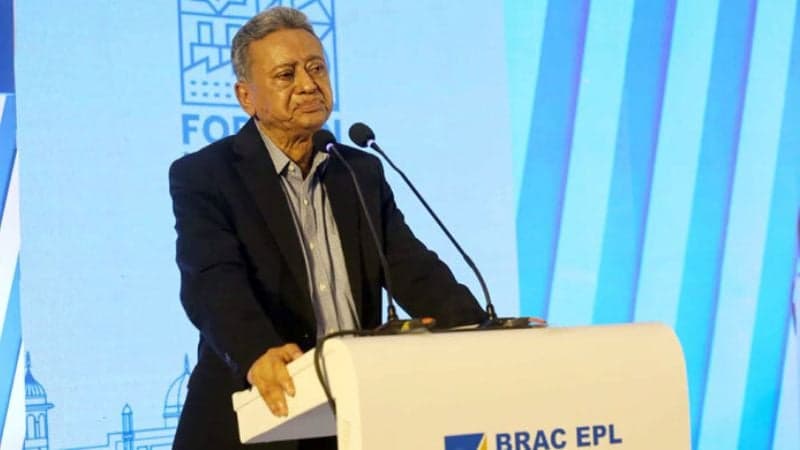

Finance Minister Amir Khasru Mahmud Chowdhury has said that comprehensive reform of the National Board of Revenue (NBR) is essential to revive Bangladesh’s economy and improve its declining tax-to-GDP ratio, which he described as one of the lowest in South Asia.
Speaking at a policy dialogue titled “Sonar Bangla” organised by The Daily Banik Barta at a city hotel on Monday (May 11), he said the country’s revenue mobilisation capacity has weakened significantly, constraining public spending on development, social protection, and basic services.
“Resource mobilisation is fundamental to any economy. Bangladesh’s tax-to-GDP ratio, which once stood at 10–11 percent, has now fallen below 7 per cent. We are among the lowest in the world and at the bottom in South Asia,” he said.
He noted that the decline has reduced fiscal space, limiting the government’s ability to undertake development and employment-generation programmes.
“If fiscal space is not created, development and social programmes cannot be sustained. This directly affects economic growth and public service delivery,” he added.
Describing the situation as a key policy challenge, the minister said the tax-to-GDP ratio currently stands at around 6.8 percent and must be increased through urgent reforms.
“NBR reform is a must. Without restructuring the revenue system, we cannot move forward,” he said.
Criticising previous reform efforts, he said the separation of policy and implementation in the revenue administration was incomplete and poorly designed. “Half-baked reforms are dangerous. An incomplete structure creates more problems than solutions,” he remarked.
He said the government has now paused the earlier bill and formed a committee to redesign the framework, adding that a revised restructuring plan is being prepared.
The finance minister also stressed the need for a more transparent and business-friendly tax policy. “Tax policy makers must understand the DNA of the economy, industry realities, and public needs. Tax decisions cannot be made only from an administrative perspective,” he said.
He warned against excessive tax pressure on investors, saying it discourages reinvestment and slows economic growth.
Calling for streamlined governance, he said tax policy recommendations should be sent directly to the finance ministry to reduce bureaucratic delays and ensure transparency.
Highlighting human capital development, he said investment in health and education is crucial to harness the country’s demographic dividend. He also said Bangladesh aims to increase investment in these sectors to up to 5 percent of GDP in the coming years.
On remittance growth, he noted that Bangladesh still relies heavily on low-skilled workers abroad and stressed the need to develop a more skilled workforce. “With improved skills, remittance earnings could rise to $40–50 billion within five years,” he said.
He further added that future vocational and skills development projects will require international accreditation and certification to ensure effectiveness and global recognition.
Leave A Comment
You need login first to leave a comment